 Society

VPBank Đất Sen Hồng Music Marathon returns with 15,500 runners in Đồng Tháp
1.
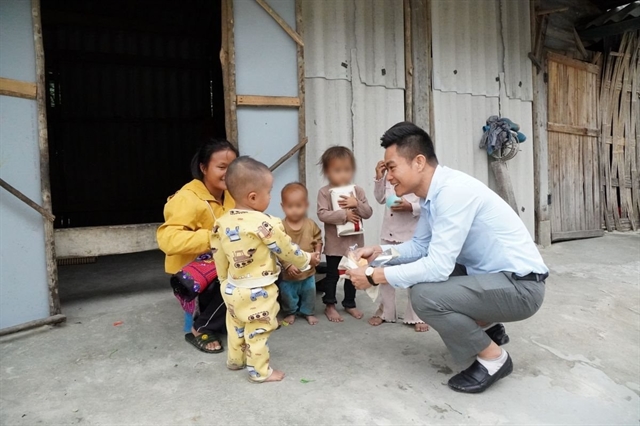 |
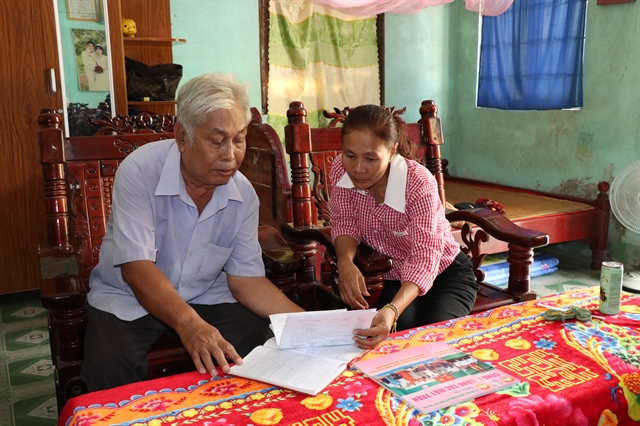
| A social worker visit Mông ethnic people's home to encourage people against child marriage. — Photo congly.vn |
THANH HOÁ — Early marriage and consanguineous marriage leave severe and lasting consequences for families and society, with authorities in Thanh Hoá Province stepping up efforts to raise awareness and bring change within ethnic minority communities.
In recent years, local agencies have implemented targeted interventions that have led to measurable improvements in attitudes and behaviour among residents in remote areas.
Sad lullabies beneath the Pù Ngùa range
Pù Ngùa, a Mông village in Pù Nhi Commune, was once known not only as an opium capital but also as a hotspot for child marriage and consanguineous marriage.
According to local statistics, in some years, the rate of early and consanguineous marriage in the village reached 30 per cent.
Hơ Thị Thơ and Thao Văn Sếnh are among the couples who married at a young age.
They now live in a shabby house furnished with only a single bed tucked into a corner.
Sếnh appeared shy while speaking about his life.
His father died when he was 10 years old. After his mother remarried, he lived with his uncle. Life beneath the Pù Ngùa mountains was harsh and he never had the chance to attend school.
One spring day in 2003, young Mông men and women gathered at the Nhi Sơn love market to socialise.
At the time, Sếnh was only 15 while Thơ was 16. Friends paired them together and, after spending time at the market, the two eventually understood each other’s hearts, bringing one another home to meet their families.
There was no wedding ceremony nor any marriage registration.
The two children became husband and wife simply because they wished to.
Soon afterwards, their children were born. With more mouths to feed and only a small separate home provided by relatives, the family’s life became even harder.
The daily struggle to make ends meet left the couple looking gaunt and older than their age.
Yet the cycle of child marriage did not stop with them. It was repeated in the life of their daughter, Thao Thị Nhi.
Nhi left school in the middle of Grade 7 to move in with her husband’s family.
Instead of continuing her education, she worked in the fields planting cassava and maize. She endured a life-threatening childbirth at the age of just 16.
Holding her grandson in her arms, Thơ said: “The child is so undernourished. At three years old, the baby weighs just over seven kilogrammes.”
“Their family is very poor. Because the parents married before reaching the legal age for marriage registration, the child still cannot obtain a birth certificate.”
According to local findings, several factors contribute to these outcomes.
Chief among them are outdated customs that persist in parts of the community.
Many Mông families believe that marrying early ensures more descendants and additional labour for farming and clearing fields.
In addition, children often study far from home at a young age and lack parental supervision, making them vulnerable to early romantic relationships while still at school.
When families oppose such relationships, some teenagers reportedly threaten suicide or resort to eating poisonous lá ngón leaves.
In several Mông villages across the province, underage couples continue to live together as husband and wife without formal recognition.
Bringing an end to child marriage
In recent years, Mường Lát Commune has introduced a range of measures that have produced visible improvements.
In 2021, statistics showed that among 545 married couples in Mường Lát Commune, 105 cases involved child marriage, including 68 cases where either spouse was underage and 37 cases where both were underage, accounting for 19.2 per cent.
There was also one case of consanguineous marriage, representing 0.18 per cent.
By 2023, among 412 marriages, the number of child marriages had fallen to 50 cases, including 29 cases involving one underage spouse and 21 involving both underage spouses, equivalent to 12 per cent, while consanguineous marriages had fallen to zero.
In 2022 and 2023, the commune organised 18 extracurricular communication sessions on preventing child marriage and consanguineous marriage at schools, attracting nearly 4,000 students and parents.
Authorities also coordinated with communes and townships to hold 19 awareness conferences attended by more than 1,000 respected community figures, including village heads, youth union members and women’s union representatives.
Although child marriage has not yet been fully eradicated, sustained efforts by local authorities have delivered clear progress across Mường Lát Commune. — VNS
Society
 Society
 Society
 Society
 Society
 Society
 Society
 Society
 Society
 Society
 Society
 Society
 Society
 Society
 Society