 Society

Books, cultural experience to offer a glimpse of Việt Nam
1.
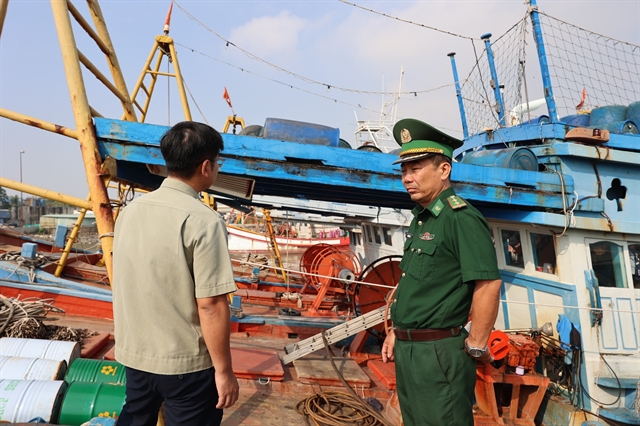 |
| Border guards at Cát Lở Port in Phước Thắng Ward in HCM City provide IUU (illegal, unreported and unregulated) awareness training to local fishermen. — VNA/VNS Photo |
HCM CITY — A three-year trial of electronic fishing logbooks on offshore vessels by HCM City has begun to deliver tangible results, helping modernise fisheries management, improve data transparency and strengthen control over fishing activities.
At Lộc An Port in Phước Hải Commune, dozens of fishing boats enter and leave the harbour each day, creating a busy and dynamic scene.
Alongside unloading seafood, the port has also become a key hub for supporting fishermen in the use of new technologies.
Many have approached port authorities on their own volition for assistance with installing applications and recording electronic logbooks before setting out to sea.
Huỳnh Văn Thìn, a fisherman in Phước Hải, said the transition was initially challenging as he was unfamiliar with using smartphones for record-keeping.
With hands-on guidance from local officials, however, he now uses the system confidently and finds it far more convenient and effective than traditional manual methods.
Lê Minh Nhật, another fisherman in the commune, said most fishermen are older and have limited formal education, making the adoption of digital tools difficult at first.
But thanks to detailed step-by-step guidance from local authorities and port staff, most are now able to use the electronic logbook system proficiently, he said.
He added that reporting fishing activities has become significantly faster and easier, allowing fishermen to submit data anytime and anywhere using mobile apps.
Since 2023, many fishing vessels more than 15 metres in length in Bình Châu Commune have been selected to pilot the system.
When boats dock, data is extracted directly from onboard devices or software, enabling authorities to quickly capture catch volumes, verify seafood origin and compile reports.
Nguyễn Trường Chín, a Bình Châu fisherman, said he had initially assumed the system would be complicated, but in practice it proved simple to use, eliminating the need for daily handwritten records.
Data could now be entered directly via mobile software and stored automatically, he said.
According to its Department of Agriculture and Environment, HCM City currently has 4,445 fishing vessels, including 80 offshore boats, as recorded in the pilot electronic logbook programme.
The initiative marks an important step in the digital transformation of the fisheries sector and supports more sustainable fisheries management.
The system has significantly reduced both the time required for data entry and the risk of errors associated with manual record-keeping.
Nguyễn Văn Huy, an employee at Lộc An Port, said fishermen now only need to carry out a few simple operations, including recording net deployment, retrieval and catch volumes, and the system automatically compiles the data when vessels arrive.
Cù Duy Cao Vỹ, a manager at the Bến Lội Bình Châu storm shelter anchorage, said the electronic logbook system enhances transparency in seafood traceability while enabling authorities to better monitor fishing output and activities.
Under a planned roadmap, electronic logbooks will become mandatory for vessels 24 metres or longer from July 1.
The requirement will extend to vessels of 15 metres from September 1, and 12 metres from January 1 next year.
A key advantage of the system is its ability to operate without mobile network coverage.
Fishermen can record data while at sea, and once vessels return to areas with signal, all information is automatically synchronised with the central system, ensuring continuity and accuracy.
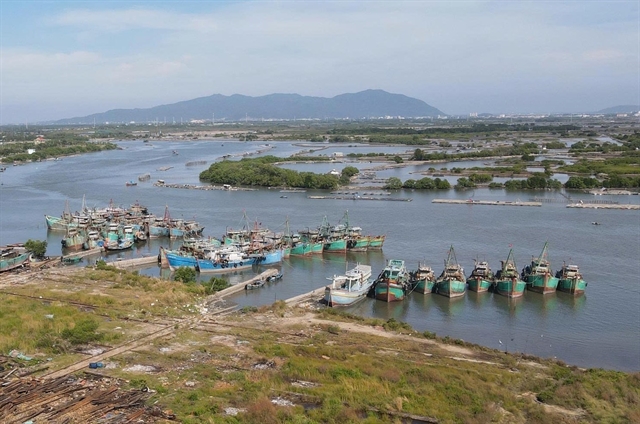 |
| Fishing vessels that fail to meet requirements in Long Hải Commune are gathered and anchored in a holding area for authorities to prevent them from going out to sea. — VNA/VNS Photo |
Phạm Thị Na, deputy director of the city's Department of Agriculture and Environment, said adopting electronic logbooks plays a crucial role in building a comprehensive seafood traceability system, from offshore harvesting to port landing, processing and export to demanding markets such as the European Union.
She added that the system enables fishermen to accurately report catch volumes and fishing locations, supporting more effective traceability and a shift towards modern, sustainable fisheries management.
The coordinated rollout of electronic logbooks, vessel monitoring systems and port-based catch control is expected to help Việt Nam address the European Commission’s “yellow card” warning on illegal, unreported and unregulated fishing after more than nine years of effort.
Removing the warning is seen as essential to expanding export markets and enhancing the value of Vietnamese seafood.
But the rollout does face certain challenges.
Some fishermen continue to struggle with digital skills, and the cost of equipment remains a concern.
Authorities are stepping up communication efforts, training programmes and technical support to ensure all fishermen can adopt the system effectively. — VNS
Society
 Society
 Society
 Society
 Society
 Society
 Society
 Society
 Society
 Society
 Society
 Society
 Society
 Society
 Society