 Society
University of Economics HCM City hosts international student research conference
1.
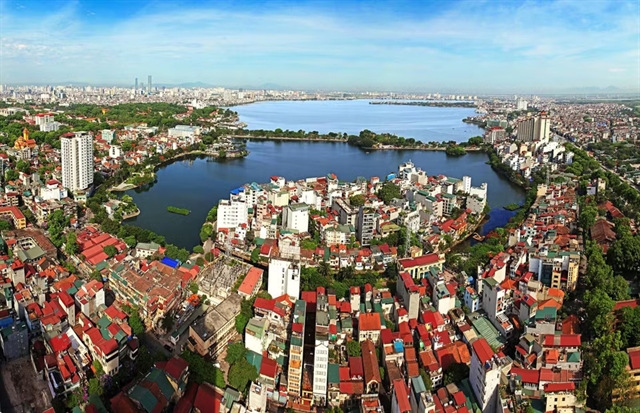 |
| Aerial view of Trúc Bạch and West lakes. — VNA/VNS Photos |
HÀ NỘI — Hà Nội has approved a sweeping 100-year master plan that aims to transform the capital into a green, smart and internationally competitive city while preserving its cultural heritage.
The Hà Nội People’s Committee issued Decision No. 2512/QĐ-UBND to adopt the long-term plan, which is broken into phases through 2035, 2045, 2065 and 2085. It places the Hồng (Red River) at the heart of the capital’s ecological and cultural backbone and promotes a multi-centre, multi-layered urban structure.
'Heritage – Identity – Creativity' is set out as the plan’s core value, with culture flagged as central to socio-economic development. The city will pursue rapid, sustainable growth tied to digital transformation, a green transition, a circular economy and climate adaptation, while maintaining security and social order.
Under the plan, Hà Nội will expand not only horizontally but also into underground and elevated spaces and a digital urban ecosystem. Underground space will be developed in multiple tiers for transport, utilities, groundwater storage and strategic facilities. Targets call for constructed underground space in the central area to reach at least 20 per cent of land area by 2045 and about 40 per cent by 2065.
The plan foresees an increase in land for urban construction to roughly 40–45 per cent of natural land area by 2035, 45–50 per cent by 2045 under a compact-green model, and about 55–60 per cent by 2065, with remaining land protected as green corridors, forests and ecological space.
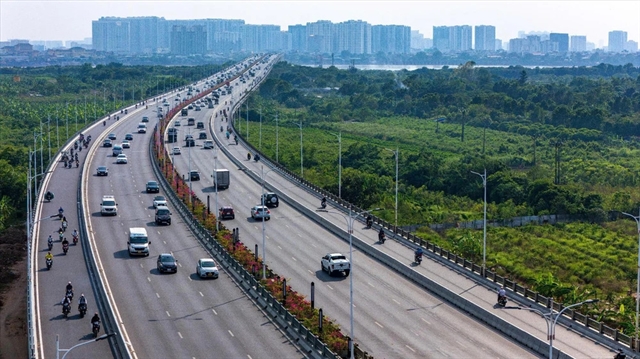 |
| Vĩnh Tuy Bridge, a new span that eases Red River crossings for residents. |
In the master plan, transport is a strategic priority.
Hà Nội will develop an integrated, multimodal system linking road, rail, air and waterways and accelerate national transport projects, ring roads and an expanded urban rail network. Authorities plan urban rail links to neighbouring provinces, including Bắc Ninh, Hưng Yên, Ninh Bình, Phú Thọ and Thái Nguyên.
The city will adopt Transit-Oriented Development (TOD), targeting 5–10 national inter-regional TOD centres, 20–30 city-level centres and 120–150 local TOD points to anchor new development around public transit.
Hà Nội also plans a second regional airport in the south, covering Ứng Hòa and Chuyên Mỹ communes, intended to be an international hub with a capacity of 30–50 million passengers per year and developed as an “airport city”. Hòa Lạc and Gia Lâm airports are to be studied for dual-use models.
The plan positions Hà Nội at the heart of international economic corridors linking China and Laos, including routes via Lạng Sơn, Lào Cai, Hải Phòng, Quảng Ninh and other northern provinces, boosting logistics, trade and innovation roles for the region.
Regarding cultural preservation, officials propose seeking UNESCO recognition for new heritage sites such as Bát Tràng craft village, the Cổ Loa complex, the Hương Sơn scenic area, Long Biên Bridge and the K9 – Đá Chông relic. Plans include restoring the Temple of Literature – Quốc Tử Giám – and creating interconnected cultural corridors, along with new museums, theatres and creative spaces.
Climate resilience measures include strict protection of green corridors, waterways and flood discharge zones, and rules to ensure riverside construction respects flood and ecological safeguards.
A major governance change will be the shift to data-driven urban management. Hà Nội plans a 3D urban spatial database and a digital twin, and will deploy artificial intelligence and big data to monitor land use, construction compliance and infrastructure. The plan calls for a centralised investment management system to increase transparency.
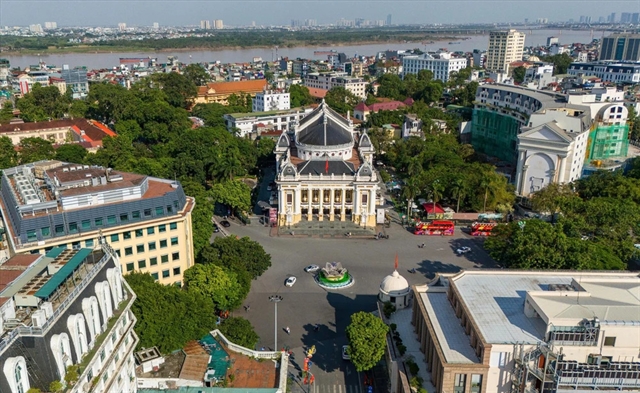 |
| The Hanoi Opera House, an architectural landmark and performing arts venue. |
The city's Department of Planning and Architecture is tasked with publicising the plan, preparing implementation steps and reviewing existing projects for alignment.
The People’s Committee ordered that projects under audit or investigation may proceed only after compliance issues are resolved, and warned against legalising past violations.
Urban planners and experts say the approval is a strategic step that opens new development space for Hà Nội and lays the groundwork for long-term, innovation-led, climate-resilient growth while preserving the city’s cultural identity. — VNS
Society
 Society
 Society
 Society
 Society
 Society
 Society
 Society
 Society
 Society
 Society
 Society
 Society
 Society
 Society