 Society
University of Economics HCM City hosts international student research conference
1.
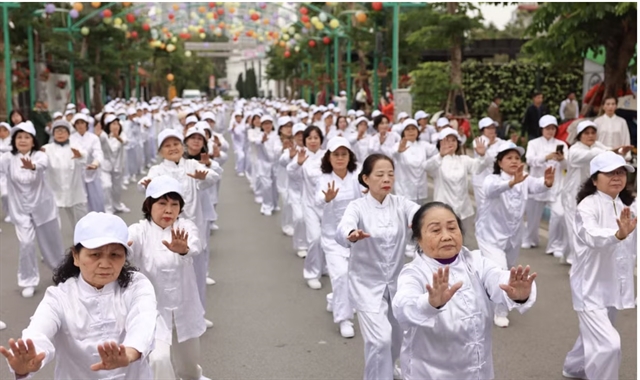 |
| The elderly people will be a resource for development if they are well cared for and offered opportunities. — VNA/VNS Photo |
HÀ NỘI — As Việt Nam’s population ages at one of the fastest rates in Asia, experts and policymakers are increasingly viewing the trend not only as a social challenge but also as an opportunity to develop a growing silver economy centred on health care, quality of life and the continued contribution of older people to society.
Pressure of an ageing population
According to statistics, Hà Nội has more than 1.4 million elderly people, accounting for 16.3 per cent of the city’s total population.
By 2025, the average life expectancy of residents had reached 76.6 years. The city’s population is ageing rapidly, coupled with low and declining birth rates that are causing the ageing index to rise even faster.
Experts believe that population ageing is having a broad impact on sectors ranging from social welfare to the labour market, health care and social services.
Therefore, it is necessary to accurately identify and assess the challenges and develop appropriate solutions to ensure sustainable socio-economic development, maintain social security and improve people’s quality of life.
Associate Professor Dr Bùi Thị An, chairwoman of the Hà Nội Women Intellectuals Association and director of the Institute of Resources, Environment and Community Development, told hanoimoi.vn that Việt Nam is entering a demographic transition period at one of the fastest rates in Asia.
Since 2011, Việt Nam has officially entered the period of population ageing and is expected to become an aged population nation by 2026, An said.
“Notably, Việt Nam is experiencing a situation of ‘getting old before getting rich’. The ageing rate is increasing but social security, economic accumulation, and support systems are insufficient to meet new needs,” said An. “In Hà Nội alone, the rate of population ageing is faster than the national average.”
However, instead of viewing the elderly as a burden on society, many countries have been tapping into opportunities offered by the silver economy, a potential market built around the needs and capabilities of older people, she said.
Việt Nam, in general, and Hà Nội in particular, has the opportunity to transform the challenge of an ageing population into a key driver of economic growth if appropriate strategies are developed and the potential is properly utilised.
The expert said the silver economy is an economic ecosystem designed to serve and harness the potential of older people, helping them become not only consumers but also a productive force.
The main pillars of the silver economy include health care, long-term care and elderly services; technologies supporting older people, such as health and wellness technology and smart homes; finance and retirement insurance; tourism, culture and entertainment for the elderly; employment and the development of a knowledge-based economy for older people.
“Among these pillars, creating jobs and providing a knowledge-based economy is the most important,” said An.
“The elderly are still capable of participating in knowledge-based economic activities such as consulting, teaching, or part-time work, thereby contributing not only to economic development but also maintaining their autonomy and self-worth.”
Developing the silver economy
An innovative aspect of the silver economy model is the shift from a passive welfare mindset to a resource exploitation mindset, viewing the elderly not only as people needing care but also as a valuable resource contributing to socio-economic development.
According to An, for Hà Nội to become a national centre for the silver economy, the city needs to implement solutions such as developing a network of elderly care facilities, building age-friendly cities and integrating silver economy elements into urban planning and development.
Agreeing with this view, Deputy Director of the Hà Nội Department of Health Đinh Hồng Phong said that in the context of population ageing, the silver economy has become an irreversible trend aimed at meeting the needs of the elderly while contributing to economic growth.
In particular, following the Party Central Committee's directive in Resolution No. 72-NQ/TW on breakthrough solutions to strengthen the protection, care and improvement of people’s health, the city is focusing on piloting a daytime health care model for the elderly in communes and wards, which is expected to become operational in 2026, Phong said.
Accordingly, the model will provide comprehensive daytime health care services for the elderly, including health monitoring and management, primary health care, rehabilitation and physical therapy, nutritional care, psychological and social counselling and support, cultural and recreational activities to improve mental well-being, the application of information technology, electronic health records and remote monitoring support.
Hà Nội is prioritising the development of a diverse network of elderly care services based on community and home care, combined with a system of professional care facilities.
At the same time, the city is promoting socialisation by creating mechanisms to encourage private-sector participation in developing the silver economy, especially in the fields of healthcare, rehabilitation and support services for the elderly, he said.
Population ageing is a challenge, but also an opportunity for new development.
When older people are well cared for and continue contributing to society, they become a resource for sustainable growth.
Therefore, developing the silver economy has been identified as one of the city’s long-term directions to proactively adapt to the ageing population process, Phong said. — VNS
Society
 Society
 Society
 Society
 Society
 Society
 Society
 Society
 Society
 Society
 Society
 Society
 Society
 Society
 Society