 Society

Vietnamese Prime Minister meets Cambodian National Assembly President
1.
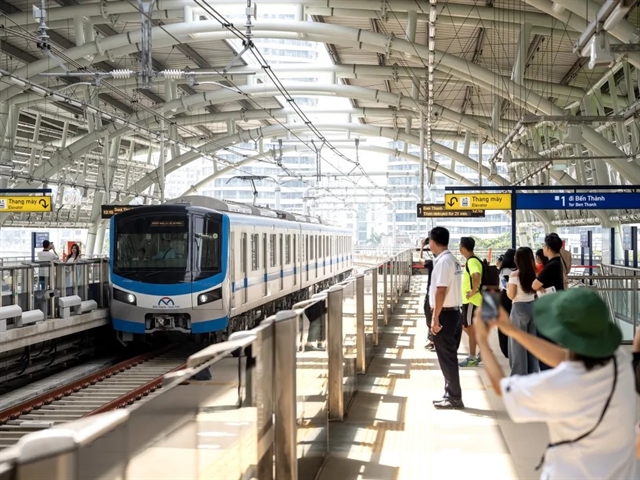
|
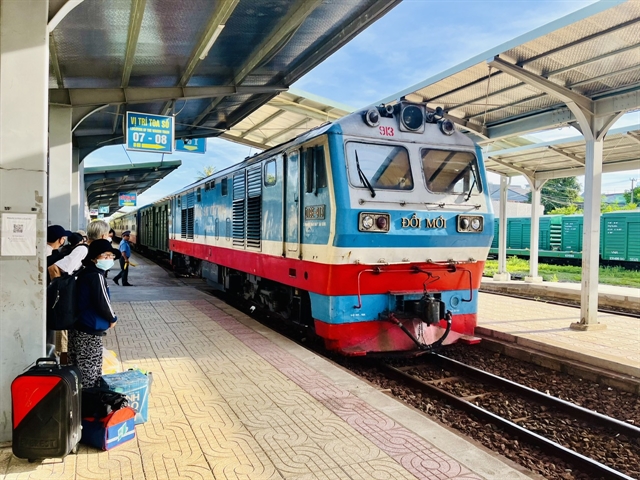
| Enhancing monitoring capacity and centralised operations has become an urgent requirement for the Việt Nam’s railway system. — Photo tcdulichtphcm.vn |
HCM CITY — A newly operational emergency response command centre is expected to improve monitoring, coordination and incident handling across Việt Nam’s railway system.
Việt Nam’s railway network stretches across diverse regions with complex terrain and weather conditions. In addition, the national network currently has nearly 4,000 level crossings between road and rail, posing an ever-present risk of incidents.
Enhancing monitoring capacity and centralised operations has therefore become an urgent requirement.
In implementing Resolution 57-NQ/TW on breakthroughs in science and technology development, innovation and national digital transformation, Việt Nam Railways Corporation has recently put into operation an Emergency Response Command Centre.
This is regarded as the “brain” coordinating responses to natural disasters and transport incidents across the entire system.
The centre operates all day and night, maintaining online connectivity with field units across the network, while also conducting supervision and surprise inspections of operations along the North–South railway line.
According to Chairman of the Members’ Council Đặng Sỹ Mạnh, the establishment and operation of the centre marks a step forward in the railway sector’s digital transformation, enhancing command, operational management and emergency response capacity.
“The application of modern digital equipment and real-time data transmission systems is expected to help railway leaders quickly update situations and make timely decisions in emergencies,” he stressed.
Recently, the Emergency Response Command Centre took charge of handling an incident in which a barge collision damaged the structure of Ghềnh Bridge, directly affecting train schedules across the line and requiring adjustments to operational plans.
Through centralised monitoring and coordination, response measures were swiftly developed, assessed and effectively implemented. The incident was resolved within just five days.
This comes as the country enters the peak travel period for the April 30 and May 1 holidays, when traffic volume surges and safety risks increase.
It is also the lead-up to the stormy season. With weather patterns becoming increasingly complex and unpredictable, natural disasters are no longer following traditional cycles but instead showing new, volatile patterns, often occurring suddenly.
This reality places higher demands on proactive response and incident management.
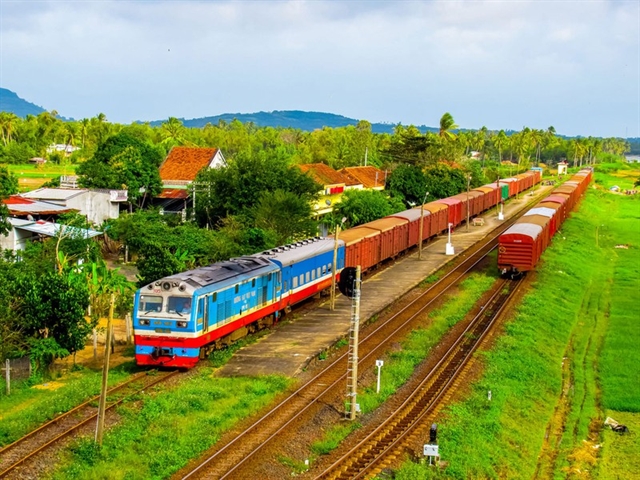
|
| Việt Nam Railways Corporation is considering the widespread deployment of early obstacle warning systems at complex crossings. — Photo tulieuvankien.dangcongsan.vn |
At present, the Emergency Response Command Centre not only handles emergencies but also supports the monitoring of daily operations across the network. From here, it is possible to track inspection activities, level-crossing guard operations, and infrastructure conditions at specific locations.
The centre integrates multiple monitoring and operational technologies. In the near future, Việt Nam Railways Corporation will continue upgrading the system to expand connectivity with relevant units and refine command procedures for rescue, relief and disaster response across the railway network.
For the corporation, science and technology, innovation and digital transformation are identified as key pillars of development.
Science and technology serve as tools to ensure safety and improve productivity, quality and efficiency. Innovation creates new value, models and methods. Digital transformation enhances transparency, optimises management and enables faster, data-driven decision-making.
The corporation has applied technology to manage, control and ensure railway traffic safety, including installing cameras in train operation control rooms; journey-monitoring and cab cameras on locomotives; cameras inside and outside guard houses at manned crossings; and cameras at automatic warning crossings connected to monitoring centres to support supervision, warning and violation prevention.
Currently, Việt Nam Railways Corporation is considering the widespread deployment of early obstacle warning systems at complex crossings.
These systems transmit signals directly to locomotives, enabling drivers to take early action and reduce accidents.
In practice, alongside challenges from terrain and weather, the railway network faces persistent risks due to approximately 4,000 road–rail crossings.
Statistics from the Việt Nam Railway Authority show that in the first four months of this year alone, 65 railway traffic accidents occurred, resulting in more than 60 deaths and injuries.
Notably, 50 per cent of accidents took place at road–rail crossings, including 42 per cent at unauthorised crossings and 10 per cent at legal crossings.
The main causes were identified as road users’ lack of attention and failure to comply with signals and signage when crossing railway lines.
From May 15, Government Decree No. 81/2026/NĐ-CP, dated March 19, 2026, on administrative sanctions in the railway sector will officially take effect.
The decree introduces several new provisions aimed at addressing and preventing violations that directly threaten railway safety.
It is expected to strengthen the effectiveness of state management in the railway sector and provide a solid legal basis for enforcing administrative penalties, ensuring the deterrent effect of the law.
As Việt Nam continues shaping and efficiently operating its railway system to support socio-economic development, ensuring railway traffic safety is not only the responsibility of the sector but also depends on public awareness.
Alongside communication efforts, infrastructure upgrades, signal modernisation, and enhanced monitoring and centralised operations will help minimise incidents and accidents, ensuring every train journey is safe and smooth. — VNS
Society
 Society
 Society
 Society
 Society
 Society
 Society
 Society
 Society
 Society
 Society
 Society
 Society
 Society
 Society