 Society

Singapore-headquartered Topview AI expands filmmaking tools as creators take AI into series and feature films
1.
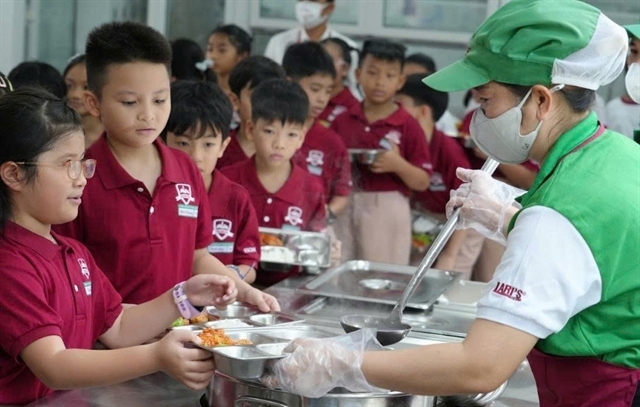 |
| Students line up for lunch at a school in central Việt Nam. School kitchens are required to strictly implement food safety standards during all stages of processing. — VNA/VNS Photo |
HCM CITY — Following multiple recent incidents concerning food quality on campuses, schools, suppliers and management authorities are facing mounting pressure to ensure food safety for schoolchildren.
Lê Đăng Thanh, a representative of the catering company Lê Thanh, said that summer is always the most challenging period of the year for food businesses. High temperatures significantly shorten food shelf life, while the risk of bacterial contamination increases.
“Just one lapse in preservation or a longer-than-normal transportation time can easily cause food to spoil. This forces us to tighten our processes even further, from ingredient selection to processing and delivery,” he said.
Thanh added that the cost of ensuring food safety also rises sharply during the hot season due to stricter preservation and control measures.
HCM City is entering its hottest season, which is also when the risk of food poisoning and gastrointestinal diseases increases significantly, especially for students.
Dr Lê Đình Quang, deputy head of the endoscopy and functional examination department at Gia Định People’s Hospital in HCM City, explained that the high temperature creates favourable conditions for bacteria, viruses and parasites to multiply rapidly.
“Food can spoil very quickly in hot weather if not stored properly. Even a short time left at room temperature allows bacteria to multiply rapidly, increasing the risk of illness when consumed,” he said.
“In addition, high temperatures can lead to dehydration and electrolyte imbalance, causing fatigue and weakening the immune system. This makes the body more vulnerable to foodborne pathogens.
“Young children, the elderly, pregnant women and outdoor workers are at higher risk. When infected, these groups often experience more severe symptoms and slower recovery.”
In school settings, Quang noted that the large volume of meals served carries inherent risks if any stage of the process falls short of hygiene standards. Food in school kitchens must therefore be strictly controlled from preparation to portioning, particularly in terms of storage time and temperature.
In addition to using safe ingredients, food businesses also have to invest in temperature control equipment and storage, specialised transport vehicles and supervisory personnel. Testing procedures must also be conducted more frequently to reduce risks.
These measures mean their costs can double compared to normal weather conditions.
Current price competition in the market means not all businesses have the resources to invest properly. In some cases, suppliers may opt to cut costs to secure contracts.
However, recent incidents regarding food safety mean food suppliers must heighten their vigilance.
Đỗ Mộng Hà, director of the food supply company Lengo Việt Nam, said: “Even a small incident can affect a company’s reputation extensively. We have to raise our standards to a higher level than before.”
Many food business owners have also expressed concerns about the lack of a comprehensive monitoring system. They argue that even with inspection procedures in place, the risk of problems persists if there is no coherence between stages like processing and transporting.
In this context, industrial catering businesses are hoping that new quality control initiatives, such as the 'Tick xanh trách nhiệm' (green tick of responsibility), will help create a more transparent playing field.
As a school meal supplier, Hà said her business hopes to see concrete control mechanisms throughout the entire food supply chain.
Once standards are applied uniformly and publicly monitored, businesses can confidently select clean, traceable ingredients to serve students, while reducing unhealthy price competition, she said, adding that this also helps build long-term trust with schools and parents. — VNS
Society
 Society
 Society
 Society
 Society
 Society
 Society
 Society
 Society
 Society
 Society
 Society
 Society
 Society
 Society