 Life & Style
Industry and trade sector puts technology into practice
1.
|
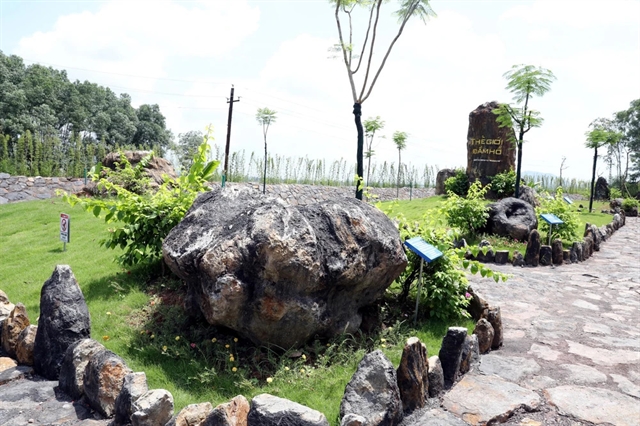
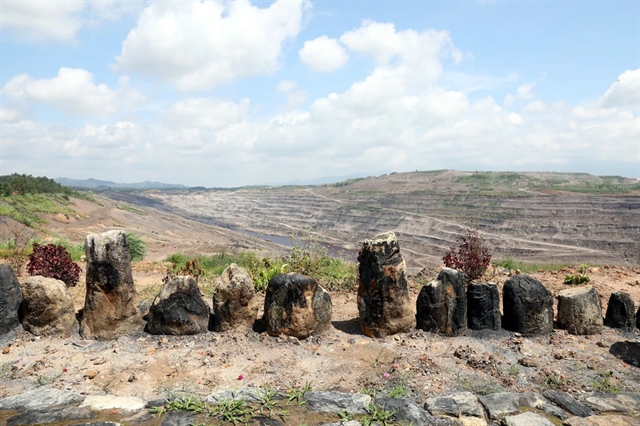
| A 30-million-year-old fossilised tree trunk discovered during coal mining operations in Na Dương Basin, Lộc Bình Ward. — VNA/VNS Photos Văn Đạt |
LẠNG SƠN — Beneath the limestone mountains of this northern province lies a hidden world shaped over millions of years.
Vast cave systems, fossil-rich basins and untouched karst landscapes are now drawing a new wave of travellers – those seeking not just scenery, but discovery.
Spanning more than 4,800sq.km, the UNESCO Global Geopark in Lạng Sơn is increasingly seen as a 'sleeping treasury'. What was once largely unexplored is now being carefully awakened, as the province positions adventure tourism at the heart of its development strategy.
Awakening a hidden treasury
Initial surveys indicate that Lạng Sơn is home to around 200 caves, including 51 identified as key geological heritage sites requiring protection.
Together, they form a complex natural system with strong potential for a wide range of activities, from caving and rock climbing to trekking, waterfall exploration and sinkhole discovery.
Some caves, such as Tam Thanh and Nhị Thanh, have already been opened to visitors and are among the province’s most popular attractions.
Others, like Keng Tao Cave, are gradually being introduced to more specialised adventure tourism markets, where authenticity and raw experience are key draws.
Deputy Director of the provincial Department of Culture, Sports and Tourism Lê Hải Yến noted that cave exploration tourism – though still new in Việt Nam – has shown a strong appeal to international travellers, particularly from Europe, the Americas and Australia.
“It is an environmentally friendly tourism model that offers high economic value while encouraging responsible travel,” she said.
To ensure sustainability, local authorities are taking a cautious, science-based approach. Codes of conduct have been introduced for visitors, requiring strict respect for cave environments, especially fragile stalactite systems and archaeological remains.
At the same time, the province is working with both domestic and international partners to survey, map and document cave systems. These efforts aim to build a comprehensive scientific database, define conservation zones, and ensure that tourism development does not come at the expense of heritage.
|
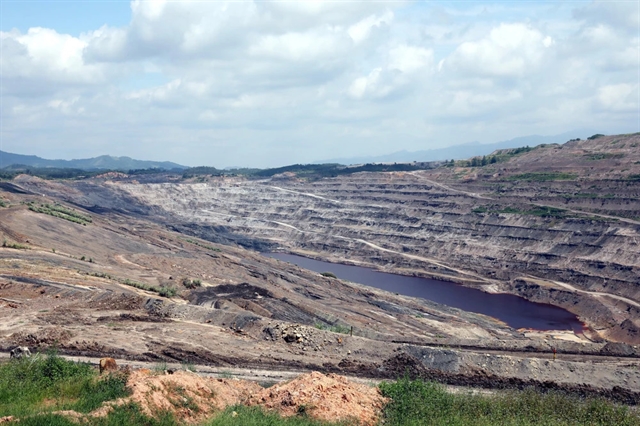
| The Na Dương Basin, formed around 40 million years ago, has yielded a rich fossil complex including rhinoceroses, anthracotheres, primates, crocodiles and dense plant remains, reflecting an ancient tropical ecosystem of rivers, lakes and wetlands. |
In Hữu Liên Commune, one of the most promising areas for cave tourism, nine caves have been earmarked for development, including Ốc, Trục Dùng and Rắn caves.
Recently surveyed Rắn Cave is expected to offer pristine, immersive exploration experiences for adventure seekers.
Importantly, local communities are not standing on the sidelines. They are becoming active participants – guiding tours, ensuring safety and acting as custodians of the caves. Their role as 'heritage guardians' is considered essential in protecting both natural formations and archaeological values.
Expanding global connections
Though still in its early stages, adventure tourism in Lạng Sơn is beginning to gain traction. Since the geopark received UNESCO recognition, the province has stepped up efforts to expand international cooperation and standardise its tourism offerings.
Head of the geopark management division under the provincial Investment, Trade and Tourism Promotion Centre Phạm Thị Hương described geotourism, particularly cave exploration, as a forward-looking development model.
“It creates strong linkages between culture, education, infrastructure, agriculture and environmental protection,” Hương said.
From detailed terrain mapping to meeting international safety standards, Lạng Sơn is taking a structured approach. The guiding principle is clear: development must go hand in hand with conservation, ensuring that natural and archaeological heritage remains intact.
Since 2024, the province has worked with a wide range of international partners, including organisations from Australia, the United States and France. These collaborations focus on product development, technical expertise and global promotion.
Nearly 30 survey missions have been carried out, leading to the creation of new tourism products. A major milestone came in late 2025 with the publication of detailed maps for Khuôn Bồng Cave (in Vũ Lễ Commune) and Ngườm Moóc Cave (in Bình Gia Commune) – tools that not only support conservation but also serve as blueprints for designing professional adventure tours.
|
| A panoramic view of the Na Dương Basin, where geological layers reveal millions of years of natural history. |
Private enterprises are also playing an increasingly important role. Việt Nam Expeditions, for instance, has established operations in Hữu Liên Commune and launched adventure experiences such as rock climbing and abseiling at Yên Sơn’s 'heaven’s gate'.
Since early 2025, the company has welcomed more than 1,000 visitors, an encouraging signal of growing demand.
International experts have also highlighted the region’s potential. A member of the US National Speleological Society noted that caves in Hữu Liên possess remarkable geomorphological value and remain largely untouched, though raising public awareness will be key to long-term preservation.
Towards a sustainable signature
Alongside development, conservation and global outreach remain top priorities. Cooperation agreements with international cave associations are helping Lạng Sơn strengthen its mapping systems, refine policies and promote its geological heritage to the world.
Looking ahead, the province plans to upgrade infrastructure and safety conditions at key sites such as Vượn, Nước and Ngườm Moóc caves. Warning systems – including water level indicators and rockfall alerts – are being installed to better protect visitors.
This direction is closely aligned with Resolution No. 80-NQ/TW of the Politburo of the Communist Party of Việt Nam on developing tourism into a spearhead economic sector, which underscores the importance of sustainable growth, heritage conservation and deeper international integration.
By positioning adventure tourism as a core offering, Lạng Sơn is not only unlocking the value of its geological assets but also contributing to a broader national strategy.
With careful planning, growing partnerships and a commitment to preservation, the province is steadily shaping a distinctive identity, one where exploration goes hand in hand with respect for nature, and where the underground world becomes a gateway to future growth. — VNS
Life & Style
 Life & Style
 Life & Style
 Life & Style
 Life & Style
 Life & Style
 Life & Style
 Life & Style
 Life & Style
 Life & Style
 Life & Style
 Life & Style
 Life & Style
 Life & Style
 Life & Style