 Life & Style

OPPO Find X10 Pro Max to Debut Globally with MediaTek’s 2nm Flagship Dimensity 9600 Pro
1.
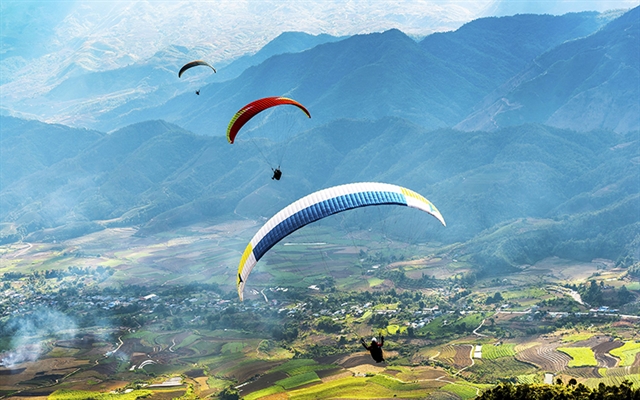 |
| Adventure tourism in Việt Nam is expanding rapidly. — Photo vietnamtourism.gov.vn |
HCM CITY — With adventure travel on the rise, Việt Nam has introduced its first national technical standard to address safety concerns and establish a unified framework for managing hiking and trekking activities.
Adventure tourism in Việt Nam is expanding rapidly, attracting young travellers and international visitors with activities such as trekking, caving, kayaking and paragliding.
However, behind these inspiring journeys lie persistent challenges in management and safety.
The issuance of the national technical standard TCVN 14602:2026 – ISO 3021:2023 is therefore considered a significant step towards standardising adventure tourism, particularly in hiking and trekking.
Risk assessment
Trần Hậu Ngọc, vice chairman of the National Standards – Metrology – Quality Committee, emphasised that the national standard on “Adventure tourism – Hiking and trekking activities – Requirements and recommendations” has officially been promulgated by the Ministry of Science and Technology.
This marks the first time Việt Nam has introduced a national standard specifically governing adventure tourism activities.
The standard sets out requirements for adventure tourism activities related to hiking and trekking, covering the safety of participants, group leaders and assistants.
One of its key provisions is the requirement for risk assessment prior to organising any activity, including surveys of terrain, weather conditions, route difficulty and emergency response capability.
This assessment applies not only to organisers but also to the classification of route suitability for different groups of travellers.
The introduction of TCVN 14602:2026 establishes, for the first time, a formal framework for hiking and trekking in Việt Nam, particularly in the context of a series of recent mountain-climbing incidents.
Once implemented, the standard is expected to help control risks and steer the adventure tourism market towards a safer and more sustainable direction.
In recent years, the sector’s rapid growth has taken place in the absence of a unified standards framework, effectively shifting risks onto participants.
As a result, when incidents occur, determining responsibility becomes complex, often falling outside the direct management scope of tourism enterprises.
The application of the new standard is expected to bring significant changes for both organisers and destinations.
The standard also clearly defines criteria, including characteristics and levels of difficulty, for classifying hiking and trekking routes as tourism products. In the long term, TCVN 14602:2026 is expected to act as a “market filter”, promoting greater professionalism in the sector.
Operators that meet the standards will gain a competitive advantage, while poorly managed activities are likely to be phased out.
A notable new requirement is the strict criteria regarding the professional qualifications and continuous competency development of group leaders and guides.
They are not only responsible for leading routes but also for managing risks on-site, ensuring that participants are properly informed rather than embarking on journeys without adequate preparation.
According to Phạm Hải Quỳnh, director of the Asian Tourism Development Institute (ATI), the new standard will shift competition among travel companies away from price towards “safety indicators” and “levels of professionalism” aligned with ISO standards.
He added that regulatory authorities should establish a roadmap to make compliance with TCVN a mandatory condition for licensing or renewing adventure tourism business operations, thereby reducing risks for travellers while encouraging more professional, sustainable and environmentally responsible practices.
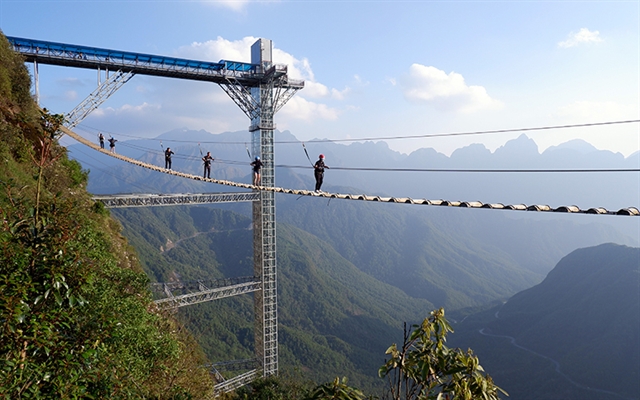 |
| Việt Nam’s growing tourism sector and its dramatic natural landscapes suited to adventure travel. — VNA/VNS Photo |
Standardising the legal framework
In recent years, adventure tourism has attracted increasing interest from travellers. However, many tours have been organised in an ad hoc or semi-professional manner, lacking standardised procedures for risk assessment, safety guidance and weather monitoring.
This has led to incidents where travellers became lost, exhausted or injured during their journeys, underscoring the urgency of implementing TCVN 14602:2026 – ISO 3021:2023.
Quỳnh noted that the issuance of a national standard for adventure tourism represents a major advancement, providing a scientific and legal basis for businesses to review and improve their operations, particularly in ensuring the safety and well-being of travellers.
The adoption of such standards will help position Việt Nam as a professional, safe and reliable adventure tourism destination in the eyes of international visitors.
Importantly, the standard extends beyond tour operators to include third parties, requiring safety control across the entire service chain.
Equipment suppliers, local transport providers and small businesses at destinations must all adhere to the standard, forming a comprehensive “safety value chain” that reduces risks at every stage.
It also reflects a shift in management thinking, requiring enterprises to demonstrate continuous competency records for group leaders and maintain equipment inspection logs.
Tourism experts note that with Việt Nam’s growing tourism sector and its dramatic natural landscapes suited to adventure travel, attracting international visitors to experience such activities is a promising direction.
The standardisation of tourism operations not only enhances safety but also contributes to the professionalisation of the industry. With standardised procedures in place, businesses can develop higher-quality tourism products, while travellers can make more informed and safer choices.
The consistent application of TCVN 14602:2026 is expected to establish a unified management framework for adventure tourism, enabling Việt Nam to align more closely with international standards in this field.
This is not only a safety solution but also a foundation for sustainable tourism development, balancing economic benefits with nature conservation.
The standard places particular emphasis on environmental protection. Trekking activities must minimise their impact on ecosystems, avoid littering, refrain from damaging natural landscapes and adhere to the principle of “leave no trace”.
This is especially important as many eco-tourism destinations are facing increasing pressure from rapidly growing visitor numbers. — VNS
Life & Style
 Life & Style
 Life & Style
 Life & Style
 Life & Style
 Life & Style
 Life & Style
 Life & Style
 Life & Style
 Life & Style
 Life & Style
 Life & Style
 Life & Style
 Life & Style
 Life & Style