 Society
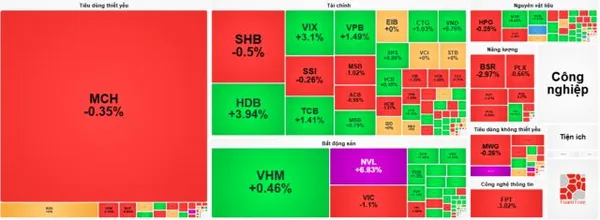
VN-Index ends lower despite liquidity hit over $1 billion
1.
|
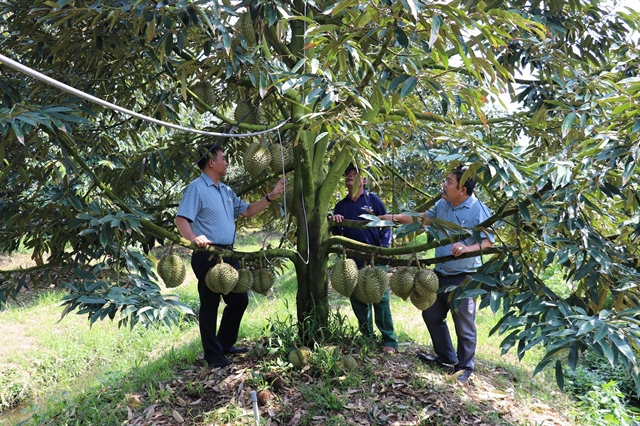
| Durian farmers in the western part of Đồng Tháp Province strictly comply with regulations on planting area codes. — VNA/VNS Photo Hữu Chí |
ĐỒNG THÁP — The Mekong Delta province of Đồng Tháp is tightening control over planting area and packing facility codes as it looks to improve fruit quality and expand exports.
Lê Hà Luân, director of the provincial Department of Agriculture and Environment, said authorities are stepping up both the issuance and monitoring of these codes, alongside stricter food safety checks in export-focused growing areas.
The aim is straightforward: improving quality, ensuring traceability and meeting increasingly demanding import standards.
Đồng Tháp, the country’s largest fruit-producing province, now has 134,903ha under fruits and produces 517,142 tonnes annually.
Durian accounts for more than 32,100ha, with output nearing 557,000 tonnes.
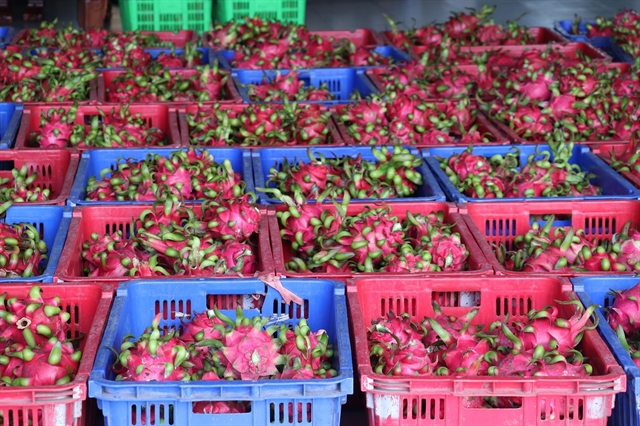
Jackfruit covers about 24,600ha, producing roughly 437,400 tonnes, while dragon fruit is grown on around 9,400ha, with an output of 236,000 tonnes.
To stay competitive, the Cửu Long Delta province is expanding the use of technology in farming, planting area and packing facility codes, and applying both VietGAP and GlobalGAP standards.
So far, 1,500 planting area codes have been approved for exports.
On April 22, Đồng Tháp shipped its first batch of fresh pomelo – 940.5kg sent by air to Australia – marking a step forward in meeting international standards and reaching overseas consumers.
These codes are already making a difference on the ground, helping co-operatives access markets more easily.
Nguyễn Trung Quý, chairman of the Hung Thinh Phat Clean Agriculture Co-operative in Tân Thuận Bình Commune, said the co-operative has secured six planting area codes to export dragon fruit to the US, China, Australia, and New Zealand.
Five of the codes cover red-flesh varieties and one applies to white-flesh fruit.
Since obtaining them, the co-operative has found it easier to connect with both domestic and international buyers and secure stable outlets through safe, sustainable supply chains.
That has, in turn, helped provide more reliable markets for members and local farmers, Quý said.
|
| Đồng Tháp Province’s dragon fruit has been granted 33 planting area codes for export to China and 92 for shipments to Japan, the US, South Korea, and Australia. — VNA/VNS Photo Hữu Chí |
For durian, Đồng Tháp has developed concentrated growing areas in communes which have embankments to control flooding in the Mekong River during the rainy season in the west covering more than 32,100ha.
Mỹ Thiện Commune alone has 2,000ha under the strong-smelling fruit.
Phùng Thanh Quang, chairman of the commune People’s Committee, said the crop grows well in the local soil.
In recent years, some households have earned around VNĐ1 billion (US$38,000) per hectare annually, he said.
Local authorities plan to work more closely with businesses and co-operatives to expand planting area codes further.
They are also promoting better farming practices, including the safe use of plant protection products, to ensure food safety and support sustainable exports, he said.
To better tap the potential of speciality crops, the province is focusing on transferring intensive farming techniques and encouraging farmers to adopt more science-based methods to lift yields.
It is also promoting off-season production to spread harvests more evenly and avoid supply gluts during peak periods.
Looking ahead, the province plans to expand concentrated growing areas for key crops linked to traceability systems, supporting the shift towards official export channels.
The Department of Agriculture and Environment is accelerating the rollout of new planting area codes for export-oriented crops, while maintaining strict oversight of existing ones to meet market requirements and improve production and distribution efficiency. — VNS
Society
 Society
 Society
 Society
 Society
 Society
 Society
 Society
 Society
 Society
 Society
 Society
 Society
 Society
 Society