 Politics & Law
Vietnamese Prime Minister meets Cambodian National Assembly President
1.
|
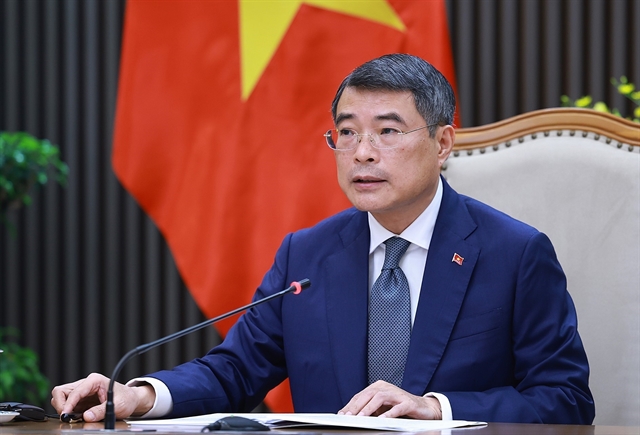
| Prime Minister Lê Minh Hưng during the phone talks with his New Zealand counterpart Christopher Luxon on Wednesday. — VNA/VNS Photo |
HÀ NỘI — Prime Minister Lê Minh Hưng and his New Zealand counterpart Christopher Luxon pledged to strengthen economic, trade and investment cooperation, aiming to raise bilateral trade turnover to US$3 billion during phone talks on Wednesday.
PM Hưng congratulated PM Luxon on New Zealand’s positive achievements in maintaining macro-economic stability and ensuring social welfare.
He also thanked PM Luxon for his important contributions to bilateral relations, especially the elevation of ties to a Comprehensive Strategic Partnership in February 2025.
Once again congratulating PM Hưng on being elected by the National Assembly to his new position, PM Luxon affirmed that Việt Nam is one of New Zealand’s priority partners and expressed his desire to further strengthen the Comprehensive Strategic Partnership.
He also congratulated Việt Nam on its impressive development as one of the fastest-growing economies in the region.
PM Hưng said he highly valued New Zealand as a trusted partner that had supported Việt Nam from an early stage in English-language training, human resource development and official training programmes, as well as providing development assistance in important areas such as agriculture, climate change response and disaster risk management.
Based on strong political trust and an effective partnership, the Vietnamese leader proposed that the two countries focus on implementing six major orientations in the future.
Both sides said they would continue consolidating political trust through increased delegation exchanges, high-level contacts and bilateral cooperation mechanisms, while promoting more substantive defence and security cooperation through enhanced exchanges and capacity building in maritime, naval and maritime security fields.
The two PMs also agreed to create more favourable conditions for each country’s key products to access each other’s market and to closely coordinate in effectively implementing free trade agreements to which both countries are parties, including the ASEAN–Australia–New Zealand Free Trade Agreement (AANZFTA), the Comprehensive and Progressive Agreement for Trans-Pacific Partnership (CPTPP) and the Regional Comprehensive Economic Partnership (RCEP).
These efforts would help strengthen each country’s resilience and economic self-reliance and improve their ability to cope with current global uncertainties, the leaders said.
The New Zealand Prime Minister also said he highly appreciated Việt Nam’s role as rotating chair of the CPTPP in 2026 and affirmed support for Việt Nam in successfully fulfilling this role.
The two leaders also shared their countries’ measures to stabilise macro-economic conditions and respond to fuel price fluctuations, including fiscal policies and appropriate support measures for businesses and citizens.
They also pledged to strengthen cooperation in climate change response, energy transition and sustainable agriculture, while promoting low-emission farming models and the development of renewable energy, particularly wind and solar power.
PM Hưng proposed that New Zealand continue expanding scholarships for Vietnamese students and promote stronger links between universities and research institutes of the two countries.
He also called for joint efforts to soon establish direct flights and more convenient connecting routes between Việt Nam and New Zealand to facilitate travel and people-to-people exchanges.
Both sides expressed concern over current complex developments negatively affecting the economies of countries in the region, including Việt Nam and New Zealand, causing increases in fuel and transportation costs and disruptions to global supply chains.
The leaders also shared their assessments of the importance of dialogue, international cooperation and adherence to international law in addressing regional security challenges.
They agreed to continue exchanges and coordination on regional and international issues of mutual concern, strengthening political trust and contributing to peace, stability, cooperation and development in the region and the world. — VNS
Politics & Law
 Politics & Law
 Politics & Law
 Politics & Law
 Politics & Law
 Politics & Law
 Politics & Law
 Politics & Law
 Politics & Law
 Politics & Law
 Politics & Law
 Politics & Law
 Politics & Law
 Politics & Law
 Politics & Law