 Society
MoIT to build system to flag unusual fuel price movements
1.
|
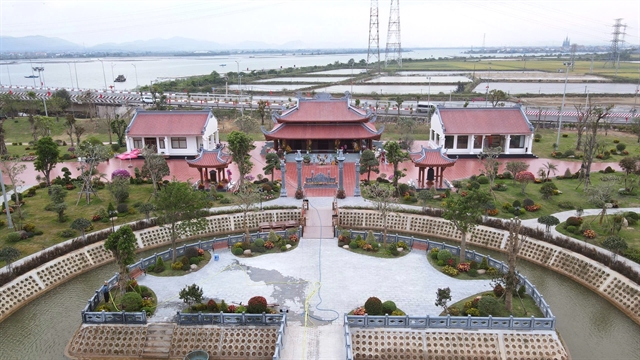
| Gianh ferry served as a vital transport artery, supplying the southern battlefields during the resistance war against the US.— VNA/VNS Photos |
HÀ NỘI — On the Gianh River today, with its low sandbanks and quiet boats, it is hard to imagine the stretch was once described as a “river of fire” in central Quảng Trị Province, where relentless bombing and mines turned a key supply route into one of the most dangerous crossings of the war.
Yet, veterans and residents still recall the devastation and the role of one man who helped keep the lifeline open during the resistance war against the US, contributing to the Spring 1975 victory.
Võ Xuân Khuể, now 80, was the motorboat operator who navigated and helped clear a channel through waters heavily mined and bombarded.
During the war, the Gianh ferry landing became a strategic choke point on the North–South transport route. Nearby Gianh port served as a departure point for clandestine sea routes carrying arms to the South. The area was therefore subjected to sustained bombing, underwater mines and aerial blockades aimed at severing the flow of personnel and supplies.
“There were days when the river wasn’t water anymore but fire and blood,” veteran Phạm Văn Thí of Battalion 45 told Tin Tức (News) newspaper.
Between 1965 and 1972, thousands of air raids targeted the ferry area. Mines laid on the riverbed turned the current into a deadly hazard and the destruction of the landing would have cut a vital supply line to southern battlefields.
Faced with these conditions, Khuể and his comrades improvised methods to clear the mines. Without specialised equipment, they initially used ropes with metal fittings to detonate explosives from a distance. When this proved ineffective, they adopted a far riskier approach, using fast motorboats to trigger mines and open a navigable channel.
Khuể volunteered for the first mission.
“Before leaving, the unit gave us three rice balls. We lit three incense sticks as a funeral rite,” he said.
“You had to floor the throttle, run very fast, ride the correct channel. If you lag a beat, you wouldn’t have a chance to come back.”
Each journey carried a high risk. At the Gianh crossing, 114 people were killed, including 78 ferry workers and staff.
He recalled an incident on August 14, 1967, when an explosion threw him into the river.
“They laid me in the middle of the boat. On each side were the bodies of two driver-soldiers who had just died,” he said, after comrades pulled him to safety.
Clearing mines was only part of the task. Escorting convoys of trucks carrying weapons across the river required navigating under frequent bombardment.
In late 1968, when a convoy halted under flares and rocket fire and its driver was killed, Khuể took control of the lead vehicle, drove it through the barrage and then returned to guide the remaining trucks across. Such actions helped maintain the flow of supplies to the front.
In 1972, Khuể was awarded the title Hero of the People’s Armed Forces.
“The commander just told me I’d been awarded the title. The reward was VNĐ180. I bought two pigs and some cigarettes to treat my comrades and took VNĐ20 home to my wife,” he said
|
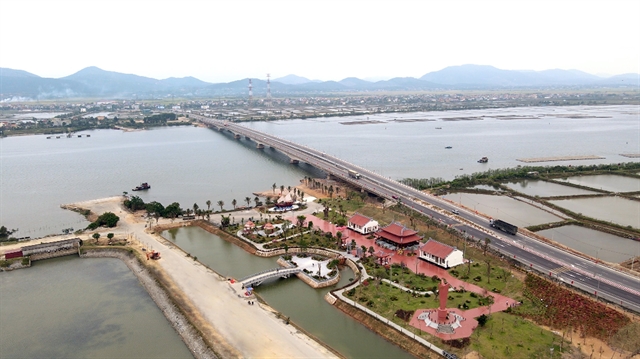
| Gianh ferry, a special national historical site. |
After reunification, Khuể remained at the Gianh ferry, moving from motorboat operator to transport official and later becoming the ferry chief. He married a local female guerrilla fighter and raised five children as the river gradually returned to the rhythms of peacetime.
In December 1998, the ferry staff and self-defence force at Gianh were awarded the title Hero of the People’s Armed Forces in recognition of their wartime service.
On November 27 that year, the opening of Gianh Bridge marked the end of the ferry’s historic role. Khuể piloted its final crossing, bringing to a close decades of operation through war and reconstruction.
More than half a century after national reunification, a return to the Gianh ferry site serves as a reminder that victory was shaped not only by major battles but also by the persistence of those who worked under constant threat to keep vital routes open.
The Gianh River continues to carry silt along its banks, as memory endures in a place where the legacy of conflict and the aspiration for peace and unity are passed from one generation to the next. — VNS
Society
 Society
 Society
 Society
 Society
 Society
 Society
 Society
 Society
 Society
 Society
 Society
 Society
 Society
 Society