 Society
Five fishermen rescued after boat catches fire in Quảng Trị
1.
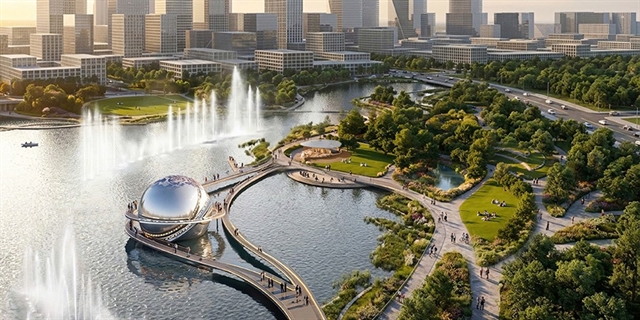 |
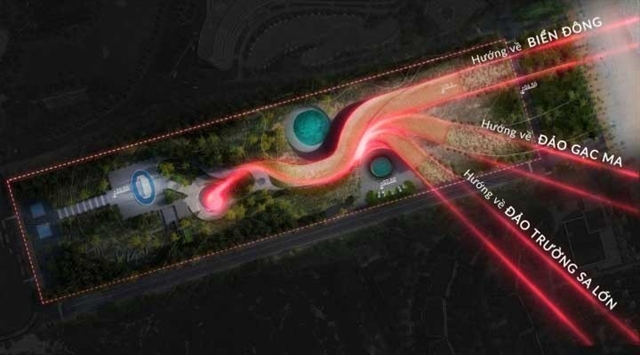
| Artist’s impression of HCM City’s central square project. — Photo courtesy of the developer |
HCM CITY — HCM City on Wednesday broke ground on a series of large-scale infrastructure projects and approved investment for the Cần Giờ International Transshipment Port, on the occasion of the 51st Liberation of the South and Reunification Day (April 30).
The launches include four key projects: a central square and administrative complex in Thủ Thiêm, a section of Metro Line 2 connecting Bến Thành and Thủ Thiêm, the renovation of the HCM Museum at Nhà Rồng Wharf, and the development of an international university urban area.
Authorities framed the timing as part of a broader effort to translate long-standing plans into tangible progress, while signalling policy momentum and reinforcing investor confidence in the country’s largest economic hub.
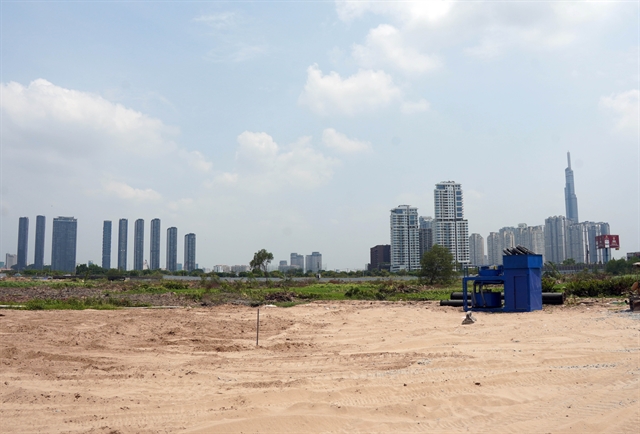 |
| The allotted land for the a central square and administrative complex in Thủ Thiêm. — VNA/VNS Photo |
The Bến Thành–Thủ Thiêm metro section, a six-km underground stretch with six stations, is seen as a critical link in the city’s future urban rail network, connecting the existing downtown with Thủ Thiêm and supporting longer-term connectivity between the under-construction Long Thành International Airport and Tân Sơn Nhất International Airport in HCM City.
The project is expected to be implemented under a public-private partnership model with total investment exceeding VNĐ46 trillion (US$1.75 billion).
Residents have expressed growing expectations for a more comprehensive metro system following the operation of first metro line, with the new section expected to significantly improve connectivity between the historic city centre and the Thủ Thiêm urban area.
Cần Giờ port to strengthen global supply chain links
Alongside urban transport, the city formally granted investment approval to a consortium including Vietnam Maritime Corporation, Saigon Port Joint Stock Company, and Terminal Investment Limited for the Cần Giờ International Transshipment Port project.
Covering about 571ha, the port will have a designed capacity of up to 21 million TEUs annually and be capable of handling ultra-large container vessels of more than 250,000 DWT.
The project carries an estimated investment of nearly VNĐ129 trillion (US$4.9 billion).
Officials say the port is expected to generate annual state budget revenue of VNĐ34–40 trillion and create between 6,000 and 8,000 jobs, while anchoring the development of logistics, free trade zones and associated financial and commercial services.
The project could mark a strategic step in positioning HCM City within global supply chains, reducing reliance on foreign transshipment hubs and strengthening Việt Nam’s role in regional maritime logistics, particularly in conjunction with the Cái Mép-Thị Vải port cluster.
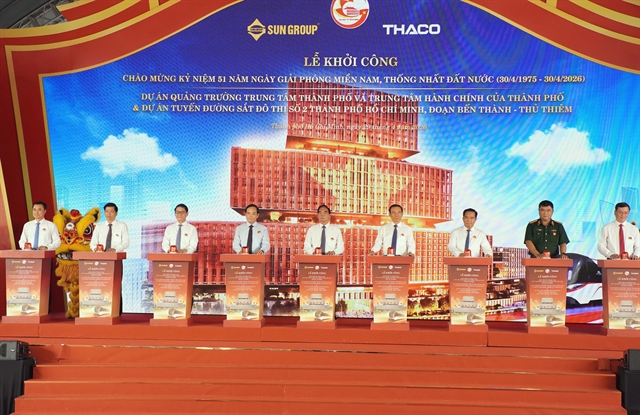 |
| The launching ceremony for a number of large-scale infrastructure projects in HCM City on April 29. — VNA/VNS Photo |
Meanwhile, the nearly 47-hectare central square and administrative complex in Thủ Thiêm is designed to consolidate government offices into a single hub, replacing the current dispersed model and improving administrative efficiency in a rapidly expanding metropolitan area of more than 14 million people.
The project is also expected to catalyse surrounding development, forming a new governance and financial core aligned with Thủ Thiêm’s role as a future international financial centre.
Other initiatives, including the upgrade of the Hồ Chí Minh Museum and the planned 880-hectare international university urban area, are aimed at preserving cultural heritage while strengthening the city’s education and innovation ecosystem.
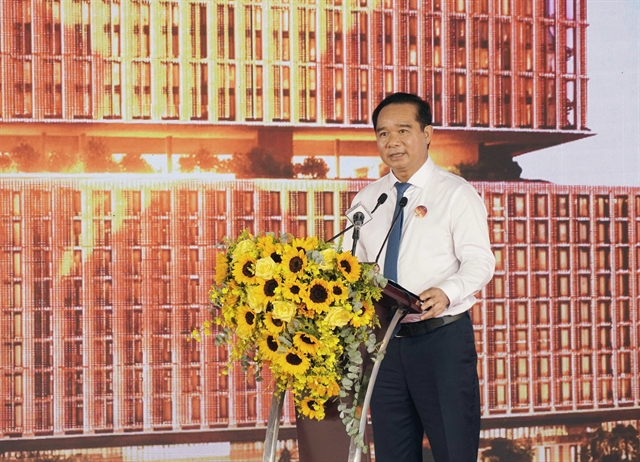 |
| Chairman of the HCM City municipal People’s Committee Nguyễn Văn Được spoke at April 29 event to launch a series of large-scale infrastructure projects in HCM City. — VNA/VNS Photo |
Speaking at the event, Chairman of the municipal People’s Committee Nguyễn Văn Được said the projects will help shape a megacity of regional and international stature. They are expected to establish a modern governance framework, improve public service delivery, develop a highly connected public transport system, and create cultural spaces that balance modern development with heritage preservation.
Implemented under public-private partnership (PPP) models, following build-transfer (BT) contracts, the projects involve major domestic private corporations such as Vingroup, Sun Group, and THACO. Their participation highlights the growing role of the private sector in HCM City infrastructure development. The projects are expected to generate strong momentum for the city’s next phase of growth. — VNS
Society
 Society
 Society
 Society
 Society
 Society
 Society
 Society
 Society
 Society
 Society
 Society
 Society
 Society
 Society