 Society

Vietnamese Prime Minister meets Cambodian National Assembly President
1.
|
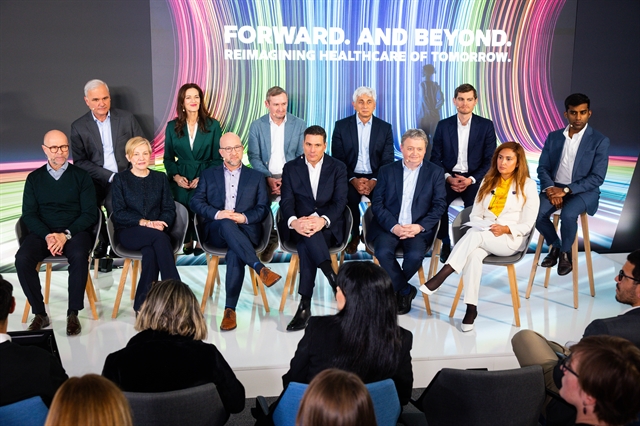
| Bayer announces its pharmaceutical growth strategy, with a strong focus on medical innovation, at Pharma Media Day 2026. — Photo Courtesy of Bayer |
Berlin, GERMANY — Leading scientific company Bayer has unveiled plans to resume mid-single-digit growth beginning in 2027, with a targeted margin expansion towards 30 per cent by 2030.
“With our unwavering focus on our strategic priorities and scientific rigour, we are seeing the rewards of our transformative strategy to drive growth,” Stefan Oelrich, board member of Bayer AG and president of the pharmaceuticals division, highlighted at Bayer’s Pharma Media Day 2026 in Berlin, Germany.
“Thanks to our strongest ever Pharma portfolio, our multimodal pipeline, and an increasingly AI-enabled operating model, we are on track to return to mid-single-digit growth from 2027 onwards, and to expand our margin from 2028 towards 30 per cent by 2030,” he said.
During the event, Bayer revealed five growth catalysts driving the future performance of its pharmaceuticals across areas including cardiology, transthyretin amyloidosis with cardiomyopathy (ATTR-CM), cariorenal diseases, oncology, and women’s health.
“Our intention is to be first- or best-in-class because patients deserve no less,” said Christine Roth, executive vice president, global head of product strategy and commercialisation and member of the pharmaceuticals leadership team at Bayer.
“The bold choices we’ve made over the past few years, along with our empowered teams, are accelerating innovation and delivering real impact for patients and for Bayer.”
Noteworthy advancements include Bayer's pursuit of novel therapeutic alternatives for secondary stroke prevention with the aim of offering improved benefit-risk profiles. By targeting factor XIa, a key protein in the blood coagulation pathway, Bayer aims to separate hemostasis from thrombosis, thereby preventing pathological clot formation while maintaining hemostasis integrity.
Furthermore, the company has introduced a therapeutic option in Europe for stabilising the transthyretin gene, mimicking a naturally occurring protective mutation that targets the root cause of ATTR-CM.
ATTR-CM is an often underdiagnosed, progressive, potentially fatal heart disease affecting an estimated 400,000 people globally.
The company's commitment to comprehensive care for chronic kidney disease and heart failure underscores its aspiration to play a pivotal role in advancing treatment for patients with heart failure and kidney disorders. Bayer's investigational heart and kidney drug, evaluated across five clinical trials involving diverse patient populations, tackles chronic mineralocorticoid receptor overactivation, a primary driver of organ damage.
In the oncology domain, Bayer is exploring androgen receptor inhibitors for metastatic hormone-sensitive prostate cancer, in addition to targeted alpha therapy for advanced cancer cases.
Additionally, Bayer is developing a covalent, irreversible Werner helicase inhibitor to target MSI-high cancer cell dependency, as well as investigating tyrosine kinase inhibitors to address HER2-mutant non-small-cell lung cancer.
For women’s health, the company has developed a treatment for vasomotor symptoms associated with menopause, aiming to alleviate symptom frequency and severity while enhancing sleep quality and overall well-being.
By antagonising key receptors, Bayer aims to enhance the quality of life for women experiencing menopause by 2030, as the global population of women experiencing menopause is forecast to increase to 1.2 billion.
At the event, Bayer representatives disclosed that three new products were authorised in 2025, alongside two new indications and six positive Phase III outcomes.
Christian Rommel, executive vice president, global head of research and development and member of the pharmaceuticals leadership team, affirmed: “In 2026, we anticipate several key milestones further validating our strategy of impact-by-innovation, such as precision medicine in our core therapeutic areas of cardiovascular and oncology, regenerative cell and gene therapies, as well as in molecular imaging.”
Of significance, Bayer at the event committed to enhancing research and development efficiency by 40 per cent by 2030.
“Our ambition is to leverage AI to increase R&D productivity by 40 per cent by 2030,” said Sai Jasti, senior vice president, head of data science & artificial intelligence, Bayer pharmaceuticals R&D.
“By integrating AI platform architecture with anonymised patient-centric data, our data scientists are empowered to maximise our in-house biologics portfolio, validate AI models, and scale solutions, thereby ultimately speeding up drug discovery.”
Bayer’s strategic partnerships with organisations such as Vanderbilt University Medical Centre in the US, FinnGen in Finland, and PRECISE in Singapore, leverage a global ecosystem that combines anonymised data and AI-driven analytics, expediting drug discovery in critical areas like cardiovascular and renal diseases.
Bayer has also recently signed a partnership with Cradle, a company whose platform is designed to compress development timelines and advance higher-quality molecules into clinical development with greater speed and precision.
Across the value chain, AI is increasingly becoming an integral part of Bayer’s operations. From end-to-end planning across products and markets worldwide to a next-generation suite of agentic tools, employees are empowered with AI-enabled ways of working. — VNS
Society
 Society
 Society
 Society
 Society
 Society
 Society
 Society
 Society
 Society
 Society
 Society
 Society
 Society
 Society