 Sci-Tech

Việt Nam, Russia seek stronger cooperation in policy research, training
1.
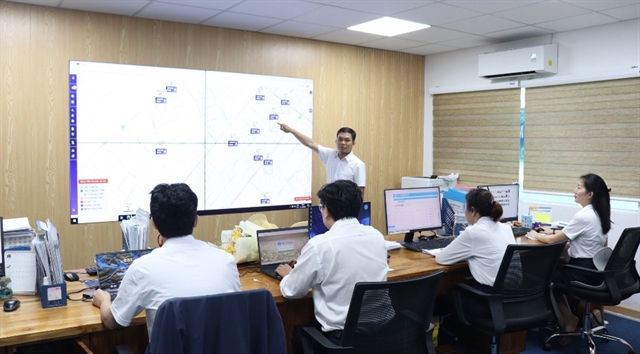 |
| Trần Văn Thiện, head of the GIS team at Bến Thành Water Supply JSC, works on a digital water management solution. His tech-led initiatives have helped significantly cut water loss in HCM City. — VNA/VNS Photo |
HCM CITY — From bustling fabrication workshops and high-tech factories to smart urban infrastructure systems, a powerful spirit of innovation is spreading among workers and engineers across HCM City.
Practical initiatives arising directly from the shop floor are boosting productivity, improving working environments, and driving national digital transformation, proving that workers are the core drivers of new economic value.
Inside the shipyard of VARD Vũng Tàu Co., Ltd., the roar of steel cutters and flashes of welding torches never cease.
Nguyễn Văn Lộc, Deputy Head of the company’s Hull Fabrication Department, is constantly searching for ways to make operations safer and more efficient.
He realised that welding propulsion thruster units for offshore wind farm vessels in cramped spaces posed high safety risks, and proposed fabricating the entire unit during the pre-assembly stage before final block integration.
His initiative has reduced workers' exposure to toxic welding fumes, improved ergonomics, and saved between 250 and 300 man-hours per vessel.
"We no longer have to climb as much or rework tasks. Most importantly, it is much safer and less physically demanding," said Lộc.
He also streamlined the fabrication process for Service Operation Vessels (SOV) and Commissioning Service Operation Vessels (CSOV) stern units weighing up to 80 tonnes.
This reduced crane-flipping and transport times, cut down on temporary welds, and significantly boosted production efficiency.
Trần Thanh Bình, Deputy General Director of VARD Vũng Tàu, said the engineers and workers directly on the line are the ones who understand the bottlenecks best.
"An initiative only truly holds value when it stems from the production site and is measured by concrete efficiency. The engineers and workers directly on the line are the ones who understand the bottlenecks best."
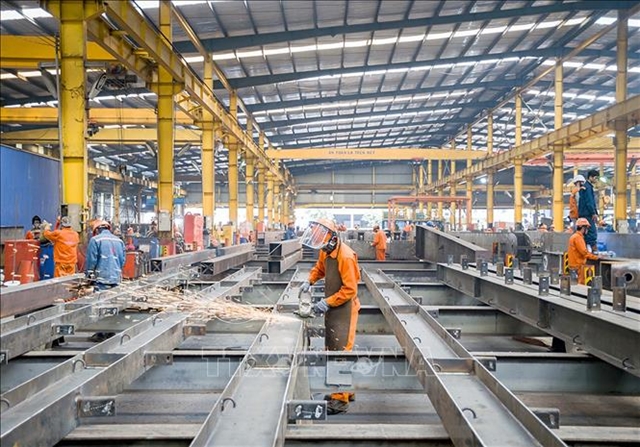 |
| Employees at work at the Đại Dũng Metallic Manufacture Construction Trade JSC based in An Hạ Industrial Park in HCM City. — VNA/VNS Photo Thanh Vũ |
Automation and digital applications
At Samsung HCMC CE Complex (SEHC), innovation is tightly linked with automation.
Over his ten years at the factory, Nguyễn Tăng Pháp, head of the Production Quality Improvement Department, has introduced numerous solutions to eliminate assembly line errors.
After identifying a risk of component mismatching during the assembly of television Liquid Crystal Modules (LCM), Pháp and his team built a 100 per cent material verification system prior to assembly.
This preventive measure cut defect rates from the outset, saving the company approximately VNĐ1.2 billion (over US$45,700) annually.
He also implemented automated software version controls on circuit boards and upgraded production pallets using local materials.
The total economic benefit of his initiatives is estimated at over VNĐ9 billion (nearly $342,900).
"Every time we find a solution that reduces assembly line defects or shortens a production step, I feel incredibly rewarded," Pháp said.
The most important thing is that the workers face less pressure, while the company cuts costs and improves product quality, he said.
Trần Văn Thiện, head of the Geographic Information System (GIS) team at Bến Thành Water Supply Joint Stock Company, has leveraged technology to solve operational challenges.
By relocating pressure-reducing valve controllers to ground level and introducing real-time remote valve management, his team has significantly reduced water loss and streamlined maintenance.
There are studies that must be done repeatedly before they can be applied, requiring patience and continuous learning, he said.
“Technical staff should not just operate the system but must always ask whether the work can be done better. Issues arising from reality offer us many ideas for improvement, and that is our greatest joy."
Worker creativity
According to the HCM City Federation of Labour, these success stories signal a major shift in the modern workforce.
In the era of digital transformation, workers are no longer just operating machinery—they are actively researching, improving technology, and optimising operations.
Lê Văn Minh, chairman of the Trade Union of the HCM City Power Corporation (EVNHCMC), said emulation movements for creative labour have yielded immense practical value, encouraging businesses to invest more heavily in worker-led R&D.
Similarly, at the Sài Gòn Water Corporation (SAWACO), hundreds of recognised initiatives have successfully reduced water loss and integrated digital management into daily operations.
Bùi Thanh Nhân, chairman of the HCM City Federation of Labour, said the city's Worker’s Month initiative is a strategic effort to foster continuous learning and technological adaptability.
"The Trade Union will continue to cooperate with businesses to launch digital initiative movements and process improvements on technological platforms, while discovering and nurturing key innovators among the workforce."
From minor adjustments on an assembly line to major digital overhauls in infrastructure management, workers are becoming the backbone of the nation's innovation ecosystem.
When innovation becomes a daily workplace habit, productivity rises through knowledge and technology—positioning the city and Việt Nam as sustainable leaders in the global digital economy. — VNS
Sci-Tech
 Sci-Tech
 Sci-Tech
 Sci-Tech
 Sci-Tech
 Sci-Tech
 Sci-Tech
 Sci-Tech
 Sci-Tech
 Sci-Tech
 Sci-Tech
 Sci-Tech
 Sci-Tech
 Sci-Tech
 Sci-Tech