 Society

Vietnamese Prime Minister meets Cambodian National Assembly President
1.
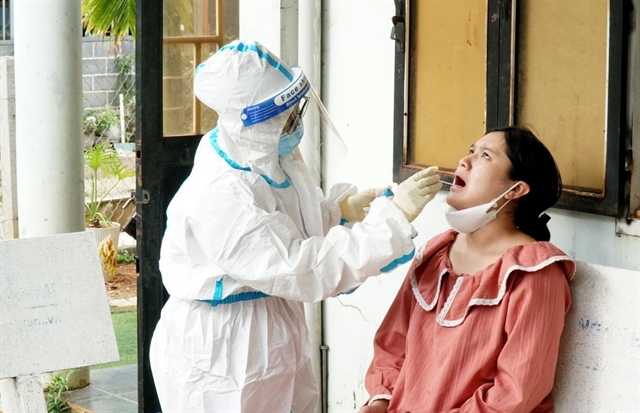 |
| A health worker collects a sample for testing meningococcal meningitis from a local person in Đắk Lắk Province. — VNA/VNS Photo |
ĐẮK LẮK — Two cases of meningococcal encephalitis have been reported in the central province of Đắk Lắk, including one case involving a child who died, according to the Đắk Lắk provincial Department of Health.
Specifically, the deceased child was N.D.T.Ê , two years old, residing in Quảng Phú Commune.
According to the family, the child was very young and stayed at home with her parents, not attending daycare. On April 23rd, she developed symptoms of a runny nose.
Two days later, she developed a high fever, vomiting, and lethargy and was taken to Thiện Hạnh General Hospital for examination. Then she was transferred to Tây Nguyên (Central Highlands) Regional General Hospital for treatment with the diagnosis of suspected sepsis and suspected meningococcal infection.
At the hospital, the patient was diagnosed with respiratory failure grade 2, suspected meningococcal sepsis, severe pneumonia, and suspected meningoencephalitis.
Despite intensive emergency care and treatment, due to the severity of her condition, the child passed away on April 26.
It is known that the child had not been vaccinated against meningococcal disease.
On April 27, N.Đ.Q – the child's uncle, residing in Tân An Ward, showed symptoms of cough and fatigue and was admitted to the Infectious Diseases Department of the same Tây Nguyên hospital for isolation and treatment.
This is also the second case testing positive for the meningococcal meningitis virus.
The provincial health sector is implementing sanitation, disinfection, and containment measures to limit the spread of the disease.
The Provincial Centre for Disease Control has urgently coordinated with the Cu M'gar Health Centre, the Buôn Ma Thuột Health Center, and the health stations of the communes and wards of Tân An, Quảng Phú, Tân Lập, Ea Kao, Thành Nhất, and Cuor Đăng to investigate, trace contacts, collect samples for testing, and administer prophylactic antibiotics to close contacts.
Simultaneously, instructions were given on environmental treatment using 0.5% Chloramin B solution at the patient's home and surrounding area.
Direct communication on meningococcal disease prevention and control was also implemented in the patient's residential area to raise public awareness.
Meningococcal meningitis is an acute infectious disease caused by the bacterium Neisseria meningitidis that can be transmitted through the respiratory tract via close contact such as coughing, sneezing, or sharing personal items.
The disease usually starts suddenly with symptoms such as high fever, headache, stiff neck, nausea, vomiting, hemorrhagic rash, and can quickly progress to sepsis, multi-organ failure, and be life-threatening if not detected and treated promptly.
To prevent the disease, people should proactively get vaccinated against meningococcal disease, especially young children. People should maintain personal hygiene and avoid sharing personal items.
Homes and classrooms need to be kept clean and well-ventilated. When there are suspected symptoms of illness, people should quickly go to a medical facility for examination, diagnosis, and timely treatment; and at the same time, limit close contact with others to avoid spreading the disease in the community. — VNS
Society
 Society
 Society
 Society
 Society
 Society
 Society
 Society
 Society
 Society
 Society
 Society
 Society
 Society
 Society