 Society
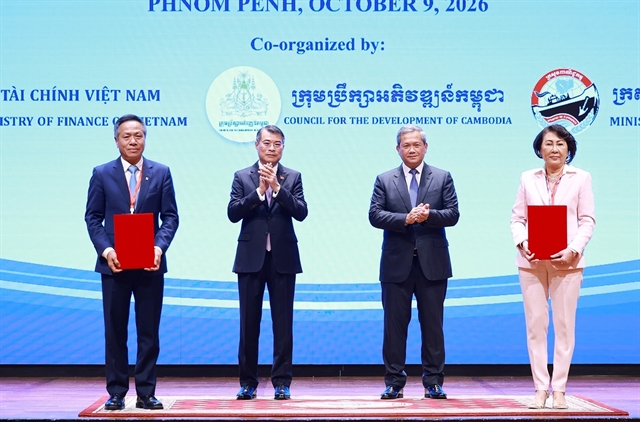
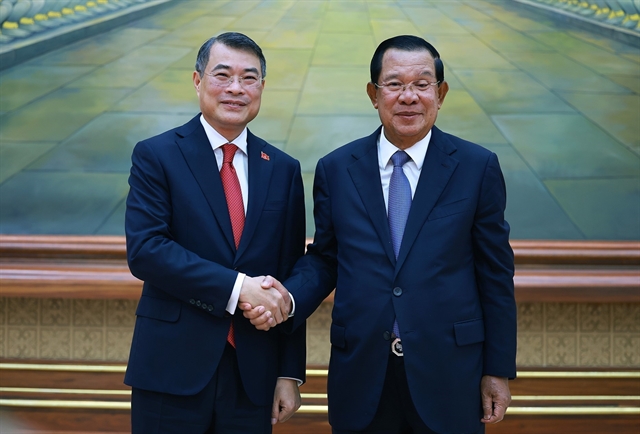
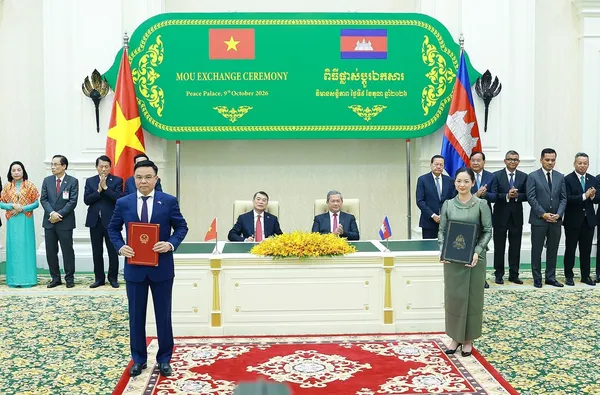
Vietnamese Prime Minister meets Cambodian National Assembly President
1.
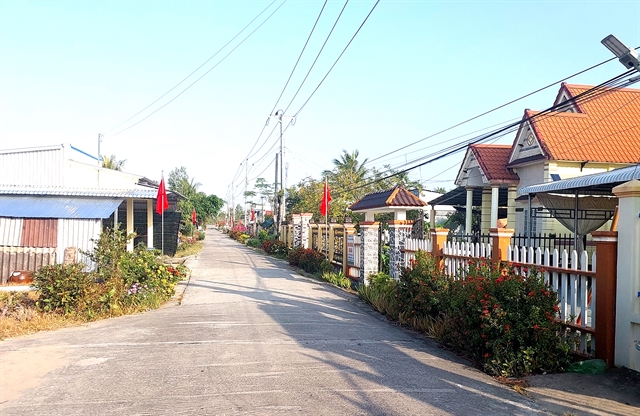 |
| Rural roads in Ninh Thạnh Lợi Commune have been asphalted and solid, well-built houses line both sides. — VNA/VNS Photo Tuấn Kiệt |
CÀ MAU — Once a war-scarred revolutionary base, Ninh Thạnh Lợi Commune in Cà Mau Province has transformed its fortunes through a shrimp–rice farming model and steady new-style rural area development, but has preserved its historic legacy.
After the liberation of South Việt Nam in 1975 the commune faced immense challenges: Large areas of land were barren, and the soil was severely affected by acidity and salinity.
In such conditions, locals could grow only cajuput trees and pineapples, crops suited to the terrain but yielding little income.
Drawing on their revolutionary tradition, local authorities and residents worked to reclaim the land.
Irrigation systems were developed to flush out acidity and salinity, bringing abandoned fields back into use.
Over time rice cultivation took hold, laying the basis for sustained growth.
A turning point came in the early 2000s with the introduction of the shrimp–rice model.
This allows farmers to raise shrimp, crab and fish in brackish water during the dry season, before flushing out salinity brought up the rivers from the sea and growing rice in the rainy season.
The model has proved effective, with farmers earning an average of nearly VNĐ200 million (US$7,600) per hectare a year.
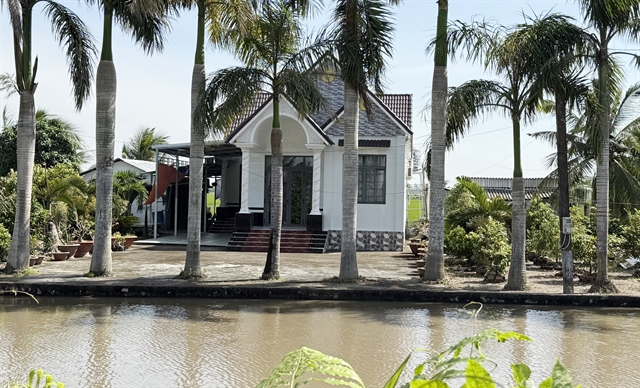 |
| An effective shrimp–rice farming model has helped many farmers in Ninh Thạnh Lợi Commune build large, well-built homes. — VNA/VNS Photo Tuấn Kiệt |
For many households, the shift has been significant.
Nguyễn Văn Phong, who owns seven hectares of farmland in Ninh Thạnh Đông Hamlet, said his land was once abandoned and overgrown.
After growing pineapples with limited success, his family adopted the shrimp–rice model and saw steady income gains, he said.
In recent years they have shifted to high-quality rice varieties such as ST24 and ST25 and adopted organic-oriented methods. The family now earns nearly VNĐ1 billion ($38,000) a year from rice, shrimp, crab and fish.
The commune spreads over more than 13,300ha, with over 12,400ha used for agriculture.
Farmers have adopted technical advances to improve productivity.
Drones are now widely used for seeding, fertilising and spraying crops.
“These tools save time and labour,” said Tăng Bình, a farmer in Cỏ Thum Hamlet.
Smartphones help farmers monitor weather, track prices and access technical knowledge.
Lê Hoàng Phi, Chairman of the commune People’s Committee, said: “After the commune Party Committee and People’s Committee encouraged farmers to reclaim land and convert more than 10,000ha of wasteland into rice fields, living standards improved steadily.”
About 40 per cent of nearly 5,400 households now earn over VNĐ1 billion ($38,000) a year, while the poverty rate has fallen to 1 per cent from 35 per cent in 2005, according to the commune People’s Committee.
Average per capita income reached VNĐ95 million ($3,420) last year.
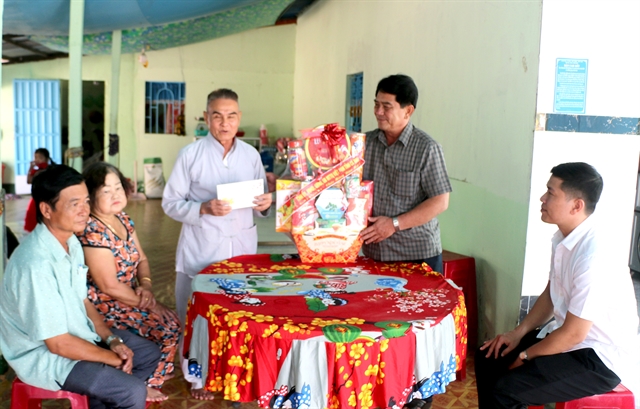 |
| Lê Hoàng Phi, Chairman of the Ninh Thạnh Lợi Commune People’s Committee, visits and gives gifts to Nguyễn Phương Đông, a policy beneficiary in Xẻo Gừa Hamlet, on the occasion of Tết 2026 (the Lunar New Year of the Horse) festival. — VNA/VNS Photo Tuấn Kiệt |
Alongside economic growth, the commune has made progress in new-style rural development.
Transport infrastructure has been upgraded, with concrete roads linking hamlets and improving the movement of people and goods.
Schools and healthcare facilities have been built for local residents.
Environmental initiatives have been introduced under the “bright – green – clean – beautiful” approach.
Community-led models such as “clean house, green garden” and “roads and rivers without waste” have been widely adopted.
The commune is preparing for further growth.
In the 2026–30 period local authorities plan to expand sustainable, large-scale agriculture centred on the shrimp–rice model.
They also aim to develop shrimp value chains, from breeding and farming to processing and export, while strengthening links with businesses.
High-quality rice production will be promoted through branding, traceability and certification.
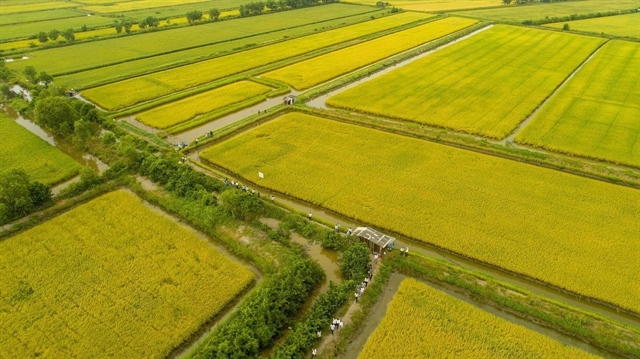 |
| Shrimp–rice farming fields in Ninh Thạnh Lợi Commune. — VNA/VNS Photo Tuấn Kiệt |
Phi said since the start of implementation of the Politburo’s Resolution No. 57, issued on December 22, 2024, on science, technology, innovation, and national digital transformation, the commune had treated this as a basis for accelerating development and improving living standards.
It would step up the use of science and technology in agriculture and aquaculture, he said.
Infrastructure projects such as the Cần Thơ–Cà Mau Expressway were expected to improve connectivity, helping the commune attract investment and expand markets.
Before July 1, 2025, Ninh Thạnh Lợi Commune was part of Bạc Liêu Province.
After Bạc Liêu merged with Cà Mau Province, Ninh Thạnh Lợi and Ninh Thạnh Lợi A communes in Hồng Dân District were combined into a single commune.
Revolutionary legacy preserved
Beyond its economic progress, the commune retains an important place in the country’s history.
At the end of last year it was recognised as the historical site of a safe zone commune during the resistance wars against the French and later the US.
It served as a key revolutionary base, centred on the Cái Chanh site.
From 1949 to 1954, during the war against the French, the base served as a shelter and headquarters for the Southern Regional Party Committee, the Central Office for South Việt Nam and the Southern Administrative and Resistance Committee.
It was also used by senior leaders, including Lê Duẩn, later Party General Secretary, and Võ Văn Kiệt, later Prime Minister.
The site then served the Bạc Liêu Province Party Committee from 1973 to 1975 during the war against the US.
Life during wartime was harsh, with repeated military sweeps, artillery bombardments and aerial attacks.
Despite this, local people supported revolutionary forces and fought alongside armed units, contributing to key victories.
In recognition, the area was awarded the title “Hero of the People’s Armed Forces”.
The Cái Chanh base has been recognised as a national historical site and later designated a special national historical site.
Today, it is preserved as a site for historical education.
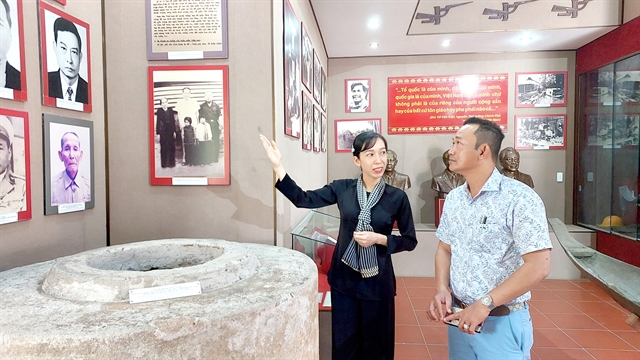 |
| A visitor is guided through photos and artefacts on display at the Cái Chanh base site in Ninh Thạnh Lợi Commune. — VNA/VNS Photo Tuấn Kiệt |
The commune also has two other national historical sites: the 1927 uprising site of Ninh Thạnh Lợi farmers and Kos Thum Pagoda, a Khmer Theravada Buddhist pagoda linked to the revolution and local life.
In implementing the Politburo’s Resolution No. 80 dated January 7, 2026, on developing Vietnamese culture, local authorities have identified heritage not only as something to preserve but also as a resource for development.
Huỳnh Thanh Hoà, secretary of the commune Party Committee and chairman of the People’s Council, said having three national historical sites would be both a source of pride and an asset for socio-economic development.
“The commune will focus on developing heritage tourism linked with site preservation.” — VNS
Society
 Society
 Society
 Society
 Society
 Society
 Society
 Society
 Society
 Society
 Society
 Society
 Society
 Society
 Society