 Society
MoIT to build system to flag unusual fuel price movements
1.
|
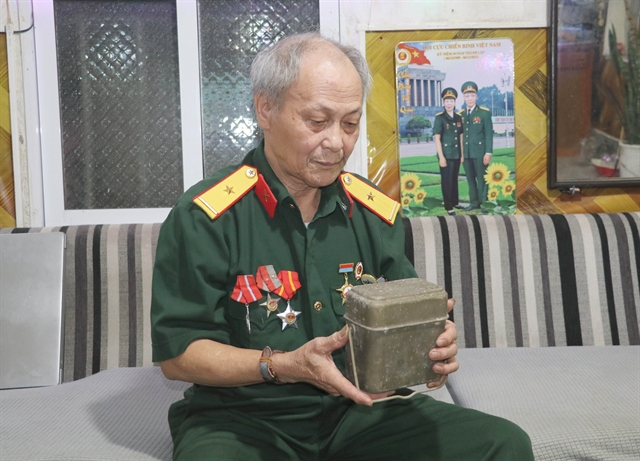
| Veteran Đào Trọng An, 75, in Nam Định Ward, Ninh Bình Province, preserves many wartime memorabilia. VNA/VNS Photo Thùy Dung |
HÀ NỘI — In the historic days of April, memories of national reunification continue to surge among veterans from the northern province of Ninh Bình who took part in the liberation of the South in 1975, a moment they recall not only as a victory but as a journey marked by blood, tears and unwavering faith in unity.
Their recollections, simple yet profound, serve as a bridge between past and present, reminding younger generations of the enduring value of peace and independence.
Veteran Đào Trọng An, 75, from Nam Định Ward, was among those directly involved in the Hồ Chí Minh Campaign, the final offensive that brought the resistance war against the United States (Vietnam War) to an end, fully liberating the South and reunifying the country.
In 1971, shortly after leaving school, An enlisted and was assigned to Company 6 of Battalion 2, Regiment 9, Division 304, one of the main combat units that took part in numerous major campaigns across some of the fiercest battlefields.
After training, he moved south in 1972, taking part in combat and support operations in key areas such as Route 9–Southern Laos, Khe Sanh and the Bình-Trị-Thiên front. Those years forged resilience, discipline and endurance in the young soldier.
By early 1975, the battlefield situation had shifted decisively. Following victories in the Central Highlands and Huế–Đà Nẵng campaigns, the Politburo and the Central Military Commission of the Communist Party of Việt Nam launched the final strategic offensive, the Hồ Chí Minh Campaign, aiming to liberate Sài Gòn before the rainy season.
An’s unit was ordered to advance rapidly, joining the northeastern assault formation towards the city and coordinating with the main forces to seize key targets.
Recalling the final days of April 1975, An said the pace of movement was intense. Troops marched almost continuously while preparing for combat and carrying full equipment and supplies. Despite exhaustion, morale remained high as soldiers understood that a historic moment was imminent.
At dawn on April 30, 1975, multiple columns launched simultaneous attacks on Sài Gòn. An’s unit was tasked with coordinating with tank forces, including the 203rd Armoured Brigade, advancing towards Sài Gòn Bridge, one of the main gateways into the city centre.
Along the way, they encountered fierce resistance. However, with overwhelming momentum, revolutionary forces broke through defensive lines, clearing the path for tanks and infantry to push deeper into the city.
As the offensive converged on central Sài Gòn, around noon on April 30, tanks entered the Independence Palace (now known as Reunification Palace). An and his comrades were part of the coordinated force that secured the site. The moment the liberation flag was raised over the palace also marked the unconditional surrender of South Vietnamese President Dương Văn Minh.
An recalled the moment with emotion: after years of hardship and sacrifice, the country was finally reunified. For him, it was not merely a military victory but the culmination of courage, resilience and immense sacrifice across generations of Vietnamese.
An unyielding spirit
Veteran Vũ Doanh Hùng, 74, also from Nam Định Ward, was another soldier who took part in some of the fiercest battles during the final phase of the war, particularly in the closing days of the Hồ Chí Minh Campaign.
|
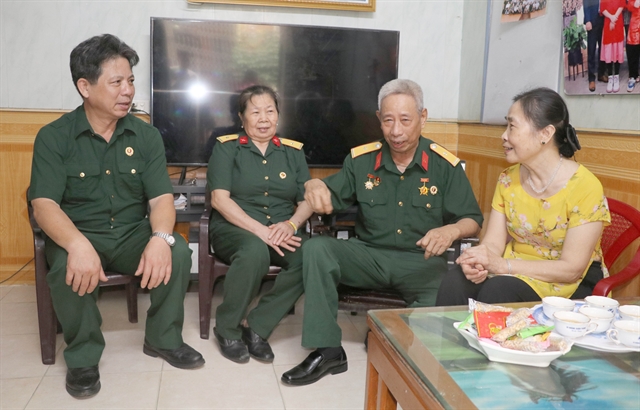
| Veteran Vũ Doanh Hùng (second from right) in Nam Định Ward, Ninh Bình Province, recalls memories with his comrades of taking part in the historic Hồ Chí Minh Campaign. VNA/VNS Photo Thùy Dung |
Enlisting in April 1970, he served in Division 7 of Regiment 209, Army Corps 4. Throughout the war, Hùng and his comrades held strategic positions, constantly facing bombardments and intense enemy sweeps.
In April 1975, as the General Offensive and Uprising entered its decisive phase, Division 7 was assigned to capture strategic targets on the eastern front, breaking through defensive lines east of Sài Gòn.
Hùng’s unit directly engaged in battles in Long Khánh, particularly the decisive Battle of Xuân Lộc, which broke the strongest defensive line of the Republic of Việt Nam’s forces in the region.
After the fall of Xuân Lộc opened the route into Sài Gòn, his unit advanced via Trảng Bom towards National Highway 1A, closing in on key objectives. On the night of April 29, 1975, they moved into the Hố Nai–Biên Hòa area, the site of one of the fiercest engagements on the eastern front in the war’s final hours.
At Hố Nai, enemy forces mounted strong resistance to block the advance. Division 7, alongside Division 341, came under intense pressure, simultaneously attacking and repelling counterattacks under heavy artillery fire. Shells fell continuously, shrouding the battlefield in dust and debris. In these conditions, Hùng and his comrades fought on while assisting the wounded. The battle continued through the night, and by dawn on April 30, they held their positions and maintained the offensive formation.
The battle at Hố Nai is considered one of the last major defensive strongholds on the eastern front before the final advance into Sài Gòn. Division 7’s role in maintaining the offensive momentum was crucial, enabling the main forces to penetrate deep into the city.
Around noon on April 30, 1975, while still on duty, Hùng suddenly heard the news of victory. Soldiers embraced each other before pouring into the streets and joining crowds in celebration of reunification. For him, it was a long-awaited reward after years of relentless fighting, though the joy was tempered by memories of fallen comrades who did not live to see the day.
Mai Văn Quyền, Chairman of the Veterans’ Association of Nam Định Ward, said the association has around 7,800 members, nearly 1,000 of whom directly participated in the campaign to liberate the South. More than half a century later, memories of the Hồ Chí Minh Campaign remain vivid among those who once fought.
Returning to civilian life, these veterans continue to cherish their service while passing on its lessons to younger generations. Their stories stand not only as personal recollections but also as living testimony to a defining chapter in the nation’s history when soldiers helped bring the country together as one. — VNS
Society
 Society
 Society
 Society
 Society
 Society
 Society
 Society
 Society
 Society
 Society
 Society
 Society
 Society
 Society