 Society

Tighter controls on livestream sales
1.
 |
| The organisers present certificates who have completed the online sale vocational training course. — Photos courtesy of the organiser |
HÀ NỘI — Seven more businesses have ceased slaughtering and trading dogs and cats, while 18 other households have officially registered to participate in a livelihood transition programme.
This represents a significant increase in numbers, showing that those involved in the trade are beginning to place genuine faith in the new direction.
A vocational workshop was held on May 19 to teach traders from Hà Nội's Kiến Hưng, Tây Mỗ, Đại Mỗ, Phú Lương, Yên Nghĩa and Xuân Phương wards about other possible professions including online sales.
Quỳnh Mai, the owner of a dog meat shop in Dương Nội Ward, Hà Nội, was one of the first shop owners to participate in the project.
“I know well that this trade has no future and carries serious disease risks," Mai said.
"It was not an easy decision – but for a more sustainable future, I decided to stop and find a new business.”
Mai added that she needed a transition period to start a new business, and she believes that she could stand on her own feet with the support of the sustainable livelihood transformation project and its partners.
The activity is part of a pilot project on promoting the transformation of sustainable livelihoods for dog- and cat-meat traders and slaughterers in Hà Nội. The project has been jointly implemented from July 2005 by Hà Nội's Department of Livestock, Fisheries and Veterinary Medicine, the Soi Dog Foundation and the social enterprise SBCC Vietnam.
The project pursues two parallel objectives, contributing to the national target of zero human rabies deaths by 2030, while strengthening disease management capacity and progressively applying animal welfare standards in line with international practice.
It encourages dog and cat meat traders to voluntarily participate in the programme to receive completely free support. The organiser hopes that pioneers like Mai will become shining examples, inspiring more and more people to join the journey towards a safer, more civilised, and more sustainable capital city.
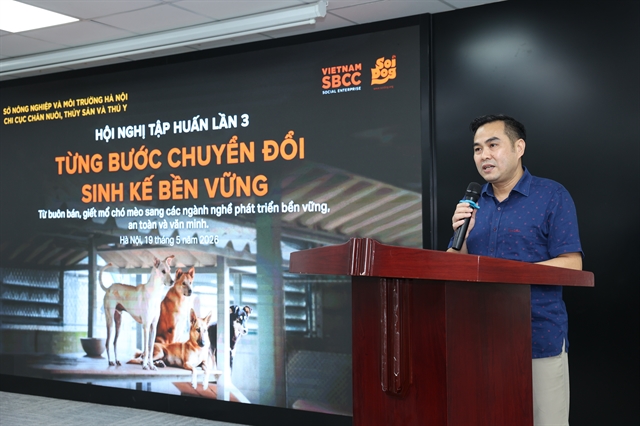 |
| Ngô Đình Loát, Deputy Head of Hà Nội's Department of Livestock, Fisheries and Veterinary Medicine, speaks at the training course. — Photos courtesy of the organiser |
At the event, Ngô Đình Loát, Deputy Head of Hà Nội's Department of Livestock, Fisheries and Veterinary Medicine, said that the project has contributed to rabies prevention in the city.
“In Việt Nam, the consumption of dog and cat meat is a long-standing consumer habit and a part of the culture," Loát said.
"We are campaigning and raising awareness to gradually change this habit and switch to using other products as alternatives to dog and cat meat, contributing to the prevention of rabies.”
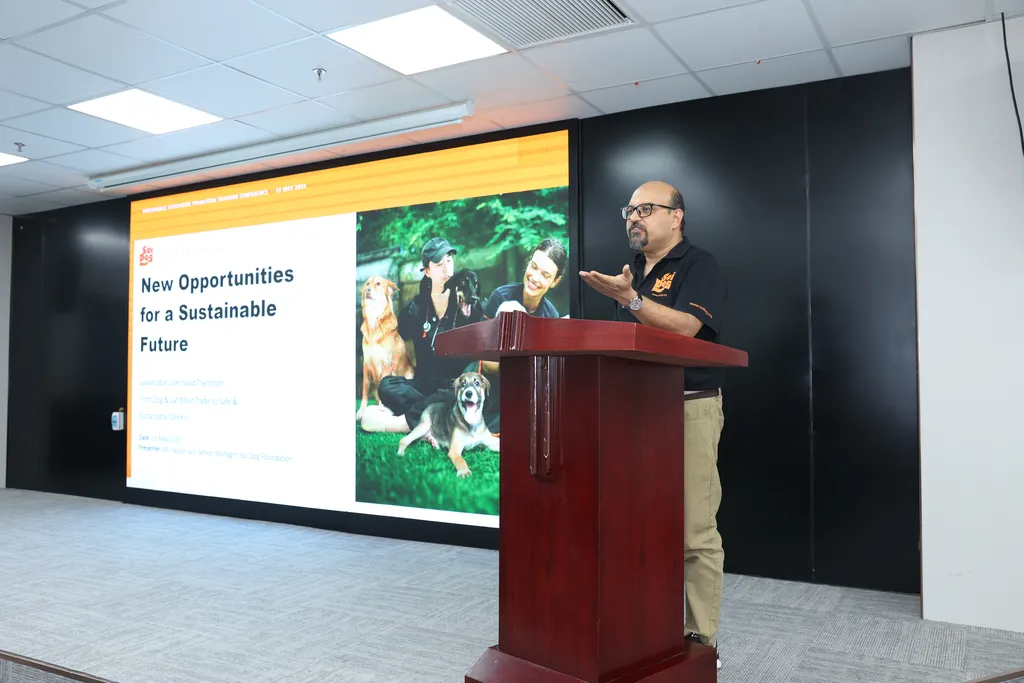 |
| Faizan Jalil, Senior Manager at Soi Dog Foundation, speaks at the event. — Photos courtesy of the organiser |
Faizan Jalil, Senior Manager at Soi Dog Foundation, added: “The project has achieved encouraging results, especially as many businesses involved in dog and cat slaughter have voluntarily ceased operations.
“This result is a testament to what can be achieved through a collaborative, strategic, and community-driven approach. Having witnessed the success of empathetic, community-led models in Thailand, the Philippines, and South Korea, I am entirely confident that this pilot project will achieve its goals in a truly transformative and sustainable way."
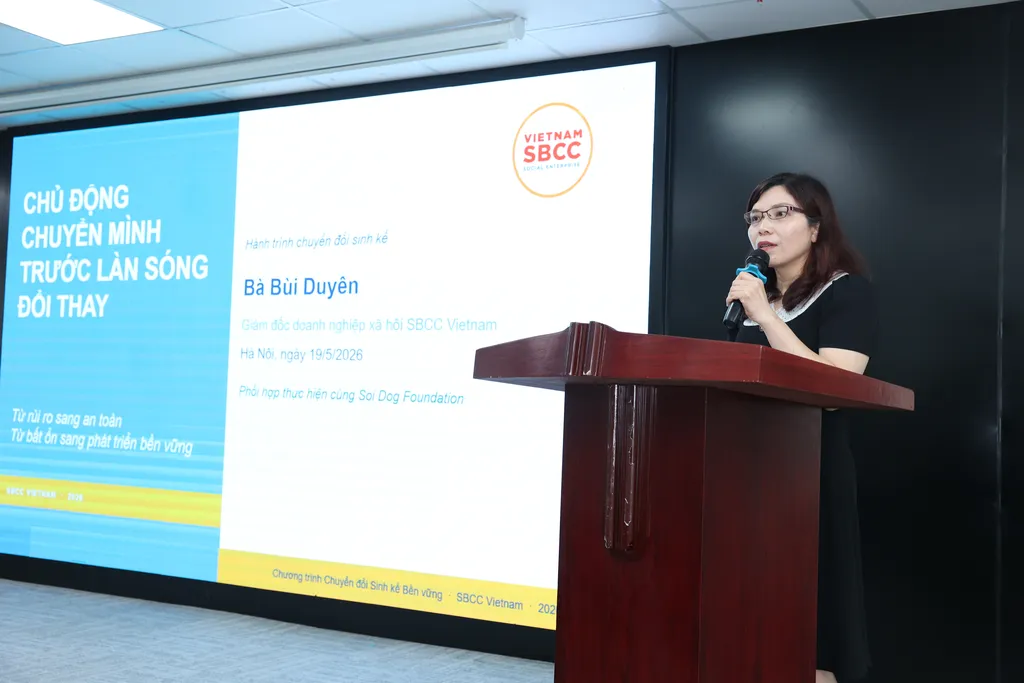 |
| Bùi Thị Duyên, Director of SBCC Vietnam, speaks at the event. — Photos courtesy of the organiser |
Bùi Thị Duyên, Director of SBCC Vietnam, said: “We will provide maximum support to early registrants, so that we can overcome this transition period together and make the most of all available resources.”
Hà Nội City has paid close attention to food safety, including the management of slaughtering, transporting, and trading of dogs and cats. Authorities at all levels are actively raising public awareness, mobilising and guiding residents and dog and cat meat traders to comply with the city’s regulations on rabies prevention and control, veterinary hygiene and food safety, and to actively participate in livelihood transition activities.
Experts say that the movement of dogs and cats infected with rabies, combined with the collection, transportation and slaughter of these animals, can contribute to the spread of the rabies virus, posing a direct threat to the lives of people and those directly involved in the dog and cat meat supply chain.
Statistics from Hà Nội's Department of Livestock, Fisheries and Veterinary Medicine show that from the start of this year to May 18, animal rabies has been confirmed in three communes – Hoà Lạc, Hạ Bằng, and Đoài Phương, with four animals confirmed infected and 36 animals dead or destroyed.
Hà Nội is actively implementing comprehensive measures to ensure rabies prevention and control, veterinary hygiene, and food safety in slaughtering, trading and transporting animal products.
The city’s authorities at all levels are intensifying management, inspection and review of slaughterhouses and animal product trading facilities across the city. The city will cease all small-scale slaughtering operations by June 30. — VNS
Society
 Society
 Society
 Society
 Society
 Society
 Society
 Society
 Society
 Society
 Society
 Society
 Society
 Society
 Society