 Society
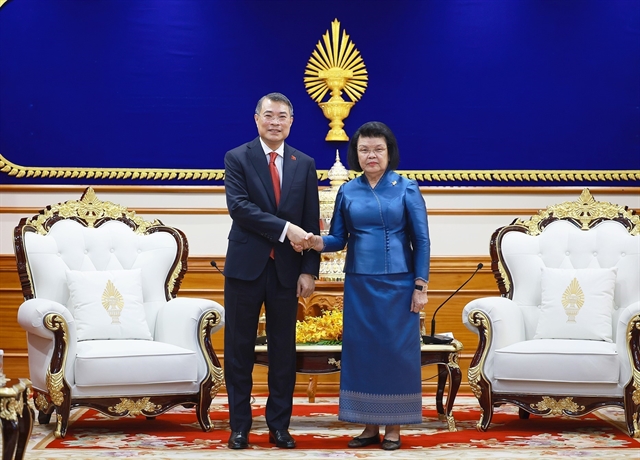
Vietnamese Prime Minister meets Cambodian National Assembly President
1.
|
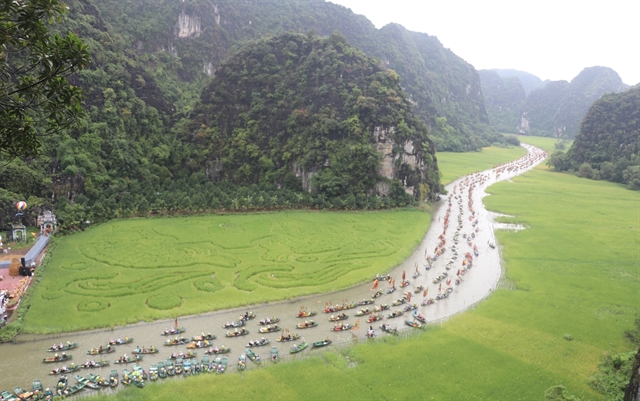
| Tourists take a boat tour through the Tràng An Scenic Landscape Complex. — VNA/VNS Photo |
HÀ NỘI — Deputy Prime Minister Phạm Thị Thanh Trà has approved a master plan for the conservation, restoration and revitalisation of the Tràng An–Tam Cốc–Bích Động scenic complex in the northern province of Ninh Bình.
Issued under Decision 705 on April 21, 2026, the plan covers the entire 9,663ha area of the complex, which forms part of the Tràng An Scenic Landscape Complex.
The initiative aims to further define and enhance the site’s values while aligning conservation with sustainable development, positioning it as a premier destination at home and abroad and a key tourism engine for Ninh Bình and the Red River Delta.
It also reinforces efforts to preserve outstanding universal values, implement local development strategies, and honour Việt Nam’s commitments to UNESCO.
The plan sets out boundaries, protection zones, land-use functions and spatial organisation, alongside phased infrastructure development. It provides a legal foundation for conservation projects and introduces policies to attract investment and boost community engagement.
Its scope spans zoning, conservation and restoration measures, spatial planning for heritage protection, safeguarding geological and intangible cultural assets, tourism development, infrastructure upgrades, and implementation mechanisms.
A central focus is balancing heritage preservation with economic development, ensuring community livelihoods while improving social, technical and tourism infrastructure. Conservation, restoration and value-enhancement efforts must maintain original elements and uphold the integrity of the World Heritage site.
Strict control will be imposed on visitor numbers, tourism activities and construction, coupled with measures to restore the environment, protect landscapes and enhance long-term resilience.
Natural areas will be tightly safeguarded, while tourism zones must blend with the landscape and prioritise eco- and cultural tourism. Traditional villages will retain their existing character without urban expansion, preserving agricultural spaces, craft traditions and intangible heritage. Mixed-use conservation areas will be closely managed, with no unauthorised conversion of agricultural land.
The plan also highlights the preservation of traditional festivals and indigenous knowledge, including hallmark rituals of the former imperial capital region, such as the Hoa Lư water procession and festivals at Thái Vi and Bái Đính Temples. Local knowledge linked to festivals, including herbal medicine practices in Sinh Dược Village and historical worship traditions associated with Tô Hiến Thành, will also be safeguarded.
At the same time, it promotes the development of distinctive tourism products tied to heritage, festivals, local lifestyles and cuisine, while strengthening links with cultural industries. Priority will be given to eco-tourism and diversified offerings aligned with market trends, including cultural and archaeological tourism, pilgrimage tours, adventure sports, craft village experiences, technology-driven tourism, wellness services, MICE, and educational tourism. — VNA/VNS
Society
 Society
 Society
 Society
 Society
 Society
 Society
 Society
 Society
 Society
 Society
 Society
 Society
 Society
 Society