 Society
Vietnamese Prime Minister meets Cambodian National Assembly President
1.
|
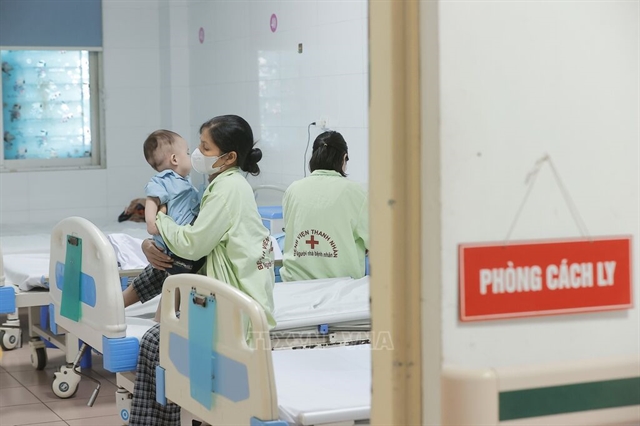
| Patients and their family members in the isolation ward at Thanh Nhàn Hospital in Hà Nội. — VNA/VNS Photo |
GIA LAI — Việt Nam is intensifying nationwide efforts to eliminate malaria by 2030, focusing on stronger surveillance, early detection and treatment, and mobilising resources from both domestic and international partners.
At a conference on resource mobilisation for malaria prevention and elimination in 2026, held in Gia Lai Province on Tuesday, health authorities and representatives from 15 project-supported localities reviewed progress and outlined priorities for the next phase.
According to Dr Ngô Đức Thắng from the National Institute of Malariology, Parasitology and Entomology (NIMPE), malaria remains a major global public health threat, with an estimated 282 million cases and 610,000 deaths worldwide in 2024, an increase of over 9 million cases from the previous year.
Việt Nam, however, has recorded significant progress during the 2021–2025 period, with malaria cases dropping sharply. In 2025, the country reported 246 cases with no deaths, down more than 30 per cent year-on-year. In the first months of 2026, only 25 cases were recorded, also with no fatalities. So far, 26 out of 34 provinces and cities have been officially recognised as malaria-free.
Despite these gains, the risk of resurgence persists, particularly in remote, border, and mountainous areas where socio-economic conditions remain difficult, and population mobility is high.
For the 2026–2030 period, the health sector aims to eliminate malaria nationwide while sustaining achieved results. Key measures include strengthening disease surveillance, ensuring early diagnosis and prompt treatment, tightly controlling transmission hotspots, reinforcing grassroots healthcare networks, and boosting public awareness alongside community engagement.
Local experiences presented at the conference highlighted practical approaches to achieving elimination.
According to Nguyễn Đại Vĩnh, director of the Đà Nẵng Centre for Disease Control, said the central city has achieved significant results in malaria prevention, control, and elimination. By June 2025, the locality was officially certified malaria-free.
This achievement stems from proactive mobilisation of local budget resources, effective integration of malaria efforts into socio-economic development plans, and strengthened surveillance, early detection, and thorough case management, he noted.
Meanwhile, Lâm Đồng Province – following the administrative merger with Đắk Nông and Bình Thuận provinces – has also reported encouraging results. With a population exceeding 3.8 million, the province recorded just eight malaria cases in 2025, more than 20 times lower than in 2020. The infection rate has dropped to 0.002 cases per 1,000 people. Currently, 21 out of 28 areas have been declared malaria-free, with the remainder continuing targeted interventions.
From practical implementation, Lâm Đồng has drawn key lessons – aligning closely with the Ministry of Health’s guidance, improving reporting systems to inform investment decisions, and ensuring effective coordination with international donors to streamline procedures and maintain project timelines.
Việt Nam plans to strengthen international cooperation and mobilise resources from organisations such as the World Health Organisation (WHO) and the Global Fund to Fight AIDS, Tuberculosis and Malaria, aiming to enhance the effectiveness of malaria prevention and control and move toward eliminating the disease by 2030. — VNA/VNS
Society
 Society
 Society
 Society
 Society
 Society
 Society
 Society
 Society
 Society
 Society
 Society
 Society
 Society
 Society