 Society
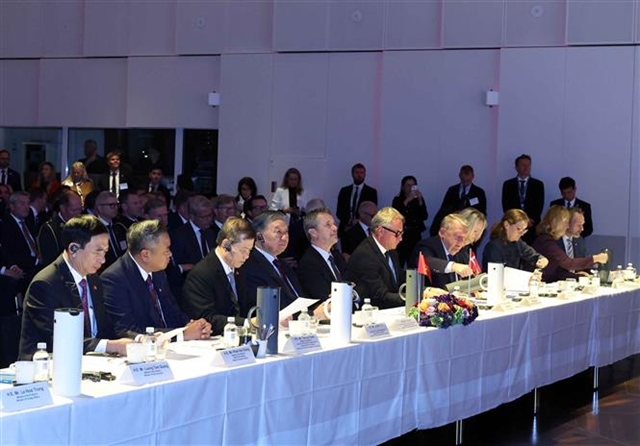
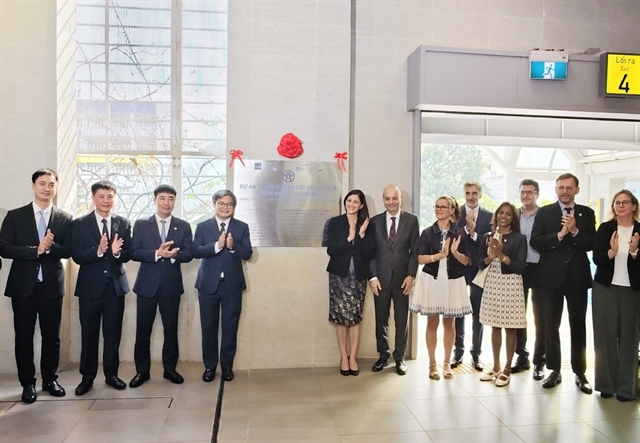
General Secretary and President Tô Lâm witnesses exchange of Việt Nam-Denmark cooperation agreements
1.
 |
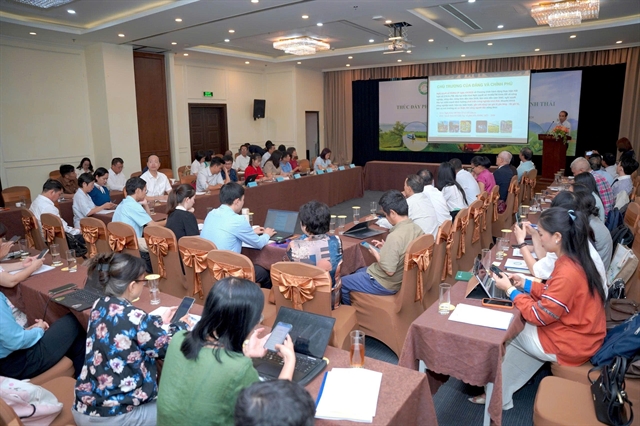
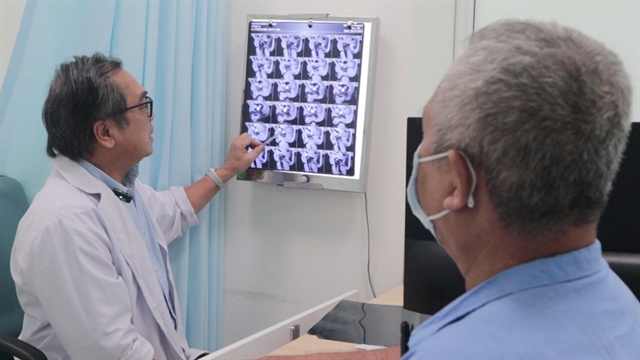
| Nguyễn Mạnh Huy (right) shares his story at a recent consultation workshop on haemophilia, held at the National Institute of Haematology and Blood Transfusion. — Photo nhandan.vn |
HÀ NỘI — Like many haemophilia patients, Nguyễn Mạnh Huy has endured significant pain from repeated bleeding episodes.
Instead of giving in to pessimism or simply accepting his fate, he remained persistent in pursuing his passions as a way to overcome the pain.
Driven by his love for beautiful photography and ornamental plant care, Huy has taken on various jobs, including advertising design and photography, and currently works as a social media content creator.
He has produced numerous videos attracting tens of millions of views on growing and caring for plants.
This has provided him with a stable income and helped him build a better life for his family.
Huy has inspired many people in plant care, turning seemingly discarded seedlings into something valuable that enhances life.
“I am who I am today largely thanks to the doctors and medical staff at the National Institute of Haematology and Blood Transfusion (NIHBT). Without them, I would not have survived, let alone had the opportunity to stand here and share my story today,” Huy said, addressing a consultation workshop on haemophilia held by the institute last week.
Also at the workshop, patient Hà Đức Hải from Hải Phong City said: “When I was young, my education was full of challenges because of haemophilia. When I reached school age, my mother was at first too worried to let me attend school. In grade 9, my teachers even thought I would not be able to pass the high school entrance exam due to frequent absences.”
However, thanks to his determination and perseverance, Hải not only passed the university entrance exam, but also graduated with honours.
He is now an English teacher, bringing knowledge, confidence and care to his students every day.
The inspiring stories and resilient journeys of these two young men in overcoming adversity and never giving up on their dreams have spread hope and become a powerful source of motivation for fellow patients and the families of children with haemophilia.
Haemophilia, also known as a bleeding disorder, is a hereditary condition caused by a deficiency or dysfunction of clotting factors.
Its hallmark feature is prolonged or difficult-to-stop bleeding that can occur anywhere in the body, most commonly in the joints and muscles.
Recurrent bleeding in these areas can lead to joint deformities and muscle atrophy.
Both Hải and Huy expressed their deep appreciation and gratitude to the NIHBT Haemophilia Centre doctors and nurses who have cared for them over the years, enabling them to achieve their current success.
Dr Nguyễn Thi Mai, vice president and general secretary of the Việt Nam Haemophilia Association and director of the Haemophilia Centre, has treated both patients since they were young boys.
She said Hải and Huy both have severe haemophilia, yet the disease does not limit them. They continue to contribute to society and live meaningful lives.
Major gap in diagnosis
According to the association, estimates from the World Federation of Haemophilia show that more than 75 per cent of people with haemophilia worldwide remain undiagnosed. This figure is even higher for other bleeding disorders, such as von Willebrand disease or rare clotting factor deficiencies.
This means that hundreds of thousands of people are living with the condition without knowing it, or are only diagnosed after severe complications have already developed.
Many patients arrive at hospitals with prolonged bleeding, swollen and painful joints or even internal haemorrhage. These complications could have been prevented with early diagnosis, Mai said.
In reality, early diagnosis can be a turning point for people with bleeding disorders. When detected in time, patients can receive preventive treatment, effectively control bleeding episodes and minimise complications.
According to the association, Việt Nam is estimated to have around 10,000 to 12,000 people with haemophilia, yet only about 4,000 have been diagnosed and are being managed at health care facilities nationwide.
This significant gap indicates that thousands of patients in the community remain undetected, particularly in areas with limited access to specialised health care services.
In recent years, the diagnosis and treatment of haemophilia in Việt Nam have seen notable improvements, especially at specialised centres.
However, early detection in the community remains a challenge, as most patients initially access the health care system through primary-care facilities, where diagnostic capacity remains uneven.
Doctors at the centre said that to meet the need for early diagnosis, comprehensive solutions must be implemented across the health care system.
These include enhancing professional capacity for health care workers, particularly at the local level, strengthening technical support and inter-level coordination, and improving testing quality with initial screening protocols to identify suspected cases early. — VNS
Society
 Society
 Society
 Society
 Society
 Society
 Society
 Society
 Society
 Society
 Society
 Society
 Society
 Society
 Society