 Society

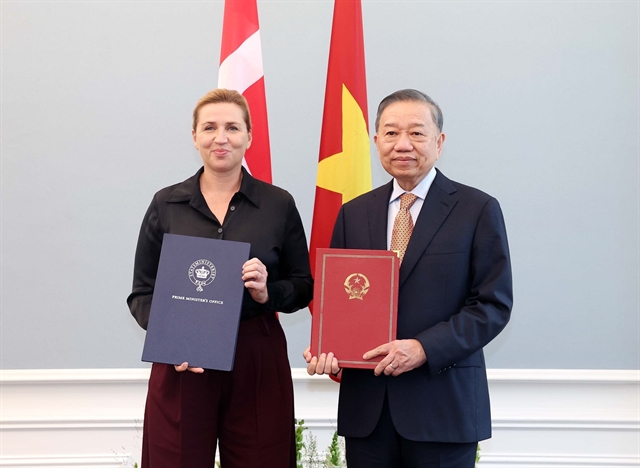
Việt Nam, Denmark issue joint statement on establishment of Comprehensive Strategic Partnership
1.
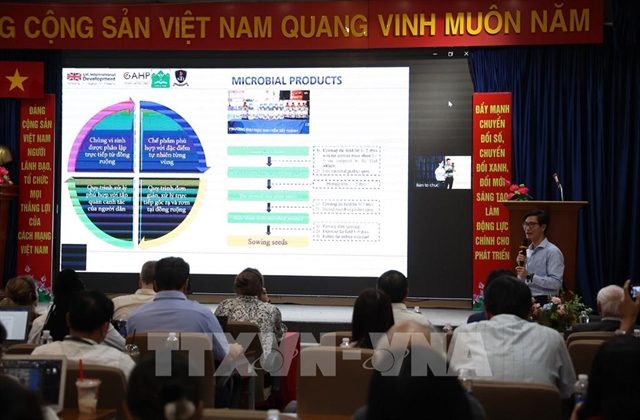 |
| Overview of the workshop reviewing Phase 2 of the project called “Air pollution and open agricultural burning in Việt Nam” held in HCM City on March 4. — VNA/VNS Photo Hồng Đạt |
HCM CITY — Strengthening air quality monitoring and identifying straw-burning hotspots are key priorities in efforts to curb open agricultural burning and reduce particulate matter (PM2.5) pollution, experts said at a workshop held in HCM City on Wednesday.
The Việt Nam Association for Conservation of Nature and Environment (VACNE) in collaboration with the Global Alliance on Health and Pollution (GAHP), held the workshop to review Phase 2 of the project called “Air Pollution and Open Agricultural Burning in Việt Nam,” supported by the UK Department for Environment, Food and Rural Affairs (DEFRA).
The hybrid event drew domestic and international experts to assess progress and discuss solutions to curb open burning of agricultural residues, particularly rice straw.
According to VACNE, the project was first implemented from July 2022 to March 2025 and entered Phase 2 from late June 2025 through March 2026.
Its overarching goal is to evaluate the environmental and health impacts of open agricultural burning and propose environmentally friendly alternatives for wider adoption.
Presenting the Phase 2 report, Associate Professor Dr Phùng Chí Sỹ, the project’s lead researcher, said the second phase focused on expanding alternatives to open straw burning.
Models promoting rapid straw decomposition in the field have been scaled up in several localities.
In Vĩnh Long Province, the model was implemented in An Trường Commune (50ha) and Quới An Commune (50ha), showing positive initial results in treating agricultural by-products and reducing smoke emissions.
The project also piloted the collection of around 40 tonnes of rice straw to produce refuse-derived fuel (RDF) pellets as an alternative to open burning.
The initiative aims to make use of agricultural biomass as an energy source, reduce resource waste and limit emissions.
In addition, Phase 2 strengthened air quality monitoring, focusing on identifying straw-burning hotspots and assessing fine PM2.5 pollution levels.
The research team updated mapping procedures and developed monthly and annual nationwide maps of open straw-burning areas and PM2.5 distribution for 2025.
The project also assessed the contribution of straw burning to PM2.5 concentrations in urban areas of Hà Nội.
Notably, the team developed two solar-powered automatic monitoring devices capable of measuring PM1, PM2.5, PM10 and total suspended particles (TSP), with data transmitted to computers and mobile phones.
The devices were installed in several communes in Vĩnh Long to monitor air quality before, during and after straw-burning periods, providing real-time data for impact assessment.
Beyond technical solutions, the project placed strong emphasis on raising community awareness and promoting environmental health.
A Việt Nam Environmental Health Network was established, and training and communication activities were organised for managers, students and farmers in several provinces.
Technical guidelines, leaflets and posters on alternatives to open burning were also produced and widely disseminated.
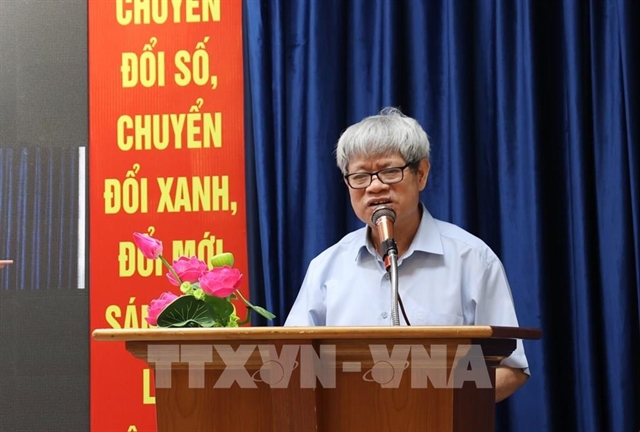 |
| Associate Professor Dr Phùng Chí Sỹ presents the Phase 2 results at the workshop in HCM City on March 4. — VNA/VNS Photo Hồng Đạt |
The project management board said implementation has been closely monitored, with regular meetings and financial reporting in line with international partner requirements.
Regulations on foreign cooperation, contracting, finance and taxation have been strictly observed.
Scientific outputs from Phase 2 have been completed and submitted to GAHP for feedback, and are being finalised for submission to DEFRA on schedule.
In closing remarks, a VACNE representative said Phase 2 had fulfilled its objectives and called on GAHP experts to continue supporting the refinement of research products.
The findings are expected to serve as a scientific basis for developing policies to control open straw burning, contributing to air pollution reduction and improved public health.
The workshop also provided a forum for scientists and policymakers to exchange experiences and propose sustainable agricultural biomass management solutions suited to Việt Nam’s conditions amid growing public concern over air pollution. — VNS
Society
 Society
 Society
 Society
 Society
 Society
 Society
 Society
 Society
.jpg) Society
Society
 Society
 Society
 Society
 Society
 Society