 Society

Japan successfully launches probe in Martian moon mission
1.
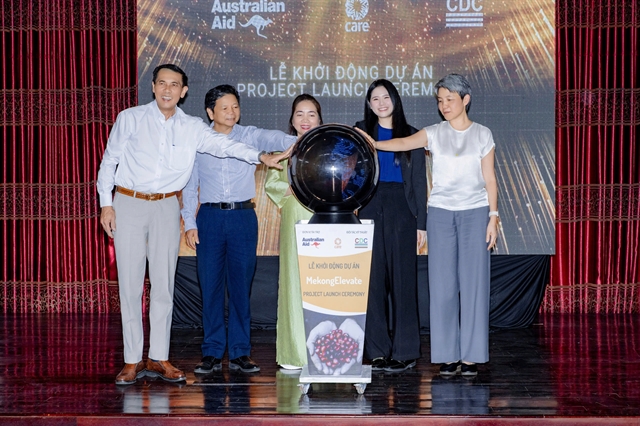 |
| At the launch of the project MekongElevate “Ethnic Communities Leading Inclusive Climate Action” in Đắk Lắk Province on March 4. — Photo courtesy of CARE |
ĐẮK LẮK — CARE in Vietnam, in collaboration with the Community Development Centre, has launched the project MekongElevate “Ethnic Communities Leading Inclusive Climate Action” to provide ethnic minority women, youth, and people with disability in Đắk Lắk Province with solutions to enhance climate resilience, contributing to the overall stability and prosperity of the Mekong subregion.
MekongElevate is funded by the Australian Government through the Mekong-Australia Partnership and implemented by CARE and local partners in the Ea Drong and Tam Giang communes from now until March 2029.
“Our Mekong-Australia Partnership supports local responses to shared regional challenges. Australia is proud to partner with Việt Nam to support a more inclusive and resilient Mekong subregion. The MekongElevate project addresses our shared priorities of climate resilience, gender equality and inclusion. It will invest in people – particularly women, people with disability, and marginalised groups – providing them with skills and opportunities to lead and shape their own paths in the green transition,” said Australia’s Ambassador to Việt Nam, Gillian Bird.
During implementation, the project will focus on supporting ethnic minorities, women, youth, and people with disability within the coffee industry. Key activities include increasing the adoption of climate-smart agriculture practices and other innovations to strengthen climate-resilient livelihoods.
A second pillar will enhance access to safety nets and recovery mechanisms, helping ethnic minority communities recover from unavoidable loss and damage caused by natural disasters and extreme weather events. The project also prioritises activities that promote greater participation and leadership of young people, people with disabilities and ethnic minority women in climate-related decision-making processes.
"The coffee industry is an economic pillar, yet it is one of the sectors hardest hit by climate change. As a local implementation partner, we are dedicated to bringing technical solutions and support mechanisms directly to the people, helping ethnic minority communities not only 'survive' but 'thrive' on their own land," said Bạch Thanh Tuấn, director of Community Development Centre.
Lê Kim Dung, Country Director of CARE in Việt Nam, said: “At CARE, we believe that lasting solutions to the climate crisis depend on who is able to participate in them. Too often, women, youth, and people with disabilities face barriers that limit their access to economic opportunities and disaster preparedness. Through MekongElevate, we work alongside communities to help reduce these barriers, strengthen practical skills, and improve access to resources, so the green transition is more inclusive and no one is left behind.”
At the launch ceremony, Vice Chairman of the Đắk Lắk Provincial People’s Committee Nguyễn Thiên Văn noted that the province remained Việt Nam’s largest coffee-growing hub, with around 214,000 hectares – more than 30 per cent of the country’s total. However, the sector faced structural challenges, including climate change, prolonged drought, water shortages, soil degradation and rising pest pressures, alongside increasingly stringent international requirements on sustainability, emissions reduction, traceability and social responsibility.
He said the province highly valued the relevance of the project.
“Implemented on a pilot basis in two communes, the project’s outcomes will provide a practical foundation for the province to assess its effectiveness, refine solutions and promote the sustainable development of Đắk Lắk’s coffee industry in the future,” he added.
Representing participating farmers, H Yui Nie expressed hope that the project’s solutions would help smallholders adopt sustainable practices that meet buyer standards. “Sustainable, climate-adaptive production does not just bring immediate results; it leaves a legacy for future generations,” she said. — VNS
Society
 Society
 Society
 Society
 Society
 Society
 Society
 Society
.jpg) Society
Society
 Society
 Society
 Society
 Society
 Society
 Society