 Society

Ping An Digital Bank Completes HKMA’s Second GenA.I. Sandbox Cohort
1.
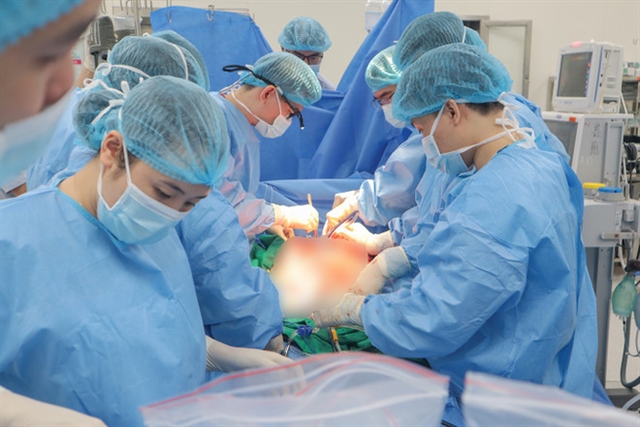 |
| Doctors carry out an organ and tissue retrieval and transplant procedure. — VNA/VNS Photos |
HÀ NỘI — After more than three decades of development, organ transplantation in Việt Nam is entering a phase of rapid advancement in both technical capacity and nationwide coordination.
From demanding cross-country transplants to highly specialised procedures nearing regional and international standards, the sector has created new chances of survival for thousands of patients.
However, persistent bottlenecks in organ donation and the legal framework highlight the urgent need to further perfect the national donation–transplantation system. In an era of advanced medicine, progress is measured not only by surgical mastery, but also by the ability to turn loss into hope and sustain life.
A special spring
On the sixth day of the Lunar New Year, which fell on February 22 this year, while families across the country were still celebrating, dozens of doctors, nurses and technicians at Bạch Mai Hospital quietly stepped into a race against time. Out of the altruistic decision of the family of student Bùi Đức Quang, eight patients were given a renewed chance at life.
Once consent was granted, the National Coordination Centre for Human Organ Transplantation activated emergency procedures, linking civilian and military hospitals nationwide. Within hours, donated organs were transported across the country.
A heart began beating again in a child in HCM City, liver transplants saved both an infant and an adult, kidneys rescued two patients, lungs restored breath to a 64-year-old man, and corneas gave the gift of sight. Beyond a single multi-organ transplant, the operation reflected both compassion and the growing maturity of Việt Nam’s transplant system.
Although Việt Nam entered the field decades later than many countries, progress has been remarkable. Since the first kidney transplant in 1992, around 10,600 transplants have been performed nationwide. Between 2022 and 2025, the number exceeded 1,000 annually, reaching about 1,368 cases in 2025 – the highest on record and the leading figure in Southeast Asia.
According to National Coordination Centre Director Associate Professor Dr Đồng Văn Hệ, Việt Nam officially appeared on the global transplant map in 2022. The country has now mastered transplantation of six organs – kidney, liver, heart, lung, pancreas and intestine – with post-transplant survival rates comparable to international benchmarks.
A major milestone came in 2025, when Việt Đức University Hospital successfully performed the country’s first combined heart and lung transplant, placing Việt Nam among a small group of countries capable of this complex procedure. Other centres, including Chợ Rẫy Hospital and 108 Military Central Hospital, have also advanced multi-organ transplants and incompatible blood type liver transplants, while surgical times and post-transplant outcomes continue to improve thanks to scientific and technological advances.
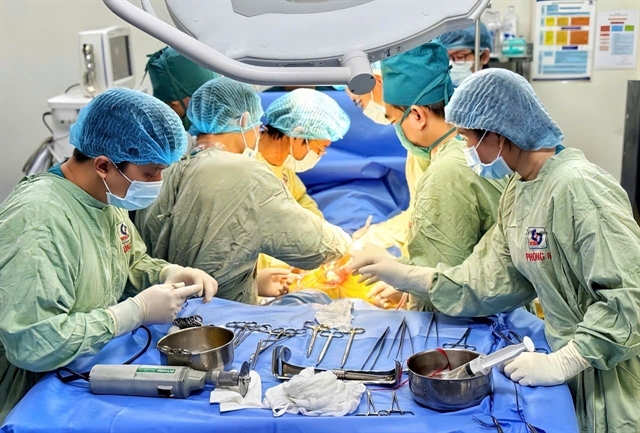 |
| Doctors at Gia Định People's Hospital retrieve organs from a brain-dead donor. |
Organ donation bottleneck
Việt Nam has established a closed-chain system covering brain-death diagnosis, national coordination, preservation, transport, transplantation and long-term follow-up. Currently, 31 hospitals are licensed to perform organ transplants nationwide.
In 2025, brain-dead donors reached a record 66 cases, raising the proportion of deceased-donor organs to nearly 20 per cent, compared with under 5 per cent before 2022. Public awareness has also grown, especially after Prime Minister Phạm Minh Chính and Health Minister Đào Hồng Lan registered as organ donors.
However, more than 80 per cent of transplants still rely on living donors, far below regional averages. Legal gaps, including the absence of provisions for donation after cardiac death, unclear regulations on paediatric donation and limited financial mechanisms, remain major obstacles. Only 109 out of more than 1,700 hospitals participate in the donation network, meaning many potential donations are missed.
Experts have called for amending the Law on Donation, Removal and Transplantation of Human Tissues to allow donation after cardiac death, clarify rules on paediatric donation and establish sustainable financing mechanisms. Hospitals should integrate donation counselling into routine care, while health insurance coverage for transplantation could help reduce long-term costs, particularly compared with dialysis.
If implemented synchronously over the next three to five years, these measures could significantly increase the share of deceased-donor transplants and reduce reliance on living donors. The ultimate goal is not only to raise transplant numbers, but to build a professional, transparent, equitable and sustainable national system.
Organ transplantation is both a triumph of advanced medicine and a measure of social humanity. With a stronger legal framework, an expanded donation network and effective coordination, Việt Nam’s transplant sector is poised for further breakthroughs, ensuring that each act of giving continues to transform loss into lasting hope. — VNA/VNS
Society
 Society
 Society
 Society
 Society
 Society
 Society
 Society
 Society
 Society
 Society
 Society
 Society
 Society
 Society
.jpeg)