 Society
Việt Nam, Russia share experience in human resource training
1.
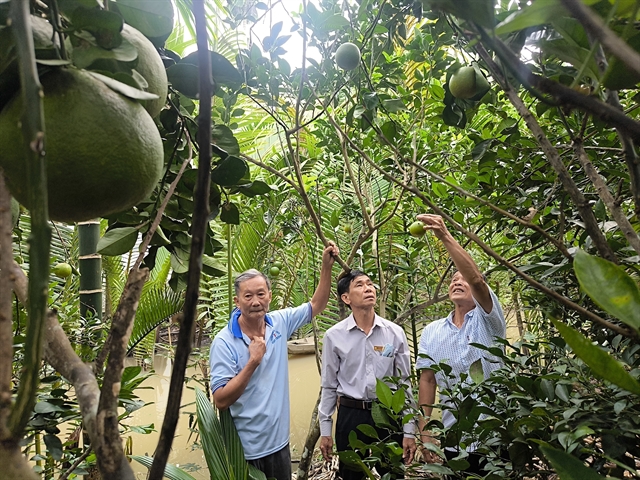 |
| Farmers in citrus-coconut intercropped orchard in Giồng Trôm Commune. — VNA/VNS Photo Huỳnh Phúc Hậu |
VĨNH LONG — Once thriving under a monoculture model for citrus crops, Giồng Trôm Commune in Vĩnh Long Province is undergoing a strong transformation following historic drought and salinity.
Rather than relying on a single crop, locals have proactively adopted multi-layered farming, intercropping citrus trees in coconut groves combined with aquaculture, creating more stable livelihoods and adapting effectively to climate change.
Giồng Trôm has long been known as a land dedicated to citrus varieties such as pomelo, oranges, lemons and mandarins. In some periods, citrus covered more than 70 per cent of the commune's cultivated area. In particular, da xanh (green skin) pomelo, with its superior quality, has helped many households boost incomes and transform the rural landscape.
However, the historic drought and salinity period in 2019–2020 marked a major turning point. Saltwater intruded deeply into water sources, soil fertility declined, and economic returns from monoculture models dropped sharply.
In that context, production transformation became not just an option but a matter of survival.
Trần Văn Tư from Giồng Trôm Commune began intercropping 400 coconut trees across 1.6ha of citrus orchard, which covers about 50 per cent of the area. The remaining space continues to maintain mainly citrus trees, primarily oranges and mandarins.
Tư said that from an agroecological perspective, this intercropping model is not a random patch-up but an application of ecological principles in multi-layered cultivation.
In this ecosystem, coconut trees rise to form the upper canopy layer. Their broad fronds act like a net shielding against harsh sunlight, significantly reducing surface evaporation and thereby retaining soil moisture during the dry season. At the same time, the coconut's dense fibrous root system penetrates deeply and interweaves thickly, holding soil and preventing erosion during high tides. In the lower layer, citrus trees thrive in the cooler and more stable microclimate beneath the coconut shade.
In the orchard's water channels, cuttings are planted to allow natural fish and green prawns to inhabit and be raised.
Similarly, Phạm Trọng Nhân from the same commune proactively shifted from pomelo to lemons and mandarins, intercropped with betel nut and coconut trees.
He said that beyond the objective factor of unstable pomelo prices, this change was a necessary step to suit altered soil and climate conditions. Moreover, it serves as a biological solution for soil improvement, helping to restore fertility after years of intensive farming and the impacts of saltwater intrusion.
Each year, harvests from crops intercropped with coconut yield an additional income of VNĐ50–60 million (US$1,900–2,300) per hectare compared with pure coconut monoculture. This provides orchard owners with a more secure livelihood.
According to Hồ Văn Lâm, deputy chairman of the Giồng Trôm Commune Farmers' Association, farmers are flexibly applying shifts in production structure to adapt to current climate change conditions and are achieving positive results.
Alongside this, locals are intensifying the application of science and technology in cultivation, including automated water-saving irrigation, organic farming and Vietnamese Good Agricultural Practices standards, to ensure stable yields and competitive products.
Da xanh pomelo remains an economically valuable crop, with good fruit quality, stable market demand and long-term development potential. Income from this crop contributes significantly to local earnings while serving as a signature product.
Science and technology application
To adapt to climate change, Phan Kim Tuyền, head of the Giồng Trôm Commune Economic Division, noted that multi-layered farming with intercropped citrus in coconut groves is being effectively adopted by locals.
Whereas farming previously relied mainly on natural experience, science and technology now play a central role, with improved understanding of each crop's growth, soil and water requirements.
The locality has collaborated with Vĩnh Long Province's Agricultural Extension Centre to conduct on-site inspections and provide advice and guidance on soil treatment and new cultivation techniques. This equips farmers with deeper knowledge for effective application.
Nguyễn Vũ Phong, chairman of Giồng Trôm Commune People's Committee, stated that changes in locals' mindset towards production development are bringing about positive results.
Previously, farming followed habit and available natural conditions, but now with specialist support, people pay closer attention to science and technology. This provides a fundamental foundation for the sustainable development of agricultural production in Giồng Trôm.
According to Vĩnh Long Province's Department of Agriculture and Environment, with more than 120,000ha of coconut, intercropping and aquaculture in coconut groves are opening new pathways for climate change adaptation. Each region and area will select suitable crops for farmers to grow.
Amid strong market demand for coconut, citrus and prawns, multi-layered farming is seen as a promising direction, maximising natural advantages while helping locals adapt to climate change and pursue sustainable livelihoods in the future. — VNS
Society
 Society
 Society
 Society
 Society
 Society
 Society
 Society
 Society
 Society
 Society
 Society
 Society
 Society
 Society




