 Society
Việt Nam, Belgium seek to deepen bilateral cooperation
1.
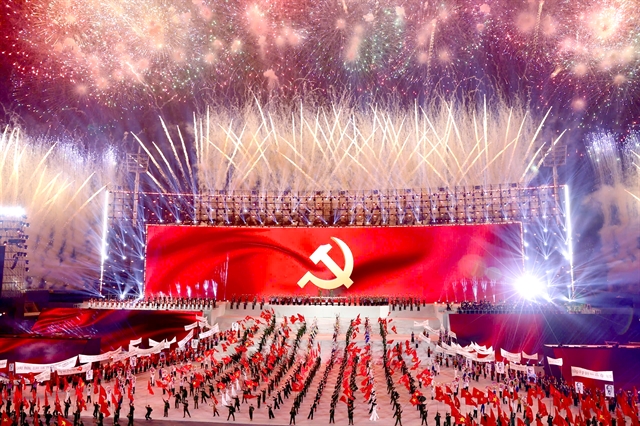 |
| An artistic fireworks display celebrates the successful conclusion of the 14th National Congress of the Communist Party of Việt Nam.— VNA/VNS Photo |
By Nguyễn Hằng
HÀ NỘI — As the 2026 Lunar New Year draws near, following the successful conclusion of the 14th National Party Congress with its strategic goals and policy directions, Việt Nam’s young generation, the future custodians of the nation, are expressing strong hopes that 2026 will be a year in which they are granted greater opportunities and broader space to grow and contribute.
Thái Nguyễn Đăng Khoa, a student of public administration at the Hồ Chí Minh City Cadre Academy, said that 2025 clearly demonstrated the strong determination of the Party and the State to pursue reform.
This was reflected in priorities ranging from administrative reform and efforts to build a streamlined, effective political system to the promotion of science and technology, innovation and greater investment in education, health care and social welfare.
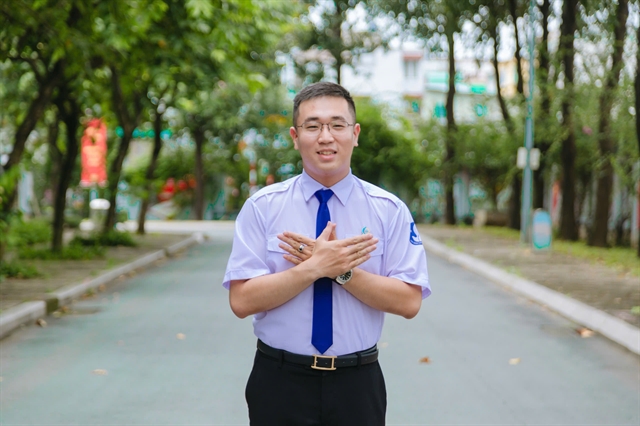 |
| Thái Nguyễn Đăng Khoa, a student of Public Administration at the Hồ Chí Minh City Cadre Academy.— Photo courtersy of Thái Nguyễn Đăng Khoa |
Entering the new year, Khoa said he hopes the reforms will “deepen and translate into more substantive development space for young people”.
He expressed confidence that, in what has been described as the nation’s 'era of rising,' young people will be entrusted with greater opportunities and confidence to test ideas, participate in policy formulation and implementation and engage in international cooperation and exchange programmes.
As a public administration student with a strong interest in youth-oriented international activities, Khoa believes that 2026 will open up new opportunities for himself and like-minded peers, enabling young people to play a meaningful role in driving the country’s sustainable development.
Nguyễn Hà Linh, a student majoring in English at the Diplomatic Academy of Việt Nam, said: “This year, breakthrough policies in science, technology and innovation will serve as a solid springboard, opening up a wide range of modern career opportunities for young people.”
She said the State’s focus on raising salaries in the education sector and improving social security not only allows young people to dedicate themselves with greater peace of mind but also affirms the value of knowledge in a new era.
A more developed health care system, together with robust universal health insurance policies, provides a vital safety net that enables young people to pursue innovation with confidence.
“This is truly a golden moment of the ‘era of rising’, where every individual can contribute their youth and energy to building a strong and prosperous nation,” Linh said, adding that she believes young people will not only be beneficiaries of development policies but also key actors in creating new national achievements.
Trần Thị Minh Nguyệt, a student at the National Economics University, said that recent Party and State policies clearly point to a future filled with opportunities for the younger generation.
She added that the prioritisation of science, technology and innovation, alongside policies supporting education and health care, including salary increases for teachers and the expansion of universal health insurance, reflects a long-term and humane vision.
Continuing along the path of the nation’s era of rising, Nguyệt expressed hope that young people will be provided with better conditions to study, conduct research, start businesses and contribute to society.
An environment that values knowledge, creativity and human-centred development, she said, will allow students like herself to confidently build their capacities, keep pace with global trends and at the same time preserve Việt Nam’s cultural identity.
A desire to contribute
Khoa said: “The responsibility of young people goes beyond merely adapting to change, extending to proactively creating value for society through their energy and pioneering spirit.”
For him, this begins with continued learning, improving professional expertise, strengthening foreign language skills and developing an internationally minded outlook in order to contribute more effectively.
He also hopes to take part more deeply in international exchanges and cooperation, learning from global peers and bringing back knowledge and experience to offer practical contributions to Việt Nam’s development.
“In the country’s new development phase, I believe young people are eager to be given the conditions to fully pursue their passions, generate real value and accompany the nation on its path forward,” Khoa said.
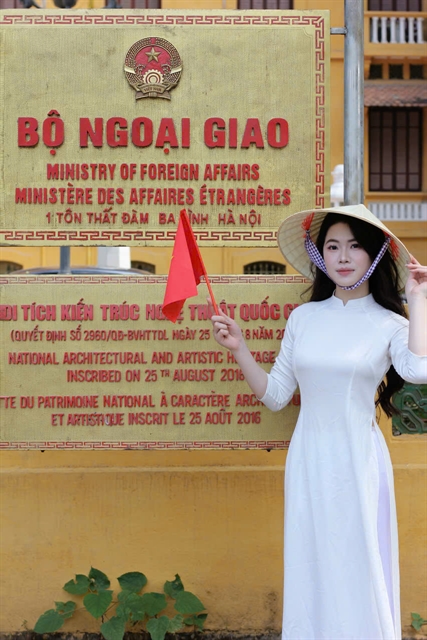 |
| Nguyễn Hà Linh, a student majoring in English at the Diplomatic Academy of Việt Nam.— Photo courtesy of Nguyễn Hà Linh |
Linh, now in her final year at the Diplomatic Academy, said she aims to become a professional education consultant to help guide and unlock the potential of Vietnamese youth.
In the country’s new stage of development, she hopes to apply diplomatic thinking and language skills to connect Vietnamese students with global knowledge, helping them integrate confidently into the international environment.
Amid policy reforms and the Party’s renewed focus on education, Linh said she feels an even stronger sense of responsibility to design personalised learning pathways that emphasise innovation and digital skills.
She aspires to serve as a bridge to promote national cultural values through language, while supporting young people in developing the confidence and character of true global citizens.
Nguyệt echoed the sentiment, stressing that young people’s responsibility in the era of rising is not limited to benefiting from policies but also includes actively contributing to national development.
In 2026 and the new development phase ahead, she hopes to first focus on self-improvement through study, equipping herself with professional knowledge, soft skills and creative thinking.
Alongside this, she plans to engage in volunteer activities, scientific research and innovation initiatives to help address real social challenges.
With continuous learning, a strong sense of responsibility and a desire to contribute, Nguyệt believes the younger generation will be “a vital force in driving the country’s sustainable development and long-term progress.”
Tết as a new beginning
For Khoa, Tết (Lunar New Year) in modern life is not only a time for family reunions and celebration but also a moment of transition, a chance to reflect, renew oneself and prepare mentally for the road ahead.
Moving from 2025, a year marked by significant positive changes in thinking, policy and social governance, into a 2026 filled with promise and expectation, he sees Tết as the starting point for creating new value based on the lessons and momentum of the previous year.
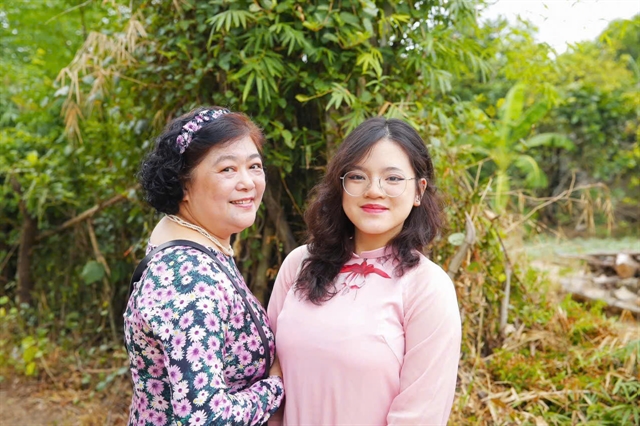 |
| Trần Thị Minh Nguyệt (right), a student of the National Economics University, with her relatives.— Photo courtesy of Trần Thị Minh Nguyệt |
Nguyệt described Tết as more than a turning point between the old and new year, but also a time to slow down and reconnect with family and enduring traditional values.
Amid the pressures of study, work and digital life, Tết offers a rare pause to reflect on the past year, appreciate what has been achieved and recharge emotionally for the journey ahead.
Linh added that despite the fast pace of modern life, Tết remains a vital spiritual anchor and the most important occasion for reuniting family members after a long year of busyness.
“It is a sacred moment to look back on the journey so far and welcome the new year with hope for peace and happiness,” she said.
Traditional customs and warm year-end family meals not only create cherished memories but also strengthen bonds across generations.
Beyond being a holiday, Tết serves as a bridge between past and present, preserving the nation’s precious cultural identity.
“For every individual, it remains a safe harbour to restore energy and place hopes for a brighter future,” Linh said. — VNS
Society
 Society
 Society
 Society
 Society
 Society
 Society
 Society
 Society
 Society
 Society
 Society
 Society
 Society
 Society