 Society

Top leader Tô Lâm’s EU visit to focus on trade, investment, energy security: ambassador
1.
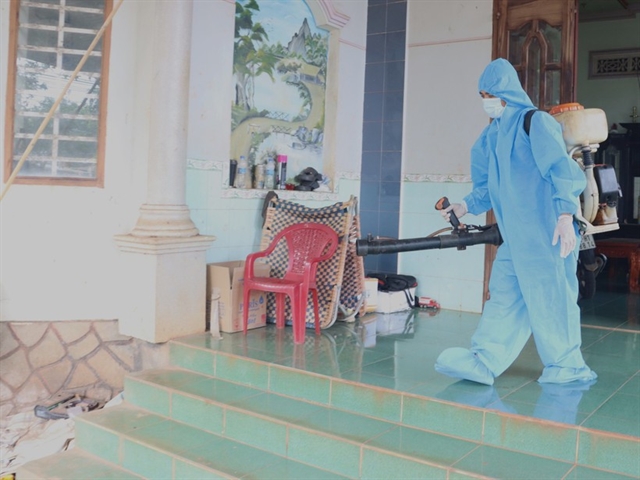 |
| Spraying chemicals to kill mosquitoes. — VNA/VNS Photo |
HÀ NỘI — The situation of dengue fever and hand, foot and mouth disease nation-wide in 2025 remained complex, according to the Ministry of Health.
Statistics show that the country recorded 190,040 dengue fever cases, up 28.4 per cent compared with 2024, and 107,249 cases of hand, foot and mouth disease, up 28.9 per cent year on year.
Although the number of cases of both diseases tended to decline in the final months of 2025 and early 2026, several localities have continued to record many severe and critical cases.
Treatment has been challenging and costly and carries a risk of long-term complications.
The primary reason was that many people remain complacent and seek medical care late, being admitted to hospital only when the disease has already progressed to a severe stage, thereby increasing the risk of complications.
Recently, the situation of dengue fever and hand, foot and mouth disease in HCM City has been particularly complex. While the number of dengue cases has shown a downward trend, the number of severe cases has remained high.
Hand, foot and mouth disease cases have also been high, with many severe and critical patients.
Dengue fever and hand, foot and mouth diseases are endemic in Việt Nam, with high case numbers and the potential to progress to severe illness and even death if not detected early and treated promptly.
The increase in dengue fever cases is attributed to changing weather conditions and rapid urbanisation, which has created numerous mosquito breeding sites in residential areas, construction sites, boarding houses and production zones.
As for hand, foot and mouth disease, the rise in cases is linked to inadequate personal hygiene, environmental sanitation and surface disinfection, as well as low disease prevention awareness within the community.
To strengthen disease prevention and control efforts and minimise infections and deaths, the Department of Disease Prevention has issued an official document requesting close monitoring of disease developments, thorough handling of ongoing outbreaks and timely detection of newly emerging clusters. Enhanced surveillance is required in hotspots and high-risk areas.
For hand, foot and mouth disease in particular, special attention must be given to monitoring children’s groups and kindergartens to ensure early detection and prompt response, preventing prolonged transmission.
At the same time, authorities are urged to intensify communication campaigns on dengue fever and hand, foot and mouth disease prevention, coordinating closely with local media outlets to deliver appropriate public information so that people actively adopt personal and community-level preventive measures. — VNS
Society
 Society
 Society
 Society
 Society
 Society
 Society
 Society
 Society
 Society
 Society
 Society
 Society
 Society
 Society