 Society

Việt Nam, Denmark issue joint statement on establishment of Comprehensive Strategic Partnership
1.
|
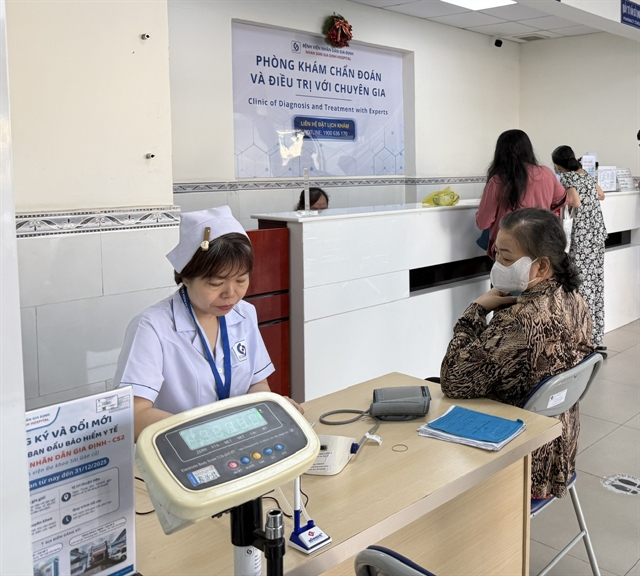
| Patients register for examination at the second facility of Nhân Dân Gia Định Hospital in HCM City. — VNS Photo Thu Hằng |
HCM CITY — All 38 regional health centres in HCM City, consisting of 168 health stations, were reorganised according to the two-tier local government model, becoming public service units directly under the people’s committees at the commune level, starting from January 1, according to the city’s Department of Health.
A total of 168 health stations under the management of the Department of Health were restructured into 168 commune, ward, and special zone health stations that are operating under the management of the local government in terms of organisational structure, personnel, and finance.
Following the handover from the Department of Health, the People’s Committee of the commune, ward, or special zone issued a decision to establish a commune-level health station as a public service unit under its direct management, ensuring it has the full functions of primary healthcare, preventive medicine, and community health care.
The department continues to provide guidance, support, and professional and technical inspection to the health stations.
The restructuring of the primary healthcare system is expected to bring healthcare services closer to the residents, improve the efficiency of State management of healthcare, and enhance the quality of primary healthcare in HCM City following the city’s merger with Bà Rịa-Vũng Tàu and Bình Dương provinces.
According to the new model, each commune-level health station includes a main health station, health station branches, and general and specialised clinics that provide medical examination and treatment services to residents in the area and neighbouring wards and communes.
From January 1, 25 regional health centres without inpatient beds ceased operations after the handover to commune-level health stations had been completed.
For 13 regional health centres with inpatient beds, including Thuận An, Dĩ An, Tân Uyên, Bến Cát, Dầu Tiếng, Phú Giáo, Bàu Bàng, Bắc Tân Uyên, Phú Mỹ, Châu Đức, Hồ Tràm, Long Đất and the Côn Đảo Special Zone Military and Civilian Medical Centre, these units transferred a portion of their resources for primary healthcare to commune-level health stations.
These centres will maintain inpatient examination and treatment and specialised services at the grassroots level. The department plans to upgrade these centres into hospitals or second facilities of hospitals in the city.
Assoc. Prof. Tăng Chí Thượng, director of the department, affirmed that the organisational restructuring will not disrupt healthcare services.
The department continues to improve the operational capacity of health stations and implement various solutions to support commune and ward health stations, he said.
The health stations are considered the foundation of the health system, and the health sector will always coordinate and provide timely support in terms of expertise, resources, and management to ensure the effective performance of the task of caring for, protecting, and improving the health of the people right from the grassroots level, he added. — VNS
Society
 Society
 Society
 Society
 Society
 Society
 Society
 Society
 Society
 Society
 Society
 Society
 Society
 Society
 Society