 Society

Results of the ixCrypto Index Series Quarterly Review (2026 Q3)
1.
 |
| A view of Terminal T3 of Tân Sơn Nhất International Airport in HCM City. VNA/VNS Photo |
HÀ NỘI — The Ministry of Construction has approved the task of formulating a master plan for Tân Sơn Nhất International Airport in HCM City for the 2021–2030 period, with a vision to 2050.
The plan aims to develop a comprehensive and coordinated framework aligned with new circumstances, meeting the growing air transport demand of the city and surrounding regions.
According to the decision recently approved by Minister of Construction Trần Hồng Minh, the commissioning of Long Thành International Airport, a new large-scale airport under construction in neighbouring Đồng Nai Province, the planned relocation of military units, and changes in urban development space have created an urgent need to adjust the planning of Tân Sơn Nhất International Airport to suit a new development phase.
The Civil Aviation Authority of Việt Nam (CAAV), the country’s aviation regulator, has been assigned to organise the planning process. The objective is to study and allocate space to ensure the airport develops in line with air transport demand and local socio-economic development requirements while also proposing an appropriate investment roadmap.
The CAAV noted that Tân Sơn Nhất is currently planned as a Category 4E airport with a designed capacity of 50 million passengers per year. The total planned land area of the airport exceeds 791 hectares, making it comparable in scale to the Nội Bài International Airport in Hà Nội.
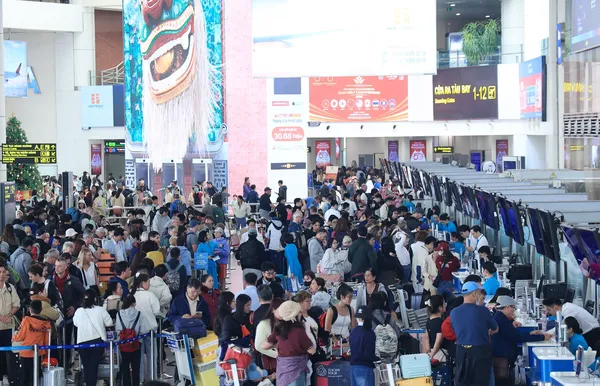
In recent years, several new factors have influenced the operational orientation of Tân Sơn Nhất. Notably, the commissioning of Terminal T3, with a designed capacity of 20 million passengers annually, has helped ease congestion at Terminals T1 (domestic) and T2 (international).
With the total planned capacity remaining at 50 million passengers per year, adjustments are required to the scale and operation of Terminals T1 and T2. These adjustments are intended not only to ensure operational efficiency but also to accommodate the growing demand for general aviation.
In addition, under existing plans, the 370th Air Division, a military unit located adjacent to Terminal T3, will be relocated to another site. The Prime Minister has directed that the cleared land be handed over for civil aviation use. This necessitates the planning of aviation infrastructure facilities and updates to land-use planning at Tân Sơn Nhất to provide a basis for implementation.
Once Long Thành International Airport becomes operational, functional authorities will need to reassess traffic allocation and operation between Long Thành and Tân Sơn Nhất. Based on this assessment, it will be necessary to consider whether adjustments to assumptions and orientations in previous planning cycles are required and to propose appropriate planning solutions.
Furthermore, following the merger of Bình Dương and Bà Rịa–Vũng Tàu provinces into HCM City, the city’s population size and economic scale are expected to increase significantly. The expansion of development space makes it necessary to update and comprehensively assess socio-economic conditions and regional development potential in relation to aviation activities at Tân Sơn Nhất Airport.
At the national level, the national master plan for the airport and airfield system for the 2021–2030 period, with a vision to 2050, has been approved by the Prime Minister under Decision 648/2023. However, Tân Sơn Nhất has yet to have a dedicated plan for this period, making the formulation of a specific master plan essential.
Under the approved task, the planning study will cover the entire Tân Sơn Nhất Airport area of approximately 791 hectares as well as surrounding areas. It includes airspace, flight routes and flight procedures serving airport operations and the establishment of flight procedures in the event of new airfield development.
The plan will also estimate total investment needs in line with the airport’s development requirements and outline a general phasing of development stages in the coming period. — VNS
Society
 Society
 Society
 Society
 Society
 Society
 Society
 Society
 Society
 Society
 Society
 Society
 Society
 Society
 Society