 Society
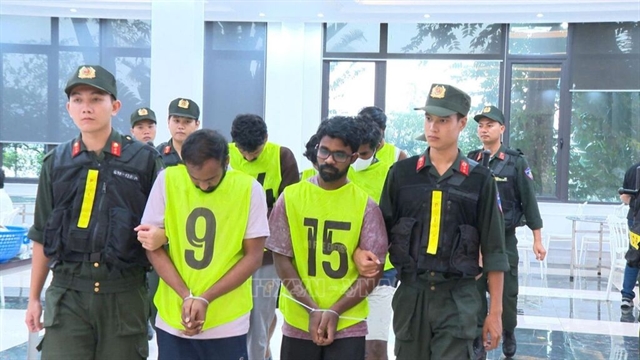
84 individuals investigated for transnational online frauds
1.
.jpg)
|
| Trần Lưu Quang, secretary of the HCM City Party Committee, chairs the expanded municipal Party Committee session discussing strategies for sustainable urban growth. — VNA/VNS Photo Tiến Lực |
HCM CITY — HCM City is gearing up to accelerate growth and urban transformation under the amended Resolution 98, which provides special mechanisms and policies to boost both local development and national influence.
Following the second expanded conference of the municipal Party Committee Executive Committee for the 2025-30 term on Monday (December 15), city leaders outlined a comprehensive roadmap covering economic growth, urban renewal, environmental protection, social housing, and public safety.
Trần Lưu Quang, secretary of the municipal Party Committee, chaired the session and said that key challenges include public investment disbursement, transport infrastructure, flood control, urban beautification, and environmental sustainability.
Trương Minh Huy Vũ, director of the city’s Institute for Development Research, reviewed global and domestic economic trends and presented three potential growth scenarios for 2026.
Under the most optimistic projection, leveraging the mechanisms under Resolution 98 and mobilising over US$10 billion for strategic projects could enable the city to achieve a growth rate of 10.5-11 percent.
“Resolving bottlenecks in investment, land clearance, and metro construction, alongside establishing the city’s International Financial Centre, will make such growth both achievable and sustainable,” he said.
Nguyễn Toàn Thắng, director of the Department of Agriculture and Environment, detailed a multi-pronged environmental plan, prioritising air quality improvement.
The programme targets over 12 million vehicles and around 23,000 industrial facilities, with measures including converting buses to electric and CNG, expanding the urban rail network, increasing electric taxis to 70 percent, and gradually restricting high-pollution vehicles in central districts.
“By 2030, the city aims to reduce air pollution to the lowest levels among major urban sources,” he said.
Trần Quang Lâm, director of the Department of Construction, noted that the city’s 1 million cars and 10 million motorcycles contribute to frequent congestion, particularly during peak hours.
“We are investing in sustainable and modern transport infrastructure, including roads, expressways, bridges, and six urban rail lines totaling 190 km by 2030, with five additional lines planned by 2035,” he said.
Traffic management improvements include AI-optimised control of 2,000 signalised intersections, digital mapping, and expansion of bus and bicycle networks to enhance mobility and reduce reliance on private vehicles.

|
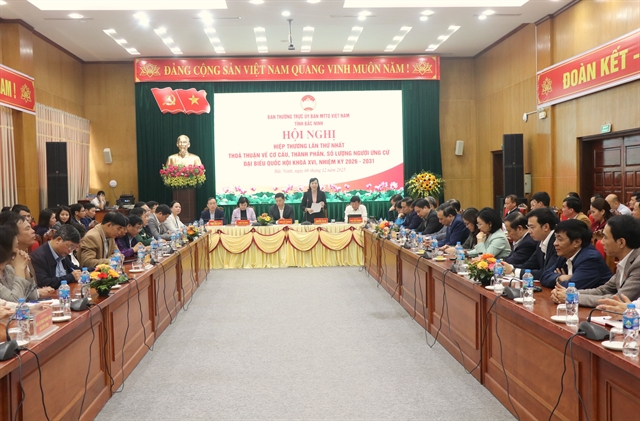
| Overview of the second expanded conference of the HCM City Party Committee Executive Committee for the 2025-30 term, outlining the city’s ambitious plan for growth, urban renewal, and environmental sustainability. — VNA/VNS Photo Tiến Lực |
Nguyễn Văn Được, chairman of the City People’s Committee, emphasised the need for coordinated policies and strong enforcement to achieve a green transformation.
Measures include relocating polluting industrial clusters, enhancing environmental monitoring, and implementing flood control solutions, such as a VNĐ10 trillion ($380 million) project set for completion in 2026.
On social housing, authorities are accelerating efforts to attract strategic investors for urban renewal and affordable housing projects.
By 2025, the city is expected to complete 13,040 social housing units, 97 percent of which have already been delivered.
The 2026 target has been raised to 28,500 units, with land currently being prepared for 38 projects spanning 732 hectares.
Programmes to relocate 39,600 homes along canals and rivers are also underway, improving drainage and urban aesthetics, with 22,000 units already addressed through 38 public investment projects.
The high demand for affordable housing remains a pressing issue, especially as people continue moving to the city for work and residence, Được said.
“We must plan ahead to ensure residents can settle securely and contribute to sustainable urban development,” he said.
City authorities are also committed to strengthening public safety and social order, with a focus on creating a “drug-free city.”
Coordinated efforts involve the Việt Nam Fatherland Front, community organisations, and law enforcement agencies, including community-based anti-drug campaigns, stricter enforcement against traffickers, and improved monitoring of production and distribution networks.
The conference also recognised the contributions of 12 outstanding collectives and 14 individuals, awarding certificates of merit for their work in organising the city’s 2025-30 development initiatives.
Leaders reaffirmed plans to continue attracting strategic investors for urban renewal, supporting sustainable growth in the years ahead.
With the support of amended Resolution 98, targeted infrastructure investment, proactive environmental initiatives, and a strong commitment to affordable housing and public safety, the city is positioned to achieve sustainable growth and emerge as a model of modern urban development in the decade ahead. — VNS
Society
 Society
 Society
 Society
 Society
 Society
 Society
 Society
 Society
 Society
 Society
 Society
 Society
 Society
 Society