 Politics & Law
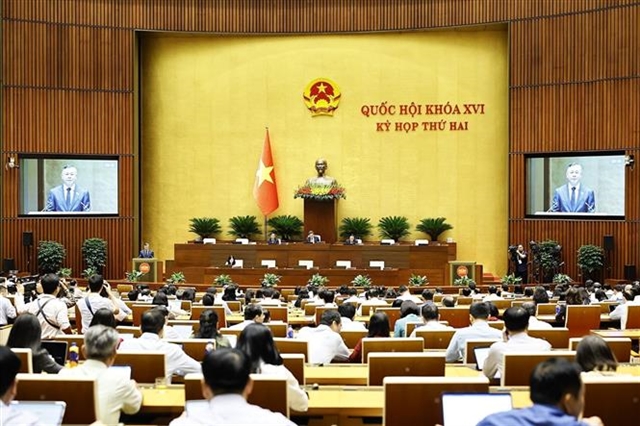
Government considers easing market access conditions for foreign investors
1.
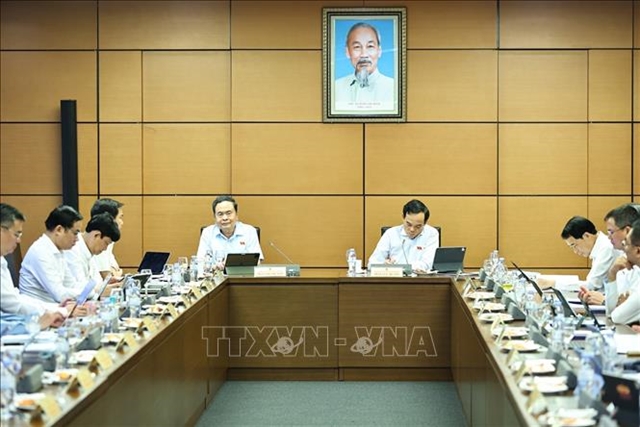 |
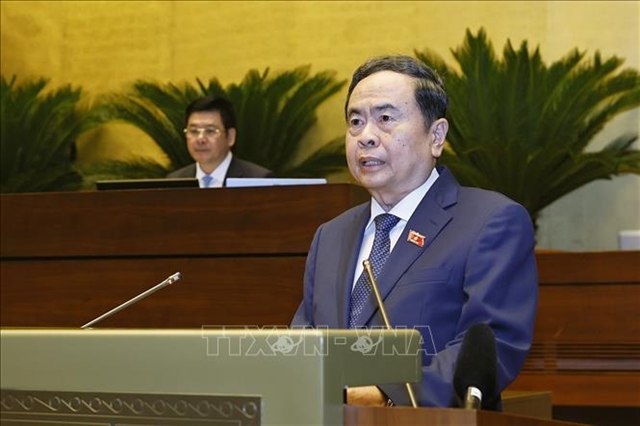
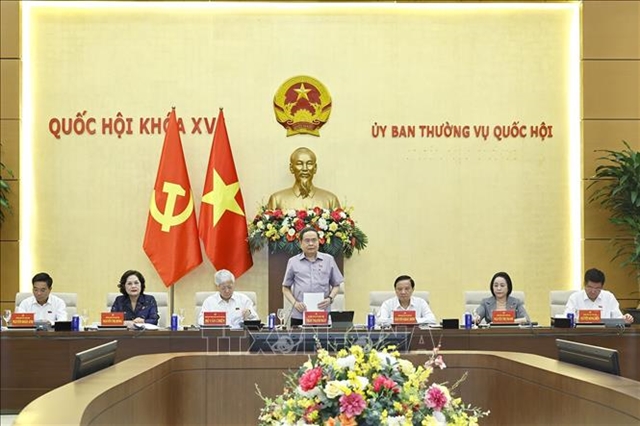
| NA Chairman Trần Thanh Mẫn (left) speaks at the group debate on Monday. — VNA/VNS Photo |
HÀ NỘI — Việt Nam’s push to slash conditional business sectors and lines must deliver substance, not just headline numbers, said Chairman of the National Assembly (NA) Trần Thanh Mẫn.
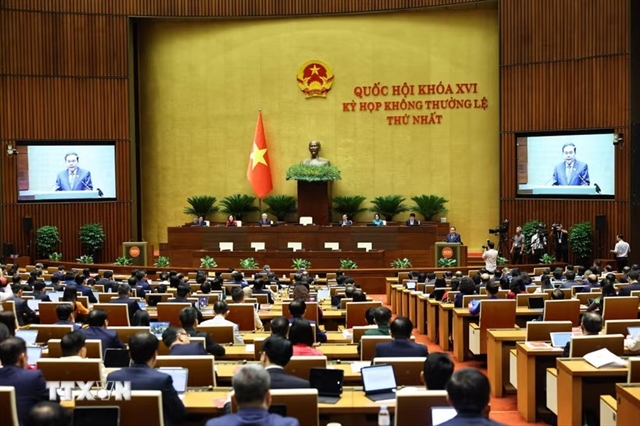
He made the request at a group debate on the draft law amending and supplementing Article 6 and Appendix IV on the list of conditional business sectors and lines under the Law on Investment in Hà Nội on Monday, as part of the 16th NA’s first extraordinary session.
Policymakers must incorporate feedback from enterprises and those directly hit by the rules to make better reforms to the business climate, he said.
Qualitative rules without clear criteria in crosshairs
Chairman Mẫn stressed that the draft law seeks to follow the Party Central Committee’s Conclusion No.18-KL/TW on cutting at least 30 per cent of conditional sectors and lines and stripping out all unnecessary business conditions.
Drafting and verification bodies were assigned to keep only those conditions tied to national defence, security, public safety, social ethics, public health, environment protection, and some others.
He also called for replacing some business conditions with technical standards, post-approval checks and penalty regimes.
In sectors that have operated stably and where companies can self-regulate and comply with legal regulations, conditions should be scrapped to level the playing field, he said.
He also urged curbing the fragmentation of business conditions rules across multiple legal documents, and tackling vague regulations that lack measurable criteria and are hard to enforce.
The top legislator called for a regular review mechanism to remove outdated sectors, particularly in fast-moving fields like digital technology, innovation and digital finance.
Cutting procedural costs and delays
On a separate draft law amending and supplementing a number of articles of the Law on Customs, lawmaker Nguyễn Phương Bắc from Cà Mau Province urged a feasibility check on mandating electronic identity verification for Vietnamese entities and individuals trading cross-border via e-commerce platforms.
With massive transaction volumes, Bắc asked for clarity on verification methods, enforcement, who bears responsibility, and how the rule applies to platforms and foreign suppliers with no physical presence in Việt Nam.
Using the national VNeID digital identification system must synchronise with customs data and create a seamless link between local buyers and foreign sellers, he said.
The draft risks creating new red tape, he warned, adding that any new steps should be mandated online to slash processing time and costs for citizens and enterprises.
Deputy Trần Thị Vân from Bắc Ninh Province said seller verification and authentication requirements for e-commerce platforms are already mapped out in existing law, chiefly the 2020 Law on E-commerce and its guiding regulations. Those rules explicitly set out platform operators' duties and sellers' obligations to provide, update and guarantee the accuracy of information.
She urged the drafting agency to carefully review the bill to avoid overlaps and ensure consistency across the legal system.
If additional rules remain unavoidable, the draft should limit itself to setting coordination principles or cross-referencing e-commerce and electronic identification legislation rather than reproducing those rules in the Customs Law, she said. — VNA/VNS
Politics & Law
 Politics & Law
 Politics & Law
 Politics & Law
 Politics & Law
 Politics & Law
 Politics & Law
 Politics & Law
 Politics & Law
 Politics & Law
 Politics & Law
 Politics & Law
 Politics & Law
 Politics & Law
 Politics & Law
.jpg)


.jpg)



