 Politics & Law
Smart Banking 2026 to open next week in Hà Nội
1.
|
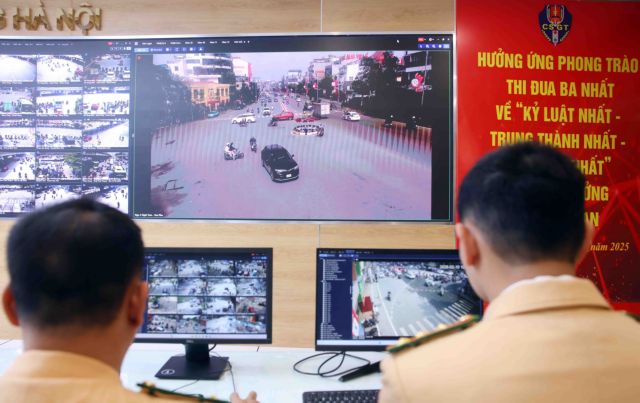
| Hà Nội traffic police monitor traffic through AI-powered camera systems. The majority of AI systems classified by the Government as 'high-risk' is related to transportation. — VNA/VNS Photo Phạm Kiên |
HÀ NỘI — The Government has released a list of artificial intelligence (AI) systems classified as ‘high-risk’ that face the highest level of regulation under the Law on Artificial Intelligence.
These systems are defined as those that may cause significant harm to the lives, health, legitimate rights and interests of organisations and individuals in Việt Nam, and to the country’s national interests, public interests and national security.
Under the AI law, their risk level must be reported to the Ministry of Science and Technology before use, and a conformity assessment must be conducted before and maintained throughout their deployment.
Providers and operators of these systems are obliged to establish and maintain a risk management plan during their operations.
A total of 46 systems were listed as ‘high-risk’ in the Government’s Decree 33, signed by Deputy Prime Minister Hồ Quốc Dũng on June 30, across six groups of education, ethnicity and religion, healthcare, banking, litigation and transportation.
The majority of them, 31, falls under the transportation category, including automated vehicle control systems without human oversight, automated traffic and signal directing systems, and those that have direct access to the monitoring systems of major road infrastructure such as tunnels, bridges and expressways, or critical urban infrastructure such as water supply and lighting.
Seven of them fall under ethnic and religion, including those that automatically score, categorise and ranks applications to determine eligibility and geographical areas for policy benefits. and allocate budgets accordingly.
Three systems fall under education, which are those that provide self-learning content using uncontrolled data sources, those that automatically evaluate results and ranks learners, and those that monitor and analyse learner’s behaviours with biometric data.
Two systems fall under healthcare, which are those integrated into robots to directly perform or participate in surgeries on humans. Two fall under banking, which are systems that automatically execute large-value electronic transactions and that make independent credit granting decisions.
AI-powered large-scale biometric identification for resolving public civil cases is the only high-risk system listed for the field of litigation.
The decree will take effect on August 15, with transitional periods running until September 1, 2027 for education, healthcare and banking systems that have gone into operation before the issuance of the decree, and until March 1, 2027, for all other existing high-risk AI systems.
This means that these systems can continue to operate during the transitional periods, unless regulators request their temporary suspension or termination due to detection of substantial risks of damage to users and those involved in the operations. — VNS
Politics & Law
 Politics & Law
 Politics & Law
 Politics & Law
 Politics & Law
 Politics & Law
 Politics & Law
 Politics & Law
 Politics & Law
 Politics & Law
 Politics & Law
 Politics & Law
 Politics & Law
 Politics & Law
 Politics & Law