 Politics & Law
HCM City refines master plan to preserve traditional crafts, rural livelihoods
1.
|
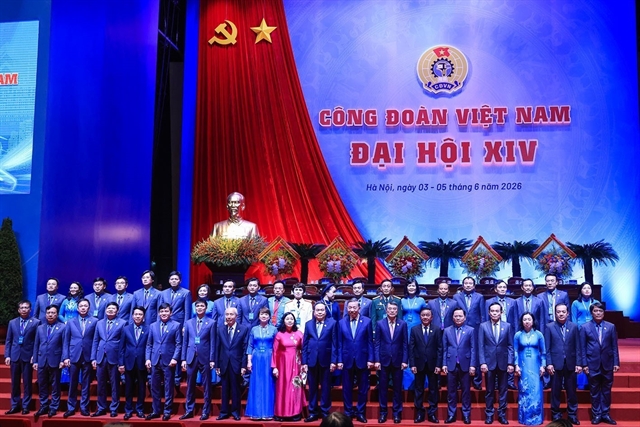
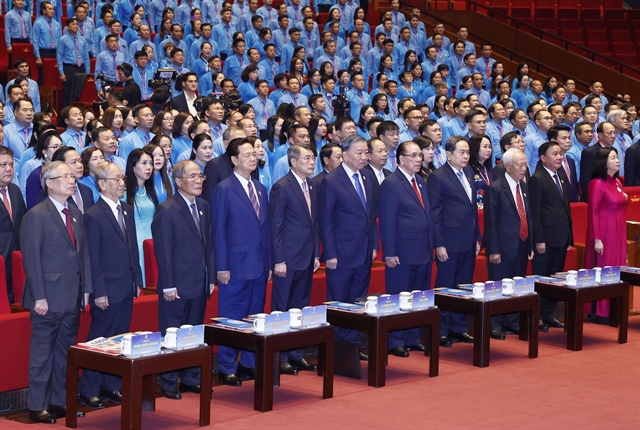
| Party and State leaders pose for a commemorative photo with delegates of the 14th National Congress of the Việt Nam General Confederation of Labour in Hà Nội on Tuesday. — VNA/VNS Photo Tuấn Anh |
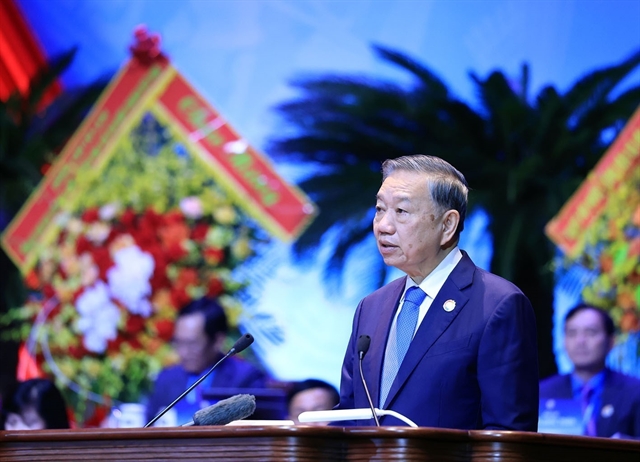
HÀ NỘI — Việt Nam needs a more modern, resilient and innovative working class, said Party General Secretary and State President Tô Lâm at the 14th National Congress of the Việt Nam General Confederation of Labour (VGCL) in Hà Nội on Thursday.
Addressing 780 delegates representing nearly 10 million trade union members nationwide, the top leader said that workers’ contributions are crucial for national development, adding that trade unions must be more closely attuned to workers' needs.
During the congress, delegates discussed issues directly affecting trade union members and workers, focusing on representing, supporting and protecting their legitimate rights and interests, developing local trade unions, enhancing the quality of trade union officials, reforming communication and outreach efforts, and implementing patriotic emulation movements.
|
| Party General Secretary and State President Tô Lâm addresses the 14th National Congress of the Việt Nam General Confederation of Labour. — VNA/VNS Photo Tuấn Anh |
Lâm noted that as the country enters a new development stage and works towards its goals for 2030 and 2045, the labour force plays a particularly important role and thus requires comprehensive training, support and engagement to ensure sustainable development.
He said the congress offered an opportunity to answer a critical question on how Vietnamese trade unions should reform themselves to become a truly reliable support for workers, a strong bridge between the Party, the State and the working class, and a key force contributing to national development in the new era.
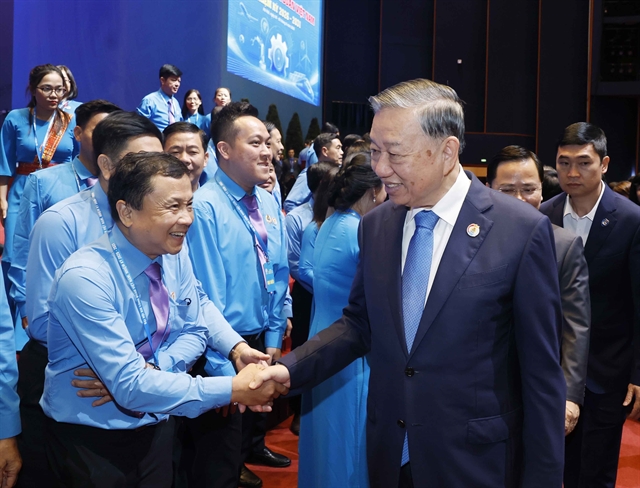
|
| Party General Secretary and State President Tô Lâm greets delegates at the 14th National Congress of the Việt Nam General Confederation of Labour. — VNA/VNS Photo Thống Nhất |
The top leader agreed with the objectives and tasks set out by the congress, commending the significant achievements of the working class, officials, workers and trade unions during the past term.
Calling for more substantive reform, Lâm urged the trade unions to help build a modern, strong Vietnamese working class. Today's workers need not only diligence but also knowledge, skills and discipline, as well as the ability to master technology and a spirit of innovation, he said.
Trade unions must work alongside the State, businesses and educational institutions to improve workers’ professional qualifications, digital skills and adaptability, Lâm stated, adding that every worker should have opportunities for lifelong learning and welfare support to improve their lives.
Noting that trade unions must place their members and workers at the core of their work, the top Vietnamese leader said that the unions’ effectiveness must be measured by workers’ trust, member satisfaction, the quality of collective labour agreements, successful cases of rights protection and tangible improvements in living conditions.
Vietnamese trade unions must become more modern, professional, digitalised and transparent, capable of effectively representing and supporting workers in the new context, he added.
Trade unions must also play a more active role in Party building and strengthening the political system to consolidate the Party’s social foundation among the working class.
Reiterating that the Party, State, National Assembly, Government and the entire political system continue to work closely with trade unions, the Việt Nam Fatherland Front and workers, Lâm stressed that authorities must consider caring for the working class a key political task, regularly engage in dialogue and promptly address their legitimate concerns.
Achievements and recommendations
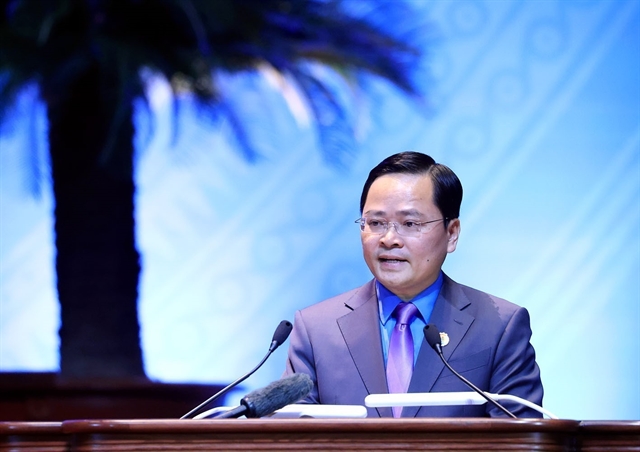
VGCL President Nguyễn Anh Tuấn also spoke at the conference, highlighting the confederation’s achievements since 2023.
|
| President of the Việt Nam General Confederation of Labour Nguyễn Anh Tuấn addresses the congress on Tuesday. — VNA/VNS Photo Tuấn Anh |
He noted that both the coverage and quality of collective labour agreements have improved, with such agreements now covering 80.4 per cent of companies that have established local trade unions, up 8.3 per cent compared to the beginning of the term.
Employee welfare programmes have also been expanded and diversified. Over the past two years, trade unions have allocated more than VNĐ27.2 trillion (over US$1 billion) to support workers nationwide.
Patriotic emulation movements have continued to gain momentum, encouraging innovation and creativity among workers. More than 380,000 initiatives have been implemented, generating economic benefits exceeding VNĐ40 trillion ($1.5 billion) and contributing directly to business performance and national development, Tuấn noted.
Trade unions nationwide recruited more than 2.2 million new members and established over 15,000 new grassroots trade unions and labour associations between the start of 2024 and May 2026.
At the meeting, a draft report by the 13th VGCL Executive Committee sets overarching goals for the 2026-2031 term, including improving organisational structures and operational effectiveness, strengthening the representation and protection of workers’ rights and legitimate interests, encouraging innovation and enhancing labour productivity.
The report also outlines key performance targets and major groups of tasks for the next term.
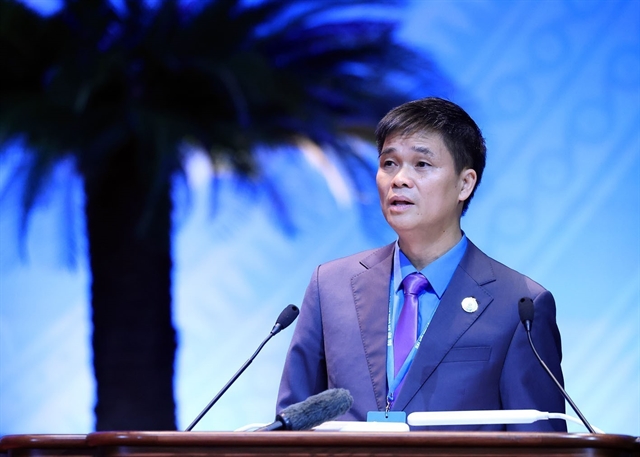
At the plenary session, VGCL Vice President Ngọ Duy Hiểu presented workers’ opinions and recommendations submitted to the congress.
|
| Vice President of the Việt Nam General Confederation of Labour Ngọ Duy Hiểu speaks at the congress on Tuesday. — VNA/VNS Photo Tuấn Anh |
In terms of labour policies, workers called on the NA to undertake a comprehensive revision of the 2019 Labour Code to better respond to changes in the economy and labour market amid the digital transformation, green transition and rapid advancements in science and technology.
To improve the settlement of labour disputes, some participants proposed adding a labour procedure law to the legislative programme of the 16th NA, aiming to establish a more professional, effective mechanism to address this type of dispute.
They also recommended adding provisions on employers’ responsibilities for shift meals, physical and mental healthcare, the prevention of workplace stress and burnout, and the development of flexible working arrangements in the current digital era.
Some proposed reducing standard weekly working hours to 40-44 hours instead of the current 48 hours, in line with current socio-economic conditions and the growing emphasis on workers’ quality of life.
Amid the rapid development of artificial intelligence, many attendees stressed the need to promptly complete regulations governing workers’ rights and employers’ responsibilities in the adoption of new technologies, while also developing a workforce strategy to improve workers’ adaptability to labour market changes.
Delegates noted that a highly skilled, adaptable workforce would be a key factor in improving labour productivity and enhancing the country’s competitiveness in the future.
Along with institutional reforms, sustainable employment, wages and social welfare remained major concerns for workers. — VNS
Politics & Law
 Politics & Law
 Politics & Law
 Politics & Law
 Politics & Law
 Politics & Law
 Politics & Law
 Politics & Law
 Politics & Law
 Politics & Law
 Politics & Law
 Politics & Law
 Politics & Law
 Politics & Law
 Politics & Law