 Politics & Law

Lotte, Phát Đạt combine strengths in Thu Thiem project
1.
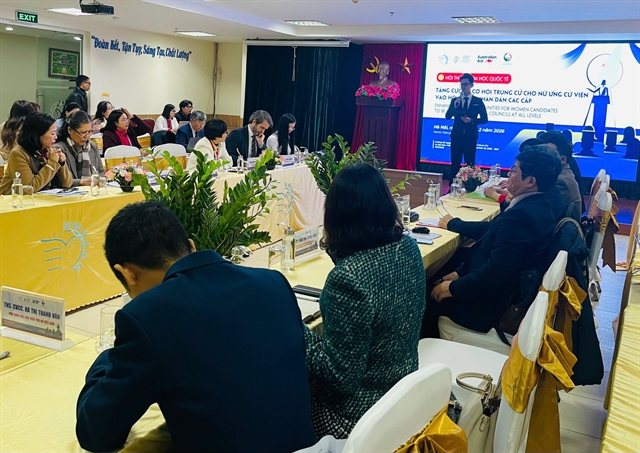 |
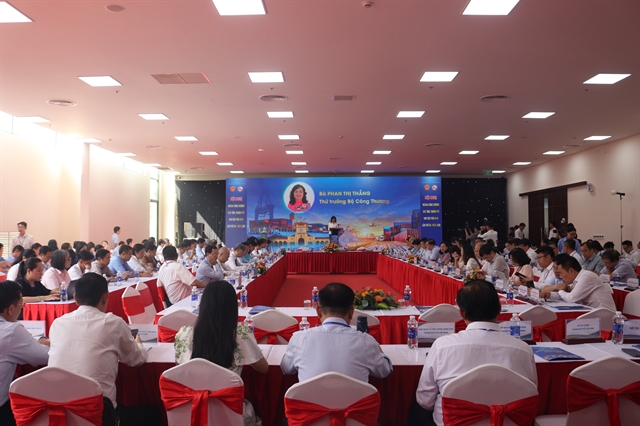
| Experts gather at the scientific workshop. — VNS Photo Thu Trang |
HÀ NỘI — Vietnamese women remain a vital force in national development, prompting the Party and State to consistently uphold gender equality as both a fundamental human right and a prerequisite for sustainable growth.
Yet gaps between policy goals and political reality persist, particularly in elected bodies at the local level.
Nguyễn Thị Thu Hiền, vice chairwoman of the Việt Nam Women’s Union, made the remarks at the scientific workshop Enhancing opportunities for women candidates to be elected to people’s councils at all levels, held in Hà Nội on Monday.
The event was co-organised by the Việt Nam Women’s Academy and the Australian People for Health, Education and Development Abroad (APHEDA) and was sponsored by the Irish Government, the Australian Government and the APHEDA.
Speaking at the workshop, Hiền said that strengthening women’s participation in state agencies, especially elected bodies at grassroots level, played a crucial role in promoting democracy and improving the effectiveness of governance.
“In recent years, Việt Nam has achieved many positive results in accelerating gender equality in the political sphere,” she said.
The proportion of female National Assembly (NA) deputies and People’s Council deputies at all levels gradually increased, with many women demonstrating strong capacity and responsibility in supervisory work and decision-making on key local issues.
In the 15th NA term (2021–2026), women account for 30.26 per cent of total deputies, the highest proportion since the sixth term and an improvement on previous legislatures.
Female candidates made up about 45.28 per cent of all candidates, also the highest level recorded in recent elections.
“Although nearing or exceeding 30 per cent in some bodies, the proportion of women in the NA and people’s councils has not yet fully reached the 35 per cent target and remains quite far from the proportion of women in the total population,” she said.
The share of women elected to people’s councils at all levels remained uneven and varied significantly between localities.
“Additionally, gender stereotypes and the dual burden of social work and family responsibilities continue to greatly affect women’s political participation. Access to training programmes and skill development essential for election campaigns and participation in elected bodies, especially for young women and ethnic minority women, is still limited,” Hiền said.
Solutions
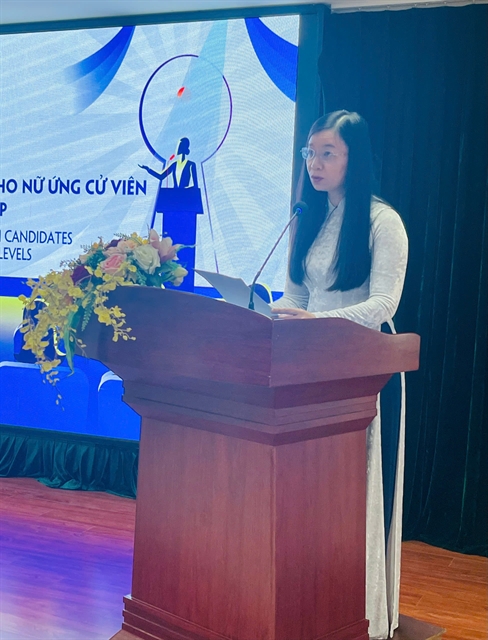 |
| Nguyễn Thị Thu Hiền, vice chairwoman of the Việt Nam Women’s Union, confirms women’s important role in national development. — VNS Photo Thu Trang |
Hiền believes that strengthening women’s participation in elected bodies requires a comprehensive approach, combining scientific research, international experience and Việt Nam’s practical realities to provide a stronger basis for refining policies and solutions in the period ahead.
“As the organisation representing the legitimate rights and interests of women, the Việt Nam Women’s Union identifies promoting women’s participation in leadership, management and politics as a regular task,” she said.
In recent years, the union has taken part in drafting and overseeing the implementation of gender equality policies, coordinated the identification and introduction of female cadres and organised leadership and management skills training, according to Hiền.
It has also provided training for female candidates for NA deputies and people’s council deputies at all levels and supported women in preparation, campaigning and fulfilling their duties after election.
“Practice shows that individual efforts are not enough. Enhancing election opportunities for female candidates requires synchronised participation from the entire political system, close coordination between Party and State agencies, political-social organisations, training and research bases as well as broader societal support,” Hiền said.
Trần Quang Tiến, Director of the Việt Nam Women’s Academy, said the workshop was among these efforts.
The event was held as Việt Nam continues to accelerate its renovation process, build and refine a socialist rule-of-law state and implement the two-tier government model nationwide.
“In that process, enhancing women’s participation in elected bodies, particularly people’s councils at all levels, is identified as one of the key priorities to ensure gender equality in the political sphere, improve the representative quality of elected bodies and realise sustainable development,” he said.
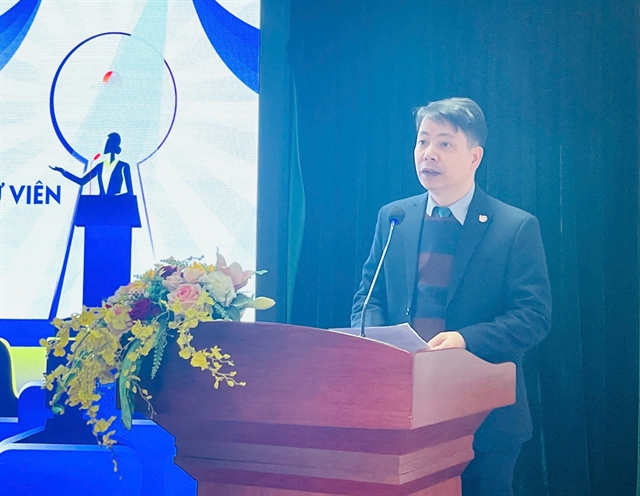 |
| Trần Quang Tiến, Director of the Việt Nam Women’s Academy, believes enhancing women's participation in elected people's councils at all levels is one of key contents to ensure gender equality. — VNS Photo Thu Trang |
The scientific workshop was of considerable importance, not only from an academic perspective but also in offering key recommendations for policy planning, implementation and concrete solutions.
It helped raise public awareness of women’s roles and contributions within the political system, foster community consensus and support for women’s participation in elected bodies in Việt Nam and contribute to the effective realisation of national gender equality goals and the Sustainable Development Goals, particularly Sustainable Development Goal 5 on gender equality, Tiến confirmed.
During the event, experts discussed three main themes: the role and voice of female people’s council deputies; the current situation and solutions to improve election prospects for female candidates; and the advantages and challenges in the process of women’s political participation.
The presentations and discussions provided a comprehensive picture of women’s political participation, while proposing practical solutions to enhance both the proportion and quality of female deputies in elected bodies.
Held ahead of the election of NA deputies and People’s Council deputies for the 2026–2031 term, the workshop has clear practical significance in identifying barriers facing female candidates and suggesting appropriate approaches to strengthen women’s participation in the upcoming term. — VNS
Politics & Law
 Politics & Law
 Politics & Law
 Politics & Law
 Politics & Law
 Politics & Law
 Politics & Law
 Politics & Law
 Politics & Law
 Politics & Law
 Politics & Law
 Politics & Law
 Politics & Law
.jpg) Politics & Law
Politics & Law
 Politics & Law