 Life & Style
Lotte, Phát Đạt combine strengths in Thu Thiem project
1.
|
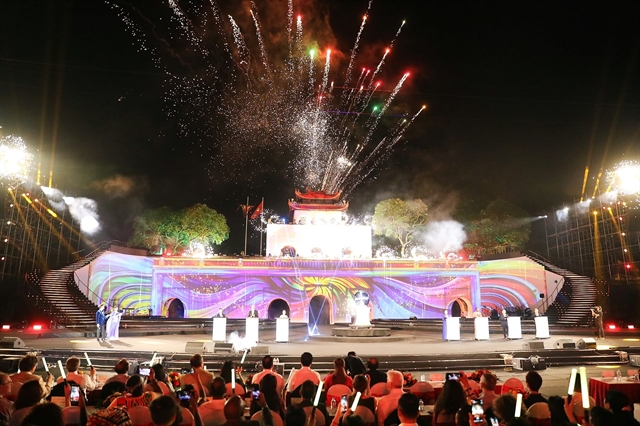
| The second Cultures of the World Festival runs from October 1 to 4, with the participation of 50 countries and international organisations. VNS Photos Đoàn Tùng |
HÀ NỘI — The second Cultures of the World Festival 2026 features a vibrant programme showcasing global cultural diversity in the heart of Hà Nội, the City for Peace.
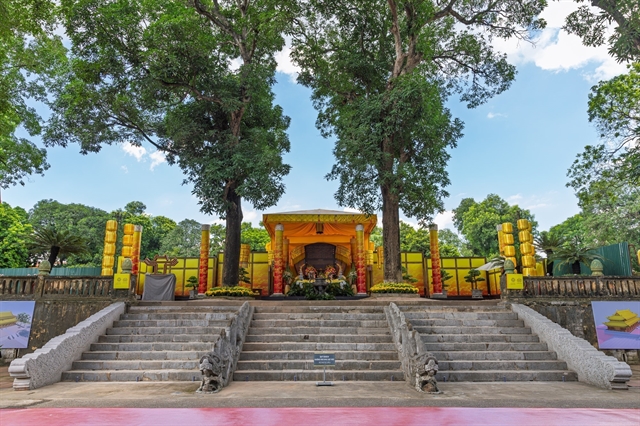
The event officially opened on October 1 at the Thăng Long Imperial Citadel under the theme 'Converging Heritage – Shaping the Future' and will last until October 4.
The four-day festival is jointly organised by the Ministry of Culture, Sports and Tourism, the Ministry of Foreign Affairs and the Hà Nội People’s Committee.
Addressing the event, Deputy Prime Minister Phạm Thị Thanh Trà said the festival was a gathering that connects cultures, spreads the spirit of friendship and creativity, and promotes dialogue for peace and development.
|
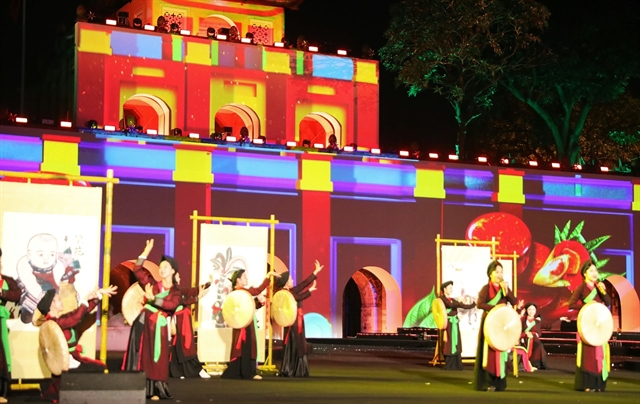
| Vietnamese artists perform quan họ (love duet) folk singing, the UNESCO Intangible Cultural Heritage of Humanity, at the opening ceremony. |
This year's festival takes on special significance, as marks the 50th anniversary of Việt Nam’s accession to UNESCO and is being held at the Thăng Long Imperial Citadel, a UNESCO World Heritage Site.
The site is a symbol of Việt Nam’s long history, cultural vitality and aspiration for peace and prosperity, she said.
Trà said heritage represents the memory of each nation and the result of human knowledge, labour and creativity accumulated over thousands of years. However, heritage doesn't belong only to the past. It remains in the present and serves as an important resource for shaping the future.
"Each country and nation has its own heritage, but when brought together, these cultural values enrich the diversity of human civilisation," she said.
"Folk songs, dances, music and traditional performing arts, as well as traditional costumes, cuisine, handicrafts, monuments, landscapes, festivals and folk knowledge, all tell stories about people, cultures, homelands and the aspirations and values that generations seek to pass on to the future.
|
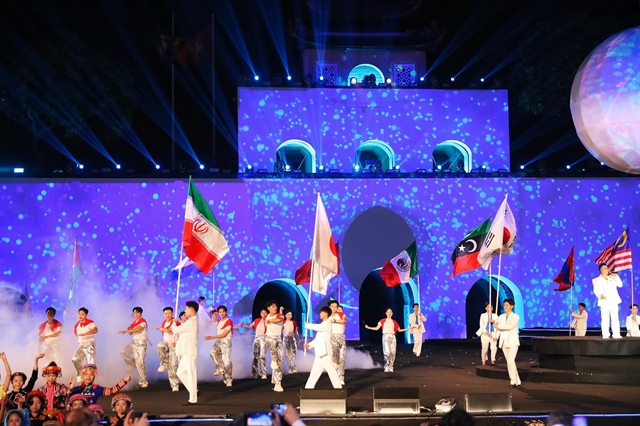
| Flags of participating countries in a parade on stage. |
“Convergence of heritage is therefore a convergence of people, while convergence of cultures is a convergence of shared human values,” she said.
She noted that the world is undergoing rapid changes, with digital technology, artificial intelligence and new forms of communication transforming how people create, experience and share cultural values.
Việt Nam views culture as both the spiritual foundation of society and an important goal, driving force and resource for national development, she said.
The country is working to build an advanced culture imbued with national identity, while actively absorbing the cultural quintessence of humanity and expanding international cultural exchange and cooperation.
|
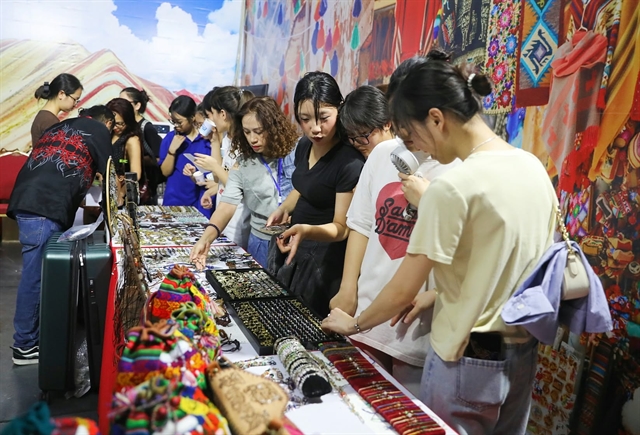
| Visitors can tour booths representing different parts of the world, as countries bring their best products to show at the festival. |
The deputy PM stressed that heritage conservation must go hand in hand with promotion, tradition with creativity and heritage with contemporary life. Science, technology and AI should also be further applied to digitise, preserve, restore and promote heritage, helping bring authentic cultural values closer to communities, particularly younger generations.
This year's event gathers 50 countries and international organisations, expanding the scale and reach of the international-level public diplomacy event.
It features 45 cultural spaces and 35 booths highlighting world cuisine, along with movie screenings from 18 countries, performances by 19 international arts troupes and traditional fashion shows from 16 delegations. According to the organisers, the festival is breathing new life into the ancient citadel site.
The opening ceremony featured renowned artists and prestigious performing arts troupes from Việt Nam, alongside international delegations from Azerbaijan, Bangladesh, China, Indonesia, Israel, the Republic of Korea, Laos, Pakistan, Peru and Ukraine, creating a diverse and captivating space for artistic exchange.
|
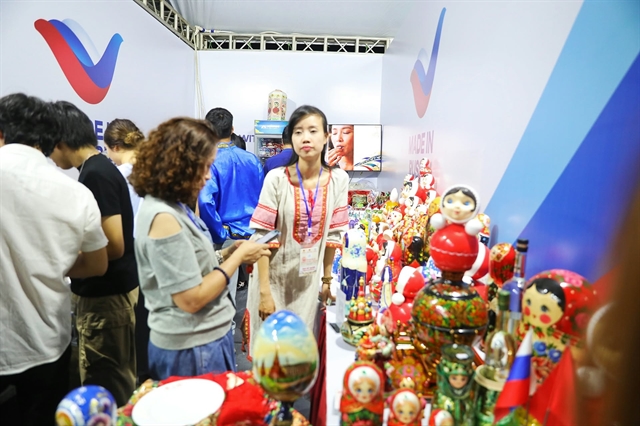
| Visitors at the Russian booth. |
The Việt Nam Đa Sắc” (Multifaceted Việt Nam) programme fully showcased the cultural identities of the host's 54 ethnic groups through dramatic vignettes and medleys of folk songs from the three regions, including nhã nhạc royal court music of Huế and quan họ (love duet) melodies from Bắc Ninh.
The Năm Châu Hội Tụ (Convergence of Five Continents) programme brought together the vibrant colours of international performing arts troupes, upholding respect for the diversity of human culture.
One major highlight was a 3D mapping projection offering a spectacular visual experience that recreated Vietnamese cultural symbols, heritage and landscapes.
|
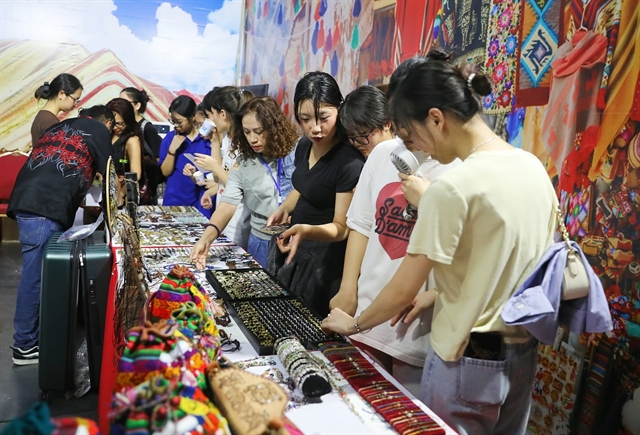
| Türkiye's space is one of the most popular areas at the festival. |
For the rest of the festival, residents and visitors to Hà Nội can take part in a wide range of activities, including sightseeing and experiences at the Việt Nam National Village for Ethnic Culture and Tourism on October 2 and the Colours of the Five Continents street parade on October 3.
Other programmes include the Concert of the Five Continents music show on October 2 and 3, free movie screenings every day at the Thăng Long Imperial Citadel and the closing ceremony on October 4.
UNESCO World Heritage Centre Director Lazare Eloundou Assomo said there could be no more suitable venue for the festival than the Thăng Long Imperial Citadel, whose archaeological layers span more than a millennium and reflect the continuity of political and cultural life.
He described the celebration of world cultures at a place representing the enduring creative journey of a civilisation as a powerful statement on the meaning of heritage. — VNS
Life & Style
 Life & Style
 Life & Style
 Life & Style
 Life & Style
 Life & Style
 Life & Style
 Life & Style
 Life & Style
 Life & Style
 Life & Style
 Life & Style
 Life & Style
 Life & Style
 Life & Style