 Life & Style
VN-Index ends lower despite liquidity hit over $1 billion
1.
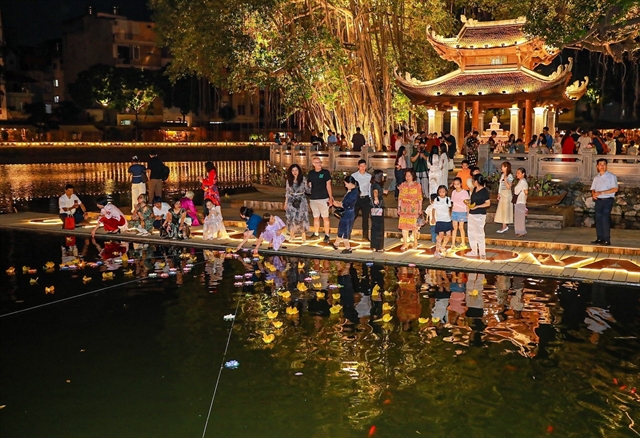 |
| Lantern floating in Văn Miếu (Temple of Literature), a new nighttime tourism activity in Hà Nội. — VNA/VNS Photo |
HÀ NỘI — Việt Nam aims to turn tourism into a key economic sector, targeting a contribution of 10-12 per cent of gross domestic product by 2030 while shifting its focus towards higher-spending visitors, longer stays and greater economic value.
The Politburo's Resolution No. 26-NQ/TW, recently signed by Party General Secretary and State President Tô Lâm, calls for the development of high-quality, smart, green and innovative tourism that is rich in cultural identity and competitive regionally and internationally.
The resolution says tourism should generate stronger spillover effects across other sectors, helping drive economic growth and innovation while promoting sustainable development and contributing to the country's cultural industries and soft power.
By 2030, Việt Nam aims to rank among Southeast Asia's leading destinations in terms of tourism scale and growth, attract 45-50 million international visitors and serve 160 million domestic tourists. Total tourism receipts are targeted at US$80-$90 billion, with priority given to visitors who spend more and stay longer.
The country also plans to develop three major tourism growth poles in Hà Nội, HCM City, and Đà Nẵng, alongside 10 key tourism centres and 20 national tourism areas.
The resolution targets about 1.5 million tourist accommodation rooms and an industry workforce generating around 2.3 million direct jobs and 3.5 million indirect jobs.
Việt Nam will also seek to establish a national smart tourism ecosystem, including a national tourism database and a national digital tourism platform.
By 2045, tourism is expected to contribute as much as 14-15 per cent of GDP, with the country targeting being placed among the world's 30 most competitive tourism economies and 70 million international visitors.
The resolution identifies eight major groups of tasks, including institutional reform, infrastructure development, market and product diversification, tourism promotion, human resources, digital transformation, smart tourism and green and sustainable destination management.
From volume to value
A central shift in the new policy is a move away from a tourism model focused primarily on visitor numbers and resource exploitation towards one centred on quality, efficiency, higher added value, and distinctive visitor experiences.
Authorities are also expected to move from administrative management towards management of an integrated tourism service ecosystem, while making tourism development part of greater economic, cultural, environmental, national security, and international integration strategies.
The resolution calls for policies to support emerging models including the sharing economy, digital-platform businesses, the night-time economy, riverfront and coastal economies, and integrated tourism, cultural, sports and entertainment complexes.
It also calls for research into a value-added tax refund mechanism to promote shopping tourism and regulations governing cross-border online tourism platforms.
Public-private partnerships are to be expanded in the preservation, management and exploitation of destinations of special value, while strategic investors will be encouraged to develop tourism infrastructure and major projects.
Visa and entry policies are to be further reformed, including wider visa exemptions and more flexible policies for key markets, with the aim of attracting higher-spending and longer-staying tourists.
The government is also expected to strengthen financial resources for tourism through the tourism development support fund, investment funds, credit guarantees and preferential loans, including interest-rate support for green and sustainable projects.
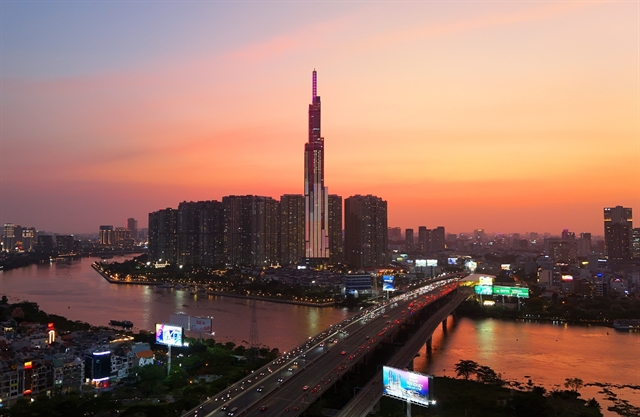 |
| A view of HCM City's skyline. — VNA/VNS Photo |
Infrastructure and new products
The resolution places emphasis on multimodal transport infrastructure linking international gateways with major economic regions, tourism centres and national tourism areas.
It calls for development of aviation, rail, waterways, seaports, marinas, convention and exhibition centres, cultural facilities and digital infrastructure.
Việt Nam also aims to improve its capacity to receive large cruise ships and develop large-scale resorts and integrated tourism, cultural, sports, entertainment and shopping complexes.
Hà Nội, HCM City, Đà Nẵng, heritage cities, and Phú Quốc island are identified as important tourism growth poles and centres.
On tourism products, the resolution prioritises cultural tourism linked to the cultural industries, the heritage and night-time economies, as well as marine and island resorts, mountain and forest ecotourism, waterway and high-end rail tourism, medical and wellness tourism, sports, meetings, incentives, conferences and exhibitions (MICE), shopping, cuisine and community-based tourism.
Localities are encouraged to develop distinctive products while strengthening links among travel agencies, transport operators, accommodation providers and other services to increase domestic value creation and help Vietnamese businesses move deeper into global tourism value chains.
 |
| The northern city of Quảng Ninh welcomed a cruise with 4000 tourists in August 2026. — VNA/VNS Photo |
Digital and green transformation
Tourism promotion will be coordinated at the national level and linked to Việt Nam's national image, culture, people and investment environment.
The resolution calls for a stronger presence in high-spending markets and the development of a network of digital tourism ambassadors. Big data and artificial intelligence are to be used in promotion and destination reputation management, while Vietnamese overseas missions are expected to play a greater role in tourism promotion.
Digital transformation is described as a cross-cutting foundation for the sector.
Plans include a national tourism database, an integrated digital platform, digitalised destinations, electronic ticketing, digital maps, virtual tourism assistants and data analytics systems.
Internet of Things technology and AI are to be used in managing energy, the environment and destination carrying capacity, while tourism management will increasingly rely on indicators such as quality, visitor spending, length of stay, safety, environmental performance and visitor satisfaction.
The resolution also calls for greener tourism through wastewater and waste treatment, reduced plastic use, green transport, a circular economy and the preservation of heritage and landscapes.
Early-warning systems and crisis-response mechanisms are to be strengthened to improve the sector's resilience to natural disasters, disease outbreaks and major regional and global disruptions.
The Politburo resolution assigns implementation responsibilities across the political system. The Party organisation of the National Assembly is tasked with helping institutionalise the policy and reviewing relevant legislation, while the Party organisation of the Government is to issue an action programme, strengthen the State Steering Committee on Tourism and develop a national tourism promotion programme and indicators measuring tourism quality, efficiency and sustainability.
Provincial and municipal Party organisations are expected to develop their own implementation plans and ensure adequate resources for tourism development, while central agencies will oversee, monitor and assess implementation. — VNS
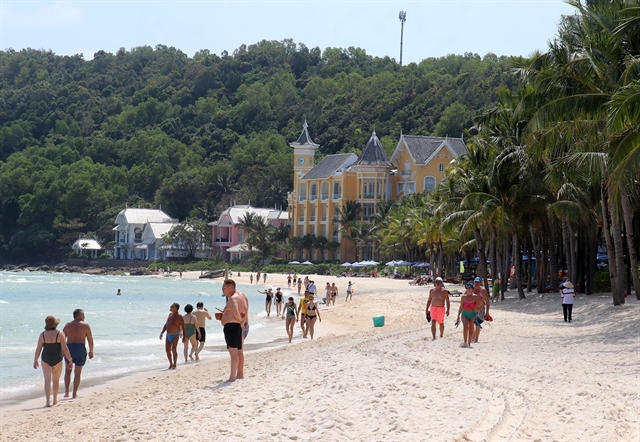 |
| Tourists enjoying the Khem beach in southern Phú Quốc. — VNA/VNS Photo |
Life & Style
 Life & Style
 Life & Style
 Life & Style
 Life & Style
 Life & Style
 Life & Style
 Life & Style
 Life & Style
 Life & Style
 Life & Style
 Life & Style
 Life & Style
 Life & Style
 Life & Style