Life & Style

42 people hospitalised over suspected gas leak in Hà Nội
1.
|
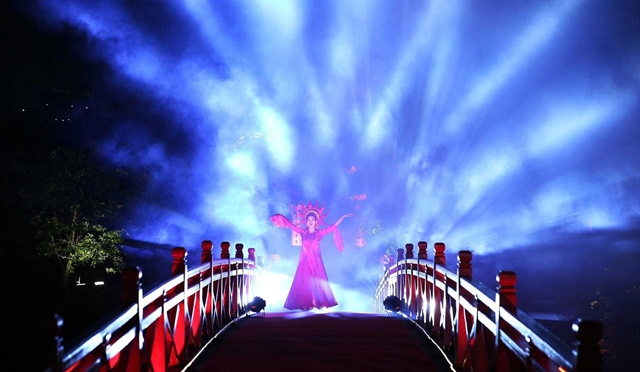
| The 'Ngọc Sơn – Mysterious Night' tour combines live performance, installation art, sound, lighting and digital projection technology to create an immersive heritage experience for visitors. — VNS Photo Viết Thành |
HÀ NỘI — Cultural heritage is more than a nation's collective memory; it is increasingly recognised as one of Việt Nam's most valuable domestic resources, capable of driving tourism, cultural industries and sustainable economic growth.
As digital technology reshapes the way heritage is preserved and experienced, museums, monuments and historical sites are reaching audiences far beyond their physical boundaries.
The transformation reflects Việt Nam's strategic vision of placing science, technology, innovation and digital transformation at the heart of national development. Within that vision, cultural heritage is increasingly viewed not only as a legacy to preserve, but also as a valuable resource that strengthens cultural soft power and creates new opportunities for economic growth.
|
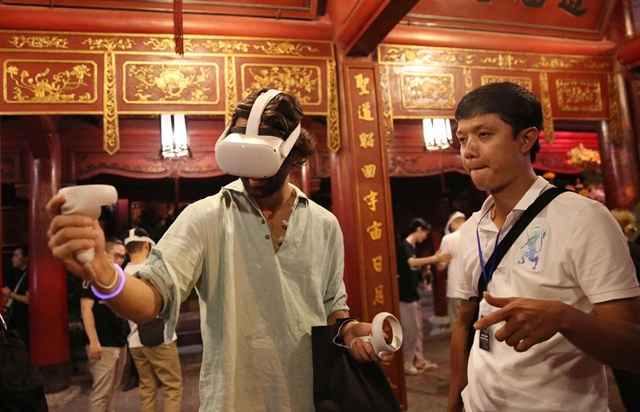
| A digital exhibition space at the Temple of Literature in Hà Nội showcases how technology is enriching visitors' experiences. — VNS Photo Viết Thành |
Instead of serving only those able to visit in person, heritage can now be experienced by millions through digital archives, 3D models, virtual museums and augmented and virtual reality tools.
Digitised collections, virtual exhibitions and immersive technologies are allowing cultural heritage to transcend the limits of time and place, making them more accessible to both domestic and international audiences.
This transformation is also reshaping the philosophy of heritage conservation. Preservation is no longer simply about safeguarding monuments and artefacts in their original state. Digital technology enables cultural assets to be protected for future generations, while inspiring new products and services that support tourism, cultural industries and the digital economy.
Across the country, digital innovation is increasingly being integrated into the preservation and promotion of cultural heritage, helping unlock the value of cultural resources while encouraging creativity, expanding markets and creating greater added value.
Where heritage meets technology
|
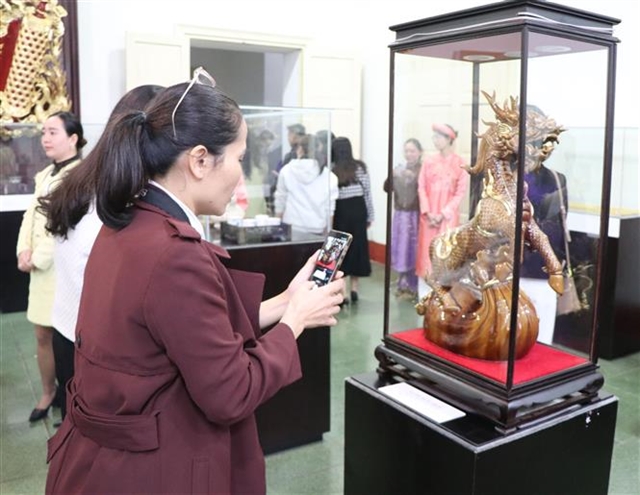
| Visitors explore an exhibition during Việt Nam Cultural Heritage Day at the Huế Monuments Conservation Centre. — VNA/VNS Photo Nguyên Lý |
Many localities have already demonstrated the benefits of combining heritage conservation with digital innovation.
The Huế Monuments Conservation Centre has spent years digitising the Imperial Citadel, royal artefacts and Hán-Nôm documents while introducing multilingual audio guides, virtual tours and digital light shows. These initiatives have enriched visitors' experiences while creating new tourism products with higher added value.
In Hà Nội, authorities are developing digital databases covering historical relics, museums, traditional craft villages and intangible cultural heritage.
Landmark attractions such as the Temple of Literature, the Imperial Citadel of Thăng Long and Hỏa Lò Prison have embraced technologies including 3D mapping, audio guides and immersive night tours enhanced by projection, sound and lighting effects, offering visitors fresh perspectives on some of the capital's best-known cultural sites.
Quảng Ninh has incorporated digital technology into the promotion of Hạ Long Bay through smart tourism apps, digital maps and destination management systems, while Ninh Bình is accelerating the digitisation of the Tràng An Landscape Complex to improve visitor services and enhance travel experiences.
In HCM City, museums are increasingly adopting digital exhibitions, digitised collections and virtual reality technology to engage younger audiences and international visitors alike.
What these initiatives have in common is that digitisation is no longer regarded simply as a means of preserving information. Instead, it has become the foundation for developing new cultural products, expanding markets and unlocking the economic potential of heritage.
Tourism has been among the sectors benefiting most directly from this transformation. Interactive exhibitions, immersive storytelling and smart tourism services are encouraging visitors to spend more time exploring cultural attractions while enjoying richer and more engaging experiences.
Heritage as an engine of the creative economy
|
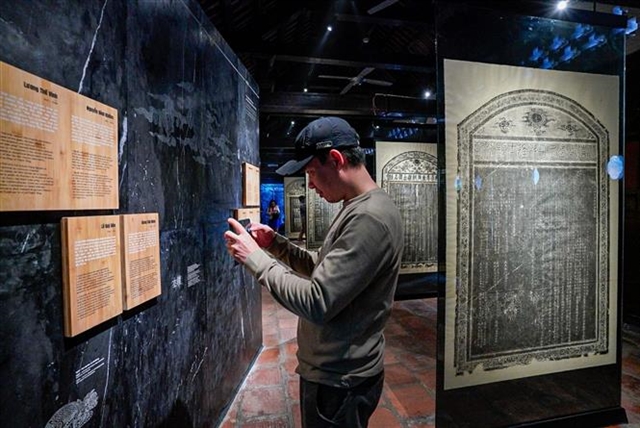
| A visitor uses Leap Motion 3D motion-control technology to explore the digital contents of ancient books at the Temple of Literature. — VNS Photo Viết Thành |
Tourism continues to be one of the sectors benefiting most directly from the digital transformation of heritage.
By creating more interactive and personalised experiences, digital technology is helping destinations attract visitors, encourage longer stays and diversify tourism products. Heritage is no longer presented solely as something to be observed; it has become something to be explored, experienced and shared.
HCM City illustrates this trend clearly. In 2025, the city welcomed an estimated 8.5 million international visitors and 45 million domestic travellers, generating an estimated VNĐ260 trillion (US$9.9 billion) in tourism revenue.
Growth has continued into 2026, with 6.4 million international arrivals recorded in the first six months of the year, up 48.5 per cent year-on-year. Tourism revenue during the same period reached an estimated VNĐ213.98 trillion ($8.1 billion), an increase of 63.9 per cent compared with the same period last year.
Hà Nội has also recorded robust growth, welcoming more than 18 million visitors in the first half of 2026. International arrivals rose by nearly 27 per cent year-on-year, fuelled by the growing appeal of cultural tourism, heritage attractions and digitally enhanced visitor experiences.
The benefits extend well beyond tourism. Digital transformation is also creating fresh momentum for Việt Nam's cultural industries, which are emerging as an increasingly important contributor to economic growth.
According to the Ministry of Culture, Sports and Tourism, the country's cultural industries generated more than VNĐ1 quadrillion (about $38 billion) in production value between 2018 and 2022, contributing around 4-5 per cent of GDP. By 2025, their contribution had risen to an estimated 6.5-7.5 per cent, with the Government aiming to increase the figure to around 9 per cent by 2045.
Under Việt Nam's Strategy for the Development of Cultural Industries, heritage provides the creative foundation for sectors ranging from film, fine arts and design to fashion, performing arts, video games and cultural tourism. As these industries expand, they are demonstrating how cultural resources can generate new economic value while reinforcing national identity.
Yet the country's potential remains far greater than what has already been realised. Việt Nam is home to tens of thousands of historical relics, hundreds of national treasures, dozens of UNESCO-recognised World Heritage sites and a remarkably rich collection of intangible cultural heritage. Unlocking the full value of these resources requires looking beyond traditional conservation towards innovation and sustainable development.
Emerging technologies such as artificial intelligence, big data and cloud computing are opening up entirely new possibilities. Digital museums, online educational platforms, virtual reality experiences and interactive cultural products are extending the value of heritage far beyond its physical boundaries. A single historical site can now support an entire ecosystem spanning creative content, communications, e-commerce and tourism services.
Ultimately, the digital transformation of heritage is not simply about adopting new technology. It represents a new development mindset that views cultural heritage not as a static legacy of the past, but as a living resource capable of generating lasting cultural, social and economic value.
As centuries-old treasures find new life through digital innovation, they are doing more than preserving the stories of previous generations. They are helping shape the future of Việt Nam's tourism, creative industries and cultural soft power, ensuring that cultural heritage remains a dynamic resource for sustainable development in the digital age. — VNS
Life & Style
 Life & Style
 Life & Style
 Life & Style
 Life & Style
 Life & Style
 Life & Style
 Life & Style
 Life & Style
 Life & Style
 Life & Style
 Life & Style
 Life & Style
 Life & Style
 Life & Style