Life & Style
Vietnamese, Danish FMs discuss ways to deepen bilateral ties
1.
|
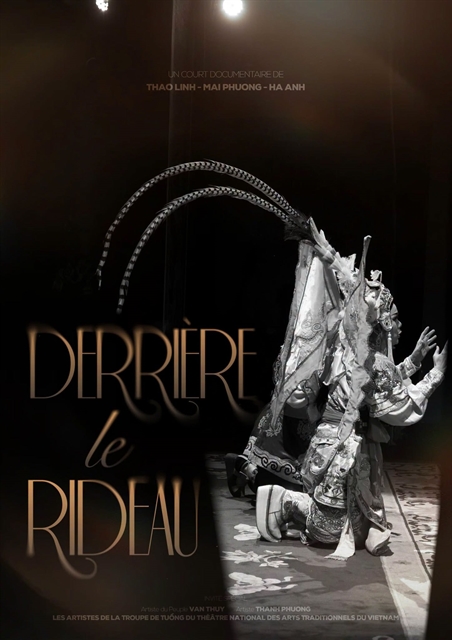
| The poster for 'Behind the Curtain' by Việt Đức High School students in Hà Nội. — Photo courtesy of producers |
HÀ NỘI — A short film produced by Việt Đức High School students in Hà Nội has been selected by the professional jury of the 2026 Viet Culture in Motion Festival for official screenings in France, the Czech Republic and Belgium.
The film, titled Mạc Hậu (Behind the Curtain), also won the Best Film award in Category B, which recognises non-professional filmmakers under the age of 30, at the festival.
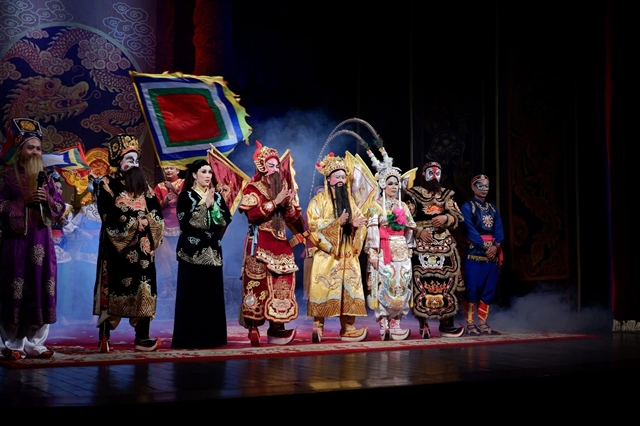
Produced by Nguyễn Thảo Linh (Class 12A5), Lê Mai Phương (Class 12A6) and Nguyễn Hà Anh (Class 10A3), Behind the Curtain offers an intimate portrait of the everyday lives of tuồng (classical drama) performers out of the spotlight, highlighting the dedication and quiet sacrifices that sustain Việt Nam’s traditional theatrical art.
The film is the third production from Việt Đức High School to win honours at Asia-Pacific and international film festivals.
Anh explained that the film's title, Mạc Hậu, refers to the space behind the theatre curtain. Instead of focusing on the splendour and spectacle of tuồng on stage, the film follows the performers after the curtain has dropped, when majestic kings and valiant generals shed their elaborate robes and make-up to become ordinary people once again.
In the film, the performers confront the realities of everyday life – the pressures of making ends meet and the difficult choice between giving up and pursuing their passion.
Yet it is within the confines of the cramped backstage area that young filmmakers discovered the art form's greatest beauty: the artists' resilience and unwavering devotion to their craft.
|
| Behind the Curtain offers an intimate portrait of the everyday lives of tuồng (classical drama) performers out of the spotlight. — Photo courtesy of the producers |
Behind the Curtain serves as a reminder that behind the preservation of cultural heritage lies the quiet sacrifice of the performers and artists who work tirelessly behind the scenes.
The filmmakers are students who share a passion for photography.
“We first picked up cameras in search of beautiful images and cultural traditions that our generation rarely stops to notice," Anh said.
"But when we stepped behind the velvet curtain of a tuồng theatre, we found a striking contrast between the splendour and grandeur of the kings and generals on stage and the performers' struggles to make a living behind the scenes."
She went on to describe some of what was involved: “We witnessed power cuts while the artists were still applying their make-up, learned about the meagre pay they received after a night's performance and were particularly moved by the story of Thanh Phương, a tuồng performer who also works as a DJ to support her passion for the traditional art form."
“Choosing this subject was also a way for us to challenge ourselves, step outside our comfort zone and learn to listen more. We believe cinema is not only a way to tell stories we already know, but also an opportunity to gain a deeper understanding of worlds we had never truly encountered before,” Anh added.
In support of the Hà Nội People's Committee plan to make English a second language in the city's schools, the film was produced with French, Czech and Dutch subtitles as well as English, at the request of the festival organisers.
This will help make the film more accessible to international audiences and contribute to the global promotion of Việt Nam’s traditional performing arts.
Held by ART SPACE, a France-based association dedicated to cultural development, Viet Culture in Motion is part of the international cultural project Toucher Arts, which aims to bring the richness of Vietnamese stories to global audiences through the voices of young creators.
Its aim is to encourage young filmmakers to present Vietnamese stories to international audiences in bold and inventive ways. Submissions were divided into two categories: short documentaries under 10 minutes and those up to 40 minutes.— VNS
Life & Style
 Life & Style
 Life & Style
 Life & Style
 Life & Style
 Life & Style
 Life & Style
 Life & Style
 Life & Style
 Life & Style
 Life & Style
 Life & Style
 Life & Style
 Life & Style
 Life & Style