 Life & Style

AITO Looks Ahead to Europe, Building a Thriving Automotive Ecosystem
1.
|
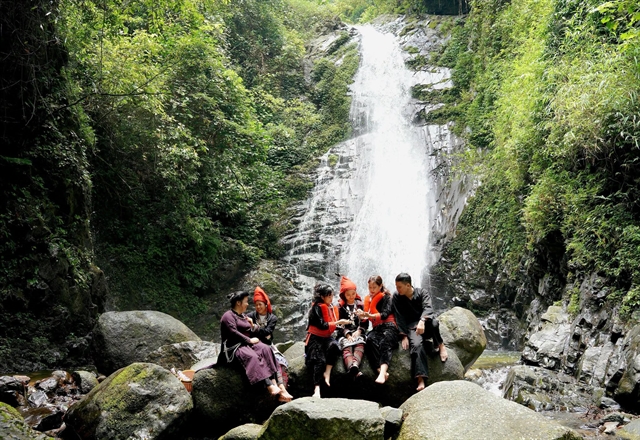
| Lủng Páng waterfall appears amidst the vast wilderness with white water cascading down from the cliffs, creating a majestic yet peaceful scene. VNS Photo Nguyễn Thị Diễm |
Thanh Hà
THÁI NGUYÊN — We were not the first visitors to explore Lủng Páng Waterfall in Thái Nguyên Province, but we were among the first to take a newly opened route that leads hikers through the area's breathtaking natural beauty.
The area was formerly part of Bắc Kạn Province (now part of Thái Nguyên after administrative merger), which is best known for Ba Bể Lake, Việt Nam's largest natural freshwater lake and one of the 100 largest natural freshwater lakes in the world.
However, it was also home to many lesser-known natural attractions that were well worth an early start and a three-hour coach journey to experience.
From Hà Nội, we travelled 170km on the new Highway 3 to the northeast to arrive at Bắc Kạn Commune centre, then drove about 20km along the Bắc Kạn – Ba Bể route to reach the starting point of the hike.
Welcoming us was Nguyễn Thị Thu Nga, director of Thiên Xanh Precious Medicinal Materials Joint Stock Company and owner of the eco-tourism project at Lủng Páng.
After chatting with the group for a few minutes, Nga told us how challenging the route would be and encouraged us to do our best to complete the entire trek if we didn't want to miss the "treasure" of her homeland.
Days before our trip, Nga and her staff reinforced the path and bamboo bridges to help us move easier, and she said once it was done, the route would be more comfortable for hikers while still maintaining the natural look.
|
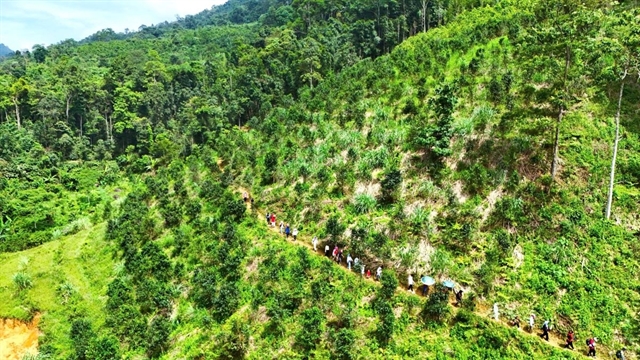
| Hikers pass through the tea tree hill on the way to discover Lủng Páng waterfall, stream and ancient Shan Tuyết Heritage Trees. Photos courtesy of organisers |
The small path led us through ancient Shan Tuyết tea hills. The large tea trees covered in moss stand tall amidst the mountains and forests, a testament to the long history of this land.
Shan Tuyết was one of Việt Nam's most distinctive specialty teas, renowned for its large, silvery-white buds covered in fine, snow-like hairs that set it apart from other tea varieties. Even after processing, the delicate white coating was preserved, producing a smooth, subtle brew that was believed to offer health benefits and help local people stay strong while living and working in the rugged mountain landscape.
After admiring the trees, we continued to hike further to the forest. The more we moved the clearer the sound of water became. About 1km after the tea hill, the stunning Lủng Páng Waterfall emerged, cascading down in a white foam from a height of approximately 20m, forming a natural lake and a cool stream at its base.
The sound of the waterfall blent with the sounds of forest birds, the wind, and streams, creating a natural symphony that was hard to find anywhere else.
|
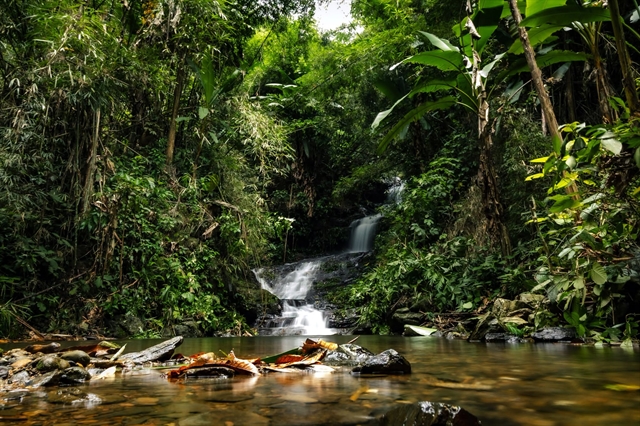
| Tranquil Lủng Páng Stream with cool water all year round. VNS Photo Nguyễn Thị Diễm |
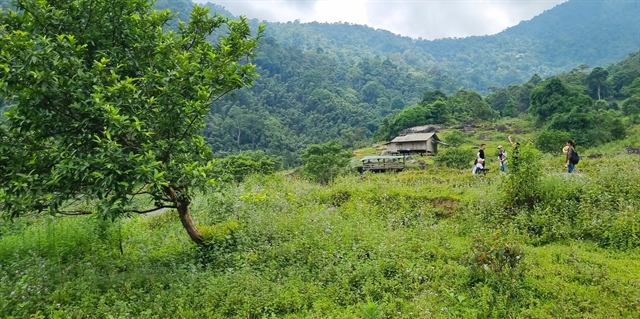
We continued upstream along the trail until the forest suddenly opened into a broad expanse nestled among the mountains, resembling a tranquil meadow embraced by rolling green peaks.
Remnants of old terraced fields still dotted the landscape, offering a glimpse into the agricultural heritage of the local people. Scattered across the lush grass were rocks of all shapes and sizes, creating a scene worthy of a film set.
Particularly striking were the massive cliffs with naturally flat surfaces lining the trail. With only minimal enhancements, they could easily become distinctive photo spots for young travellers.
With its pristine scenery and untapped charm, the area holds great potential for experiential tourism, outdoor picnics, and eco-tourism development.
Continuing our route, we went deeper into the forest and more picturesque scenery welcomed us. It was the first time that I emersed myself in such a huge lush bamboo grove. Whenever the wind blew, the rustling of bamboo left sounds like a symphony of the mountains and forests. It was so beautiful that we didn't want to leave while taking countless photos.
|
| A large meadow gives hikers a time to rest after long walk in the forest of Phong Quang. |
The journey continued to take us through ancient forests with large trunks covered in vines and lichens. The cool atmosphere year-round, along with the fragrance of the forest, made each step a relaxing and healing experience.
Finally, we reached our target, the area of the hundreds-year-old Shan Tuyết tea trees.
The local residents told us that there were 12 trees which were recognised Việt Nam Heritage Trees in late 2025.
|
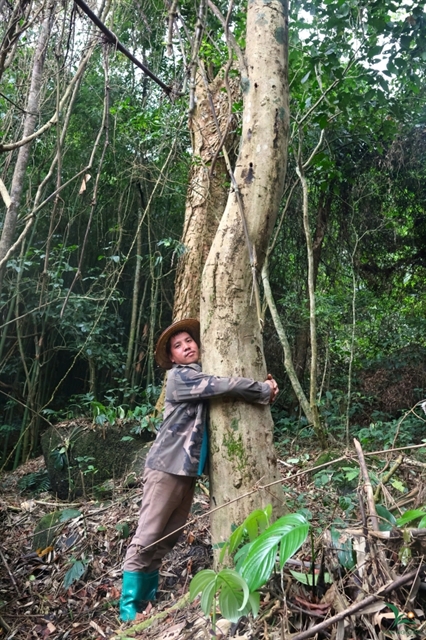
| A local farmer holds one of the ancient Shan Tuyết tea trees in the mountainous area of Phong Quang Commune. Photo thainguyentourism.vn |
No one knew the trees' exact age, but their enormous trunks – so wide that only an adult could encircle them – suggested they had stood there for centuries. Compared with the 200-year-old trees at the foot of the mountain, locals believed these ancient giants are between 700 and 800 years old.
They were definitely witnesses to the history of highland cultivation, embodying landscape value, community stories, and the potential for experiential tourism development.
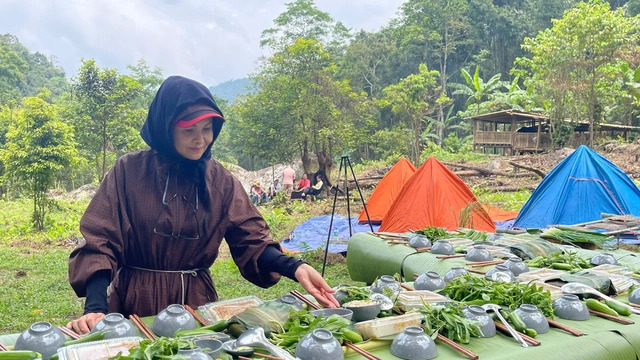
Then we were back to the meadow where Nga and her staff set up a place for resting and eating. We were encouraged to immerse ourselves in the lives of the local people through various interesting activities such as catching stream fish, digging bamboo shoots, or learning about the specialties of the mountainous region. These simple experiences, especially local cuisine, were what all of us remember long after the trip.
|
| Nguyễn Thị Thu Nga, director of Thiên Xanh Precious Medicinal Materials Joint Stock Company, takes care of tourist meals after hiking. Photo of organisers |
Nga told us that the idea of developing the Lủng Páng hiking route stemmed from a desire to better leverage the locality's existing advantages.
She was developing day-trip and overnight experiences that weave together the landscapes of waterfalls and streams, natural forests, Shan Tuyết tea plantations, and local community life into a cohesive journey.
"I am from Bắc Kạn. Naturally, I love my hometown. I simply hope tourism here develops to provide the locals with additional livelihoods while ensuring the forest is preserved. The forest is the soul of this place," she said. — VNS
Life & Style
 Life & Style
 Life & Style
 Life & Style
 Life & Style
 Life & Style
 Life & Style
 Life & Style
 Life & Style
 Life & Style
 Life & Style
 Life & Style
 Life & Style
 Life & Style
 Life & Style