 Life & Style

Việt Nam, Switzerland to turn education, sci-tech, innovation into cooperation focus
1.
HÀ NỘI — A summer design workshop bringing together university students and traditional artisans was officially launched in Hà Nội on July 6, aiming to develop contemporary products inspired by the capital's centuries-old craft villages and strengthen links between cultural heritage and the creative economy.
Known as Summer Camp – Re 2026, the eight-day programme is one of the key activities of the Hanoi Creative Design Festival 2026. Carrying the theme 'Craft Village Regeneration', it invites students from multiple disciplines to work alongside artisans in exploring how traditional crafts can be reinterpreted through modern design while retaining their cultural identity.
The workshop forms part of the Contemporary Crafts Development on Traditional Craft Heritage initiative, launched by the Hà Nội Department of Culture and Sports and Architecture Magazine under the Việt Nam Association of Architects.
The programme receives strategic and professional support from UNESCO, the Sovico Group and the British Council, with sponsorship from An Cường Wood JSC and Viglacera Corporation.
The launch comes as Hà Nội continues to promote cultural and creative industries as a driver of sustainable urban development. Since joining the UNESCO Creative Cities Network as a City of Design in 2019, the capital has expanded programmes that connect heritage conservation with innovation, entrepreneurship and creative production.
.JPG) |
| Participants pose for a group photo at the launch of Summer Camp – Re:Craft 2026 in Hà Nội on July 6. — Photo courtesy of the Hanoi Creative Design Festival 2026. |
The programme brings together students and lecturers from universities across Hà Nội and beyond, with Hanoi Architectural University serving as the host institution. Other participating schools include Hà Nội University of Culture, FPT University, Hanoi Open University, the VNU School of Interdisciplinary Sciences and Arts, the University of Industrial Fine Arts, Hanoi University of Civil Engineering, Phương Đông University, Greenwich Vietnam, Phenikaa University and Hòa Bình University.
Unlike conventional design competitions, Re 2026 places students in direct collaboration with artisans through field-based learning. Participants are organised into interdisciplinary teams combining expertise in design, culture, communications and the creative industries before being assigned to one traditional craft village.
Each team will study local materials, production techniques, cultural stories and the practical challenges facing artisans today. Based on that research, participants will develop design concepts and physical prototypes intended to demonstrate how traditional crafts can adapt to changing consumer demands and contemporary lifestyles.
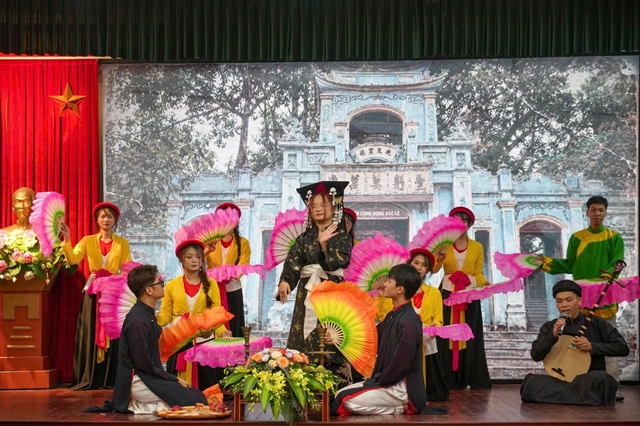
Five traditional craft villages have been selected for this year's programme: Hạ Thái lacquerware, Kim Lan ceramics, Đào Thục water puppetry, Phú Vinh bamboo and rattan weaving, and Quất Động embroidery.
Together, they represent a broad spectrum of Hà Nội's craft heritage, from lacquer and ceramics to textile arts, weaving and performing arts. Each village preserves distinctive techniques and cultural traditions that have been passed down through generations while facing increasing pressure to remain economically viable in a rapidly modernising society.
The programme begins with exchanges between students and artisans before moving to field surveys at the craft villages. Participants will then attend an intensive design camp at Hanoi Architectural University, where they will refine their concepts before presenting completed prototypes to a panel of experts.
A key part of the workshop involves identifying what organisers describe as the 'design DNA' of each craft village, including colours, motifs, materials, production methods and cultural narratives. These elements will provide the foundation for products that both respect traditional craftsmanship and respond to contemporary markets.
Beyond product design, teams are encouraged to develop branding strategies, explore commercial applications and create digital communication campaigns capable of introducing traditional crafts to wider audiences, particularly younger consumers.
Organisers say the workshop also serves as an interdisciplinary educational model, allowing students to learn directly from artisans while tackling real-world issues confronting traditional craft communities. Rather than treating heritage as static, the programme encourages participants to see craft villages as living cultural spaces capable of continuous innovation.
Selected concepts and prototypes from Re 2026 will be showcased during the Hanoi Creative Design Festival 2026, providing opportunities for students, artisans, designers, businesses and investors to exchange ideas and explore future collaborations.
Organisers hope the programme will help nurture a new generation of designers who can draw inspiration from traditional knowledge while creating products suited to contemporary life, contributing to the long-term preservation and sustainable development of Hà Nội's craft villages. — VNS
Life & Style
 Life & Style
 Life & Style
 Life & Style
 Life & Style
 Life & Style
 Life & Style
 Life & Style
 Life & Style
 Life & Style
 Life & Style
 Life & Style
 Life & Style
 Life & Style
 Life & Style