 Life & Style
Phenikaa wins fifth consecutive Vietnam National Brand title
1.
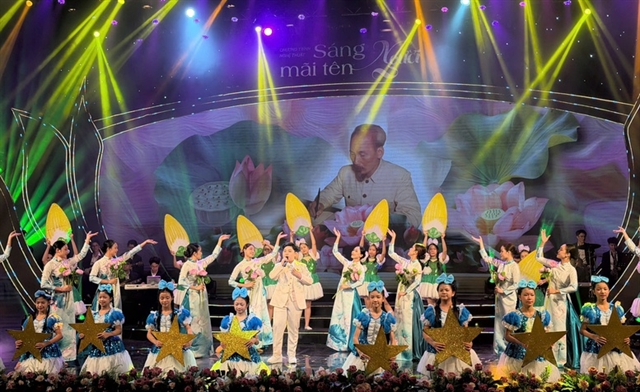 |
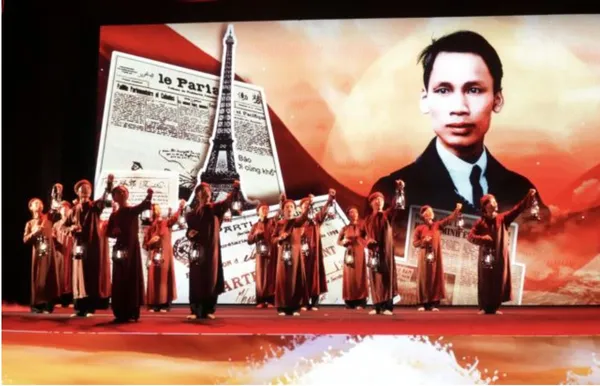
| A performance held in May in Hà Nội celebrates President Hồ Chí Minh's birthday. The capital city is stepping up efforts to develop a set of statistical indicators for cultural industries. — Photo baochinhphu.vn |
HÀ NỘI — Hà Nội is striving to complete a set of statistical indicators for cultural industries to meet the requirements for building a Creative City and sustainable development goals.
Hà Nội – the country's political, economic, and cultural centre – sees the cultural industry as a new growth driver, achieving a 5 per cent contribution to GRDP by 2026, a pivotal step to create momentum for sustainable development until 2030.
A scientific and transparent statistical system not only helps accurately measure the contribution of cultural industries to GRDP, but also serves as a basis for identifying market trends, allocating resources rationally, and attracting domestic and foreign investment, officials and experts have said.
Speaking at a workshop held recently in the city to discuss building statistical indicators for cultural industries in Hà Nội, Lê Thị Ánh Mai, Deputy Director of the capital's Department of Culture and Sports (DoCS), stated that the cultural industry has 'gradually affirmed its role as a new growth engine for the economy'.
However, she said, unlike many other traditional economic sectors, the cultural industry is a broad area with high interdisciplinarity, providing many products with intangible value.
The workshop was held by the DoCS in collaboration with the UNESCO Office in Hà Nội, sharing domestic and international experiences to support the project on developing a set of statistical indicators for cultural industries in Hà Nội.
Mai argued that while the revenue of a film company could be seen, it was not easy to fully measure the ripple effect of a cultural festival, count the number of handicraft production facilities or quantify the impact of heritage, cultural identity, or creative appeal on urban development.
Meanwhile, Director of the Copyright Department under the Ministry of Culture, Sports and Tourism, Trần Hoàng, stated that the (SoSI) is being built in accordance with the spirit of the Politburo's Resolution No 80-NQ/TW on the development of Vietnamese culture, playing a particularly important role in developing cultural industries in Việt Nam.
According to Hoàng, although work on cultural statistics has been conducted for many years, those on cultural industries still face many difficulties due to their broad scope, while the concepts and content have not yet been fully unified.
Following UNESCO's recommendations, the Ministry of Culture, Sports and Tourism has coordinated with statistical agencies to review, standardise concepts, and clearly define areas and statistical groups to form a unified indicator system.
Currently, the draft system of indicators is being developed in five main groups, including physical and technical infrastructure; market and promotion of cultural industry products; activities and results of cultural industry development; training and human resources; and registration and protection of intellectual property rights.
One of the biggest challenges today is sources for statistical data. Building a system of indicators should not only rely on statistical surveys but also utilise data from administrative reporting systems and other specialised data sources.
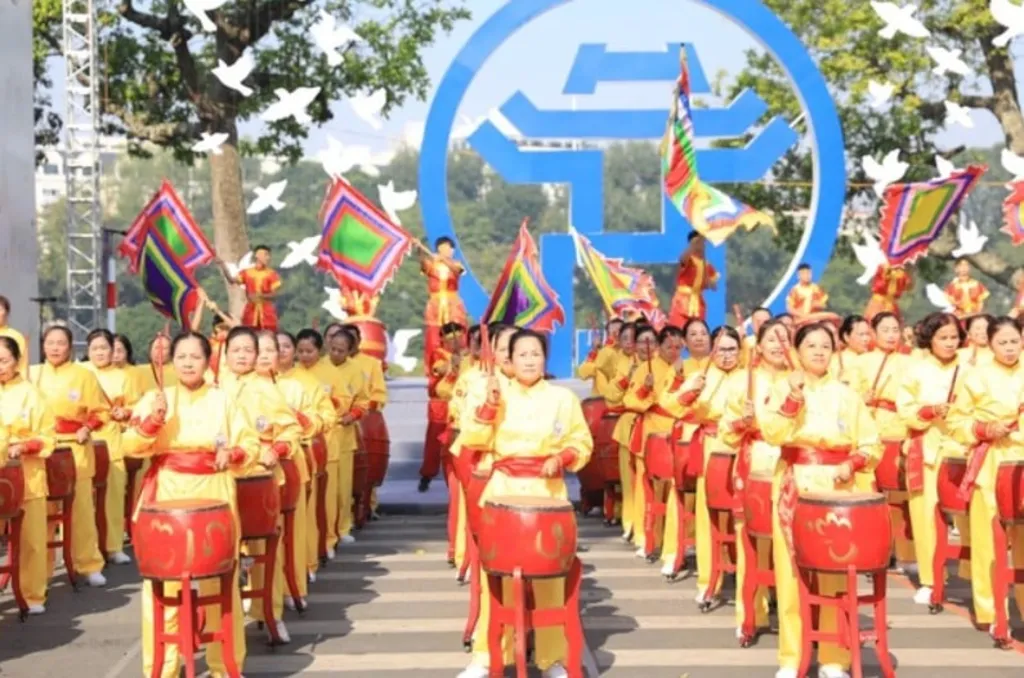 |
| One of the biggest challenges today is sources for statistical data. Illustrative Photo |
According to Hoàng, in the initial phase, priority should be given to indicators with clear definitions, collected from readily available data sources.
"If Hà Nội successfully implements a set of statistical indicators for cultural industríe, it will be a valuable model for other localities nationwide," Hoàng said.
Nguyễn Thị Thu Hà, Director of the Centre for Support and Development of Contemporary Art, believes that building a data and statistics system on cultural industries is of particular importance for policy planning and sustainable development.
Việt Nam currently lacks a specialised statistical framework, and data is still fragmented, inconsistent, and difficult to compare because it is collected for individual tasks and different projects. Furthermore, coordination among management agencies, ministries, localities, and market research organisations is not truly effective, leading to information fragmentation.
To overcome current limitations, Hà proposed the early establishment of a national statistical framework for the cultural industry; strengthening coordination mechanisms; establishing a central point for managing, exploiting, and publishing data on digital platforms; and simultaneously enhancing the capacity of cultural statistics personnel.
Since data is integrated and effectively operated, in the long term, the cultural industry will not only directly contribute to economic growth but also spread profound social values, making a contribution to building urban identity, improving the quality of people's spiritual lives, and strengthening the 'soft power' of the capital.
Therefore, experts said, the development and implementation of a set of statistical indicators for the cultural industry is not only a technical requirement but also a strategic step in the process of developing Hà Nội into a regional creative centre. — VNS
Life & Style
 Life & Style
 Life & Style
 Life & Style
 Life & Style
 Life & Style
 Life & Style
 Life & Style
 Life & Style
 Life & Style
 Life & Style
 Life & Style
 Life & Style
 Life & Style
 Life & Style