 Life & Style

Incense for the fallen: Visitors honour fallen soldiers at the HCM City Martyrs’ Cemetery
1.
|
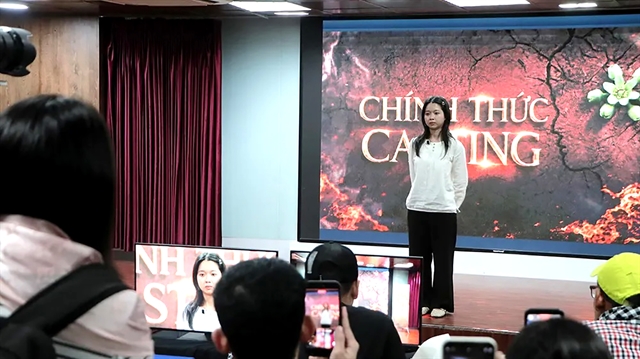
| At a casting session for the film 'Đất Đỏ' (Red Earth). It is challenging to find actors who truly fit the characters being portrayed. — Photo sggp.org.vn |
HCM CITY — As the Vietnamese film industry experiences a boom in theatrical releases, a less visible challenge is emerging behind the scenes: finding actors who truly fit the characters being portrayed.
The industry is also witnessing a positive shift, with films featuring relatively unknown actors increasingly achieving commercial success.
This change has created more opportunities for emerging performers, reducing the difficulties newcomers once faced in securing meaningful roles.
Director Nguyễn Phan Quang Bình said: “In the past, actors were often selected based on their ability to attract audiences to cinemas. Today, what matters most is their ability to inhabit a character and deliver an authentic, emotionally engaging performance. That is why, when searching for actors for Hộ Linh Tráng sĩ: Bí Ẩn Mộ Vua Đinh (The Guardian Heroes: Mystery of King Đinh's Tomb), I welcome newcomers and established performers alike.”
Opportunities for new faces
More than 1,200 applications have been submitted for casting in the feature film Đất Đỏ (Red Earth), directed by Lê Văn Kiệt.
Familiar names such as Lâm Thanh Mỹ, Đình Khang, Hạo Khang, and Huỳnh Thanh Trực have attended in-person auditions.
Producer Hoàng Quân said: “The support of established actors is greatly appreciated, but for this project our greatest priority is finding someone who genuinely embodies the image of national heroine Võ Thị Sáu rather than securing a box-office star. Whether a newcomer or a familiar face, suitability for the role remains the most important factor.”
Several high-profile Vietnamese productions currently in development, including Nữ biệt động Sài Gòn (Female Sài Gòn Commandos), Cận Kề Cái Chết (Close to Death), Vùng Trời Lửa (The Burning Sky), Loạn Thế (Turbulent Era) are also conducting extensive casting searches.
For large-scale productions, casting can take months or even years, with thousands of candidates screened before the right performer is identified. Lật Mặt 8 (Face Off 8), directed by Lý Hải, set a record by attracting more than 5,000 applicants during its casting process.
One common feature of contemporary casting practices is their increasing professionalism and rigour. Many actors must pass through four or five rounds of auditions before entering months of training prior to filming.
According to representatives of Hoàng Hậu Cuối Cùng (The Last Empress), directed by the duo Bảo Nhân and Namcito, successful candidates are required not only to undergo acting training but also months of instruction in royal etiquette and court customs.
Similarly, actors in productions such as Địa Đạo: Mặt Trời Trong Bóng Tối (Tunnels: Sun in the Dark) by Bùi Thạc Chuyên and Đất Rừng Phương Nam (Song of the South) by Nguyễn Quang Dũng completed intensive specialised training programmes lasting several months.

|
| The team behind 'Hộ Linh Tráng Sĩ - Bí Ẩn Mộ Vua Đinh' (The Guardian Heroes: Mystery of King Đinh's Tomb) shares insights about the film. — Photo bazaarvietnam.vn |
Personal reputation increasingly matters
Alongside acting ability and physical appearance, performers today are expected to possess a broader range of skills, including martial arts, dance, singing, musical performance and athletic ability.
Increasingly, production teams are also considering actors’ personal conduct and public image during the casting process. The rationale is simple: even a minor controversy involving an actor can trigger public backlash and online boycotts, potentially damaging an entire production.
Representatives of the film Tây Sơn Thất Hổ Tướng (The Seven Tiger Generals of Tây Sơn) said that because many characters are based on revered historical figures and national heroes, particular attention is paid to the personal reputation of actors.
Quân shared a similar view, arguing that films featuring heroic or historical figures require especially careful consideration of an actor’s off-screen image.
“If an actor is portraying a respected historical figure or a heroic character, but their personal conduct does not align with those values, audiences may find it difficult to accept the performance,” he said.
“Today, a single inappropriate comment or action can become national news within minutes and have serious consequences. Actors who choose this profession must understand that maintaining their public image is crucial. Production companies are also tightening personal conduct requirements during casting because, regardless of how comprehensive a contract may be, the damage caused by a scandal can be extremely difficult to avoid,” he added.
The increasingly demanding standards applied to casting reflect a broader professionalisation of the Vietnamese film industry.
A role is no longer determined solely by popularity, but also by talent, suitability for the character and professional credibility.
For young actors committed to the craft, this evolving landscape presents both a challenge and an opportunity to prove themselves. — VNS
Life & Style
 Life & Style
 Life & Style
 Life & Style
 Life & Style
 Life & Style
 Life & Style
 Life & Style
 Life & Style
 Life & Style
 Life & Style
 Life & Style
 Life & Style
 Life & Style
 Life & Style