 Life & Style

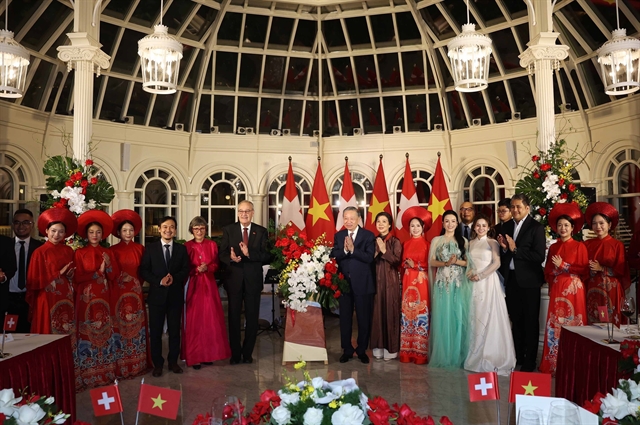
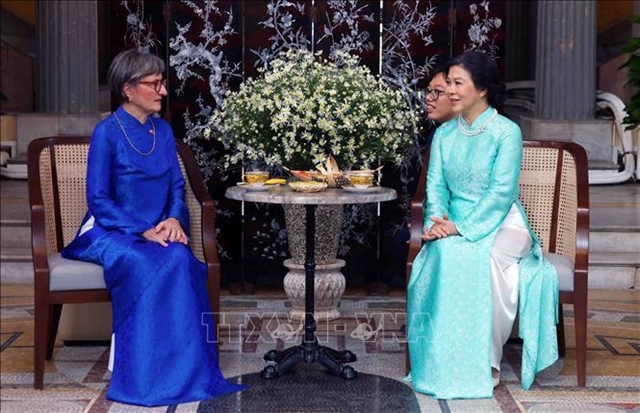
Việt Nam, Switzerland to turn education, sci-tech, innovation into cooperation focus
1.
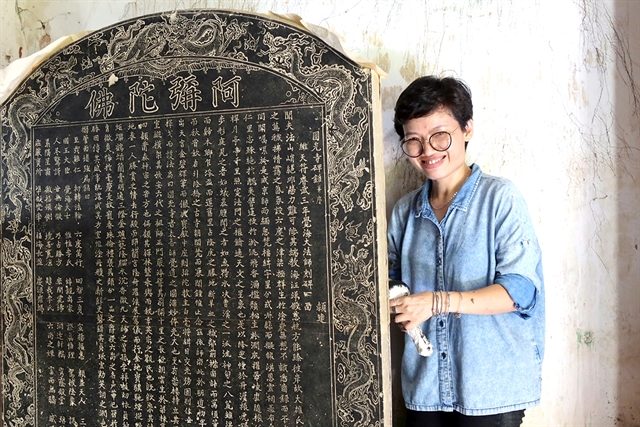 |
| Researcher Vũ Thị Hằng from VNFAM. — Photo Nguyễn Xuân Bảo |
The Việt Nam Museum of Fine Arts (VNAM) has recently launched a bilingual Vietnamese-English publication entitled Tranh Tứ Bình – Sưu Tập Chọn Lọc Tranh Dân Gian Việt Nam (Four Scroll Woodblock Prints from Việt Nam: A Selection of Vietnamese Folk Art).
Việt Nam News reporter Nguyễn Bình spoke with Vũ Thị Hằng, one of the book’s editors, about the compilation process.
What inspired the book and what were the main opportunities and challenges throughout the process?
In 2019, VNFAM wanted to promote the museum's collection and spread awareness of the value of the works in its collection through publications.
To carry out this mission, we held a series of meetings and discussions to explore ideas and identify the most effective approach. We set out a number of goals, including publishing books to introduce Vietnamese folk paintings, propaganda art, the museum’s nine National Treasures and works by renowned painter Trần Văn Cẩn in the museum collection.
We are pleased that all of these goals have since been achieved, such as Aspiration for Peace: Selected Posters (2020), Nine National Treasures of the Việt Nam Museum of Fine Arts (2022) and Trần Văn Cẩn: Selected Works from the Collection of the Việt Nam Museum of Fine Arts (2024).
As for Four Scroll Woodblock Prints from Việt Nam: A Selection of Vietnamese Folk Art, our initial plan was quite modest. We intended to produce a small publication introducing tứ quý (Four Seasons) folk paintings depicting spring, summer, autumn and winter, primarily as a gift for international visitors and guests to the museum.
However, after surveying and researching the museum’s collection of folk paintings and consulting with experts, we decided to broaden the scope of the project and develop it.
In 2021, the museum collaborated with the Fine Arts Publishing House to print the first edition. A key member of the editorial team at that time, Nguyễn Văn Nghi, had previously conducted research on Hán (Chinese script) characters in folk paintings at the museum, which provided a valuable academic foundation for the project.
The Chinese scripts were translated and edited by Phạm Văn Tuấn from the Institute of Hán-Nôm Studies. We also received expert guidance from leading Vietnamese folk art researcher Phan Ngọc Khuê, a former member of the museum’s Research and Collection Desk. Khuê was among the key figures who helped build and enrich the museum's collection of folk paintings through years of research.
The English translation was undertaken by translator Trịnh Lữ, which proved to be another major advantage for the project. Beyond his expertise in English, he is also an accomplished painter, whose rich life experience and deep knowledge of East Asian culture greatly benefited the project.
Nevertheless, we recognised that a number of factors, both within and beyond our control, prevented the book from reaching its full potential.
This year, we partnered with the Thế Giới Publishers to produce a new edition of the book. I personally reconnected with researcher Khuê to review and revise the provenance of several painting sets featured in the collection. The Hán – Nôm (Vietnamese ideographic script) inscriptions were also thoroughly reexamined and updated.
The English translation and editorial review benefited from the support of Trịnh Lữ, Susan Baly and Sue Fleming, whose contributions helped ensure both the accuracy and accessibility of the publication for international readers.
What role does tranh tứ bình (the four-panel format) play in the tradition of Vietnamese folk painting?
With their distinctive four-scroll woodblock prints, often produced on a larger scale than other folk paintings, tranh tứ bình occupy a special place within the rich heritage of Vietnamese folk art.
These painting sets reflect a narrative mode of expression as well as the philosophical and aesthetic traditions of East Asia. Through their imagery, they convey traditional concepts of time, ways of life and everyday customs, offering valuable insights into the worldview and cultural values of earlier generations.
Tố Nữ (the Goddess) painting sets not only celebrate the beauty and grace of women, but also reflect the humanistic values of traditional Vietnamese society, particularly its emphasis on ritual music.
In East Asian thought, the cultivation of ritual and music was seen as a foundation for moral and spiritual development. As such, these paintings convey more than aesthetic ideals. They embody the belief that a flourishing ritual and music culture contributes to a more refined, ethical and harmonious society.
Through their elegant depictions of women engaged in artistic and cultural pursuits, Tố Nữ paintings offer a glimpse into the aspirations and values of earlier generations.
Could you introduce the museum’s folk paintings and talk about how they are preserved compared with modern artworks?
The museum currently houses one of the country’s most extensive collections of folk paintings featuring Việt Nam’s major folk art traditions, including Hàng Trống, Đông Hồ, Sình Village, Kim Hoàng, Độc Lôi and Vũ Di paintings, and other ritual artworks created by ethnic communities in the northern mountainous regions.
For the most part, preserving folk paintings at the Việt Nam Museum of Fine Arts does not pose significant challenges today, as the museum has been equipped with specialised conservation facilities and environmental control systems that meet international preservation standards.
The folk paintings are currently kept in the museum’s paper and silk painting storage, while the original woodblocks are preserved in the lacquer storage. Keeping the paintings and printing blocks in separate storage areas reflects the different conservation requirements of their respective materials, each of which demands specific environmental conditions and preservation methods. — VNS
Life & Style
 Life & Style
 Life & Style
 Life & Style
 Life & Style
 Life & Style
 Life & Style
 Life & Style
 Life & Style
 Life & Style
 Life & Style
 Life & Style
 Life & Style
 Life & Style
 Life & Style