 Life & Style
Philippines and Việt Nam mark 50 years of bilateral relations
1.
|
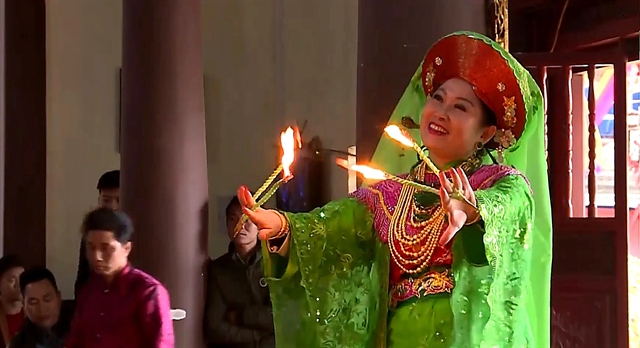
| Ritual performances include the 36-incarnation hầu đồng ceremony. — Photo baothanhhoa.vn |
THANH HÓA — The central province of Thanh Hóa is leveraging its rich network of temples and shrines associated with the UNESCO-recognised Worship of the Mother Goddesses of the Three Realms to expand cultural and spiritual tourism while seeking to preserve the authenticity of a heritage deeply rooted in local identity.
The tradition continues to attract an increasing number of domestic and international visitors, particularly during festival seasons.
Meritorious Artisan Trần Văn Thuận, Chairman of the Thanh Hóa Association for the Preservation of Chầu Văn Singing and Mother Goddess Worship Practices and also chief custodian of Phủ Cốc Temple, said many foreign visitors from countries with goddess worship traditions find common cultural elements in Việt Nam’s belief in the Mother Goddesses. As a result, prominent spiritual destinations such as Sòng Temple, Phủ Na Shrine, Phố Cát Temple and Cửa Đạt Temple have become popular stops for visitors interested in exploring Việt Nam’s spiritual heritage.
To further promote the tradition, the association has organised cultural exchanges at goddess worship sites in Thailand, the Republic of Korea, Hong Kong (China) and Taiwan (China), helping introduce Thanh Hóa’s cultural identity to international audiences.
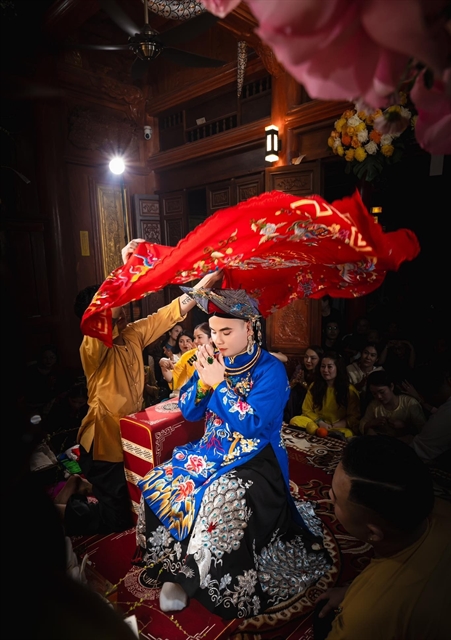
The growing popularity of local sites, however, has also highlighted the need for stronger heritage management. Thanh Hóa is considered one of Việt Nam’s major centres of Mother Goddess worship places, with a dense concentration of temples and shrines dedicated to female deities and royal figures.
Bùi Thị Tuyết, head of the cultural heritage management division under the provincial Department of Culture, Sports and Tourism, noted that Thanh Hoa is currently home to more than 1,500 protected historical and cultural sites, alongside over 4,000 privately managed worship facilities that are being reviewed and documented.
|
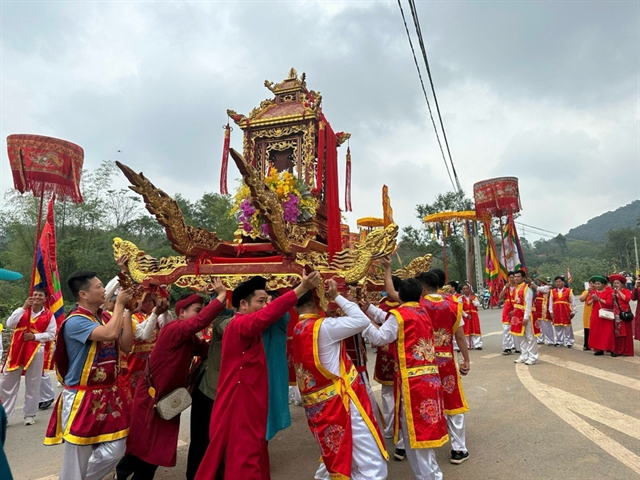
| A palanquin is carried in procession during the Phố Cát Temple Festival on April 5. — Photo courtesy of Beat Thanh Hóa |
Experts have warned that the rapid expansion of private worship establishments risks diluting the sacred and cultural values of heritage.
Cultural researcher Hà Huy Tâm, Deputy Director of the Việt Nam Institute of Applied Research on Traditional Culture and Construction Architecture, said the institute is conducting an in-depth study on the worship of Mother Goddesses in Thanh Hóa, focusing on rituals, chau van singing, costumes and related cultural practices.
He stressed that preservation efforts must extend beyond physical sites to include rituals, ceremonial music, costumes and traditional spaces. Properly managed and utilised, the belief system can contribute to moral education, uphold cultural identity and support sustainable tourism development.
Greater emphasis on heritage management has already helped reinforce traditional standards at several worship sites. Ritual performances, including the 36-incarnation hầu đồng ceremony at Phủ Cốc Temple, continue to follow established practices, while strict observance of traditional protocols remains in place at places such as Tây Mỗ Shrine, Sòng Temple and Phố Cát Temple. Such authenticity is seen as a key attraction for visitors.
Assoc. Prof. Dr. Bùi Hoài Sơn, full-time member of the National Assembly’s Committee for Cultural and Social Affairs, said UNESCO’s recognition of the worship of the Mother Goddesses of the Three Realms demonstrates the enduring vitality of Việt Nam’s traditional culture.
He added that Thanh Hóa plays a significant role in safeguarding the heritage through its extensive ritual system and distinctive worship spaces. Continued research, documentation and publication of studies on the practice will help preserve its values while supporting the development of spiritual tourism.
|
| Thanh Hóa is considered one of Việt Nam’s major centres of Mother Goddess worship places. — Photo courtesy of Cô Lương |
Experts have called for stronger implementation of heritage management regulations under the Cultural Heritage Law, clearer responsibilities for site management boards and stricter action against activities that distort cultural traditions.
They have also proposed measures to curb wasteful practices such as excessive burning of votive offerings and money scattering while preventing superstition and the commercialisation of spiritual activities. Community-based management models and the preservation of traditional chầu văn repertoires through publications and regular festivals have also been recommended.
For spiritual tourism to develop sustainably, specialists emphasise the importance of training guides and interpreters with in-depth knowledge of the Mother Goddess worship.
Dr. Bùi Thị Thanh Lương of the Institute for Research and Preservation of Vietnamese Folk Beliefs said tourism programmes should focus on explaining the cultural significance and symbolic meanings of the heritage rather than presenting rituals as entertainment.
Achieving that goal, she said, requires close cooperation among practitioners, researchers and authorities to create educational and culturally respectful visitor experiences while safeguarding the sacred character of the tradition. — VNA/VNS
Life & Style
 Life & Style
 Life & Style
 Life & Style
 Life & Style
 Life & Style
 Life & Style
 Life & Style
 Life & Style
 Life & Style
 Life & Style
 Life & Style
 Life & Style
 Life & Style
 Life & Style
.jpg)