 Life & Style

Weaving the unique heritage of the Thu Lao
1.
 |
| Meritorious Artist Nguyễn Sĩ Tiến, Việt Nam Youth Theatre. Photo nhahattuoitre.vn |
As summer arrives, the Việt Nam Youth Theatre is once again opening its curtains to young audiences, creating a world where imagination, empathy and live performance still hold their magic in an age dominated by screens and social media. The theatre's director, Nguyễn Sĩ Tiến, spoke to the media about the issue.
What changes and trends do you see in children’s theatre this summer?
I see positive developments in children’s theatre this summer, as producers and theatre companies are making stronger investments in storytelling, staging and interactive experiences for young audiences.
At my theatre, we see children’s theatre as much more than a seasonal form of entertainment. That is why we have invested seriously in scripts, music, visual design and communications. Audience experience is also important, ensuring that each performance is both engaging and meaningful for young audiences.
This summer, the theatre is staging a wide range of classic children’s works such as Nobody’s Boy, Pinocchio and Cinderella.
We are also preparing Tuổi Thơ Dữ Dội (The Fierce Childhood), adapted from the novel of the same name by Phùng Quán and set to premiere in August 2026. The production aims to remind young audiences that, while war is a thing of the past, the ideals of responsible citizenship, love for one’s country and commitment to the community continue to resonate across generations.
What should your theatre do to capture the attention of children in an increasingly digital world?
I believe theatre makers should not see technology and digital platforms as rivals, but as realities of contemporary life that theatre can embrace and adapt to. At the same time, it must retain its greatest strength — something social media cannot replicate —which is its ability to foster genuine, face-to-face emotional engagement between actors and audiences.
Theatre helps children regulate emotions, understand relationships and process the world around them. It gives them language for big feelings. Creating theatre for young audiences is one of the most demanding, rewarding and impactful forms of storytelling there is.
In children’s musicals, for instance, we have made significant investments in music, choreography, lighting, LED technology and stage effects to deliver a richer and more immersive theatrical experience.
The theatre is also expanding its digital outreach, using trailers, visuals, behind-the-scenes content and social media to bring productions closer to young audiences and extend their impact beyond the stage.
However, children’s theatre still faces considerable challenges. Young audiences today are immersed in a digital world and are used to consuming content that is fast, visually engaging and highly interactive.
We all know that children are unpredictable. Some have sensory sensitivities, while others need to move around or take breaks. Making a space truly welcoming to families means designing their experience with care, flexibility and empathy.
I believe this environment also highlights theatre’s enduring value. Its ability to create genuine emotional connections, foster direct interaction and offer shared live experiences remains something that digital platforms simply cannot replace.
What are the key principles guiding the theatre’s selection of themes for young audiences?
We prioritise three key considerations when selecting works for children: humanistic value, artistic excellence and meaningful engagement with children.
Additionally, sensory experiences, fun props and fantastic costumes can be powerful tools, but what truly stays with a child is the story. Children deserve narratives that reflect their worlds, respect their intelligence and challenge their perspectives. The best children’s theatre productions are not afraid to tackle big emotions, tricky questions or complex relationships. It’s not about talking down to children; it’s about speaking with clarity and care.
A play for children should not merely captivate through its visuals or entertainment value. Its greater purpose is to nurture positive qualities in young audiences, including compassion, integrity, a sense of responsibility and an appreciation of empathy and kindness.
Today’s children are intelligent, well-informed and resistant to overt moralising. That is why children’s theatre should focus on honest, relatable storytelling, enabling young audiences to learn through the characters’ experiences rather than through direct instruction.
What matters most is helping children preserve their ability to be moved by the world around them. The capacity to appreciate beauty, to love and to empathise with others is a precious foundation upon which character is built and the soul is nurtured.
How do you reinterpret classic and popular works to keep them meaningful and appealing to children today?
Adapting classic works for children is both a challenge and an exciting creative opportunity. I believe the key lies in preserving the essence of the original work rather than attempting to transfer every detail of the story directly to the stage.
Audiences change with each generation and so does the way they receive and interpret stories. That is why theatre must continually renew its language and artistic approach to connect with the perspectives and expectations of young audiences.
Stories like Pinocchio and Nobody’s Boy may be centuries old, but their messages about love, honesty, growing up and the value of family remain timeless. The task for theatre-makers is to breathe new life into these works so that young audiences embrace them as reflections of their own journeys, not relics of the past.
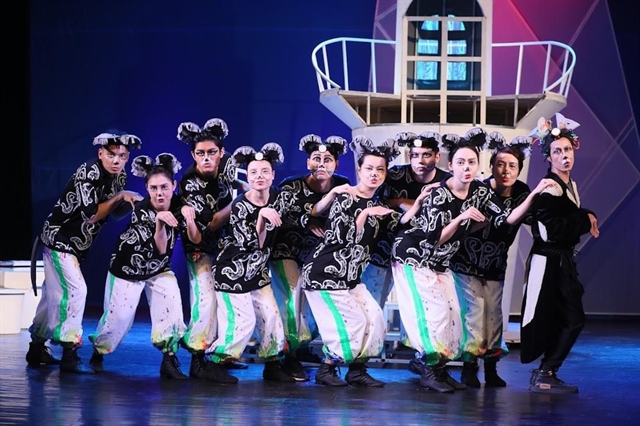 |
| 'The Story of a Seagull and The Cat Who Taught Her to Fly' is performed by the Việt Nam Youth Theatre. Photo cucnghethuatbieudien.gov.vn |
In your view, what is needed to ensure the sustainable development of children’s theatre in Việt Nam and attract the young audiences?
To build a sustainable ecosystem for children’s theatre, a comprehensive strategy is needed — one that combines creative vision with institutional support.
First, the quality of productions must be raised and the mindset of creating works merely to meet seasonal demand must be abandoned. Today’s children are digital natives with broad cultural exposure and a sophisticated understanding of the world.
They deserve access to high-quality productions. Each work must be developed with serious investment and artistic ambition if it is to compete with the growing range of modern audiovisual entertainment.
Second, it’s not just about the children. When a child comes to the theatre, they are accompanied by siblings, parents, carers, guardians or grandparents. The shared experience matters.
Third, special mechanisms are needed to attract and retain young creative talent. Creating and performing for children requires not only strong artistic skills but also a deep understanding of child psychology.
Dedicated incentive policies, independent arts funding schemes and professional awards specifically for children’s theatre are therefore essential. Such support would enable artists to pursue their work with confidence, creativity and long-term commitment.
Finally, the value chain of theatre products should be expanded through cross-sector collaboration. In today’s creative economy, children’s theatre should not be confined to performances on stage. It needs to connect proactively with education, experiential tourism, multimedia communications and community engagement initiatives. — VNS
Life & Style
 Life & Style
 Life & Style
 Life & Style
 Life & Style
 Life & Style
 Life & Style
 Life & Style
 Life & Style
 Life & Style
 Life & Style
 Life & Style
 Life & Style
 Life & Style
 Life & Style