.jpg) Life & Style
Life & Style
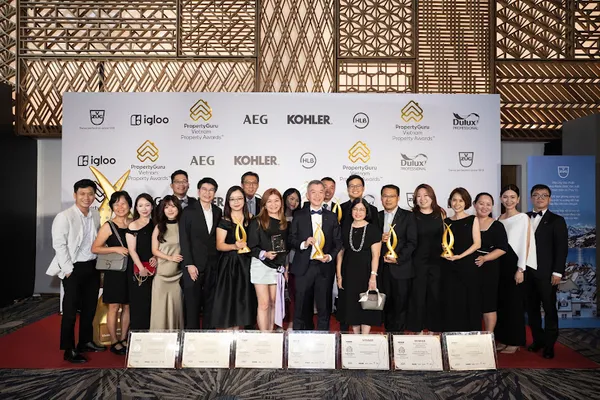
CapitaLand Development recognised for sustainability, social impact, design excellence
1.
|
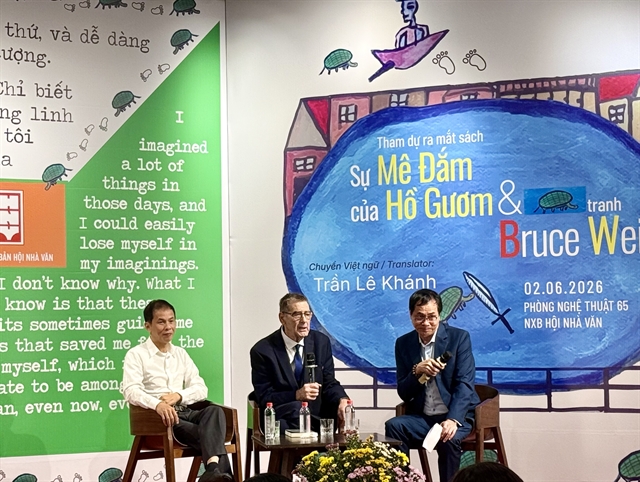
| US poet and veteran Bruce Weigl (centre), translator Trần Lê Khánh (left), and Vietnamese poet Hữu Việt speak at the event. — VNA/VNS Photo Phương Lan |
HÀ NỘI — Acclaimed US poet Bruce Weigl explores memory, loss and a deep connection with Việt Nam in a newly released poetry collection that reflects on his experiences and observations of Hà Nội through the lens of a former soldier turned literary voice.
Published by the Writers’ Association Publishing House, Sự Mê Đắm Của Hồ Gươm (The Ecstasy of Hồ Gươm) captures Weigl’s experiences, observations and reflections on Hà Nội.
In the collection, Weigl invites readers into a vision of Hà Nội seen from the other side of the front line, where memories of war, guilt, repentance and a deep love for Việt Nam coexist within a powerful emotional current.
Hồ Gươm (Sword Lake) emerges not only as a cultural symbol of the capital but also as a spiritual space where the poet confronts his past and ultimately finds a sense of renewal.
The collection unfolds as a continuous flow between present and memory, where the everyday beauty of Hà Nội blends with the lingering echoes of a war that has never fully faded.
In Weigl’s poetry, readers encounter Hà Nội’s streets at night, figures huddled asleep on park benches, quiet mornings around Hồ Gươm, passing rains, rippling waters and moonlight.
All are rendered through the gaze of a poet who is at once enchanted and troubled, raw yet deeply yearning in his search for redemption.
The 28-page collection also benefits from the contribution of poet-translator Trần Lê Khánh. His nuanced and lyrical translation preserves the original work’s poetic sensibility, beauty and emotional depth, bringing Vietnamese readers closer to Weigl’s poetic world.
Born in 1948 in Ohio in the US, Weigl served in the US American War in Việt Nam from 1967 to 1968. In later years, he emerged as one of the prominent anti-war voices in post-war American literature and became a close friend of Việt Nam and its people.
Throughout his literary career, Weigl has published 14 poetry collections, been shortlisted twice for the Pulitzer Prize for Poetry and received numerous literary honours, including the Lannan Literary Award, the Robert Creeley Award and the Paterson Poetry Prize.
He has regularly travelled to Hà Nội to write, translate and draw inspiration from Việt Nam’s cultural life since 1988.
His name is closely associated with works on the Vietnam War, including Song of Napalm, which explores the war’s impact and the human search for redemption.
In 2024, Weigl was awarded the Friendship Order by General Secretary and President Tô Lâm in recognition of his contributions to promoting Vietnamese literature and fostering cultural and literary exchange between Việt Nam and the US.
The poet said he had long held a deep affection for Việt Nam. Across his works, from poetry and prose to memoir and painting, the country maintains a constant and vivid presence.
It appears in the streets around his apartment, in bustling cafés, in the quiet image of ordinary people tending roadside plants, in the solitude he feels during Tết and in the countless rhythms and movements of life throughout the country.
Speaking about the decision to publish the collection in Việt Nam, Weigl said he wished to share these poems with Vietnamese friends and readers, as they reflect his deep love for the country and its long-standing cultural heritage. He emphasised that the poems belong to Việt Nam and that the country itself has nurtured and shaped them.
“Weigl’s journey to Việt Nam is a particularly remarkable story,” said poet Nguyễn Quang Thiều, chairman of the Việt Nam Writers’ Association. “Nearly 60 years ago, the American soldier Bruce Weigl came to Việt Nam and took part in the war. Yet in his returns after 1975, he brought with him poems and a profound affection for the country.”
What is distinctive in his poetry, Thiều noted, is that Weigl does not portray Hà Nội in a direct or literal way, but instead discovers the city anew through the most familiar details of everyday life.
The chairman also praised the translation for preserving both the clarity of the Vietnamese language and the essential qualities of Weigl’s poetic voice.
|
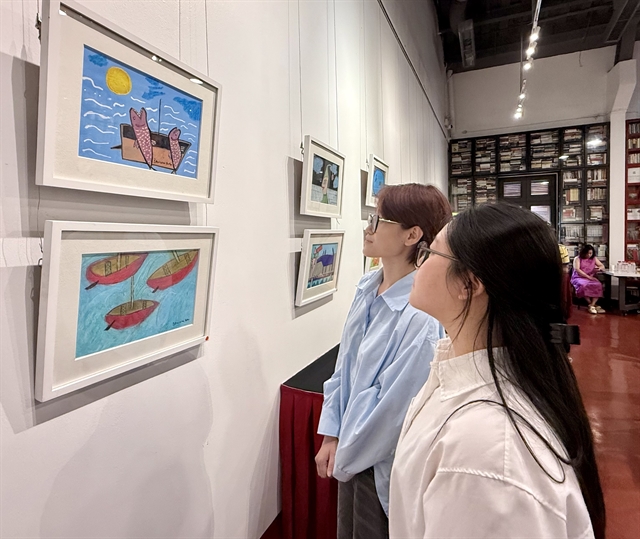
| Visitors view artworks by US poet Bruce Weigl exhibited at the event. — VNA/VNS Photo Phương Lan |
Alongside the launch of the bilingual poetry collection, an art exhibition by the US poet is also being held, presenting paintings inspired by Việt Nam and Hà Nội.
The works depict simple, everyday stories that are deeply evocative, reflecting the perspective of a former American soldier who has developed a profound and enduring love for Việt Nam. — VNS
Life & Style
 Life & Style
 Life & Style
 Life & Style
 Life & Style
 Life & Style
 Life & Style
 Life & Style
 Life & Style
 Life & Style
 Life & Style
 Life & Style
 Life & Style
 Life & Style
 Life & Style