 Life & Style
Bắc Ninh conference explores Lý Công Uẩn’s historical legacy and contemporary values
1.
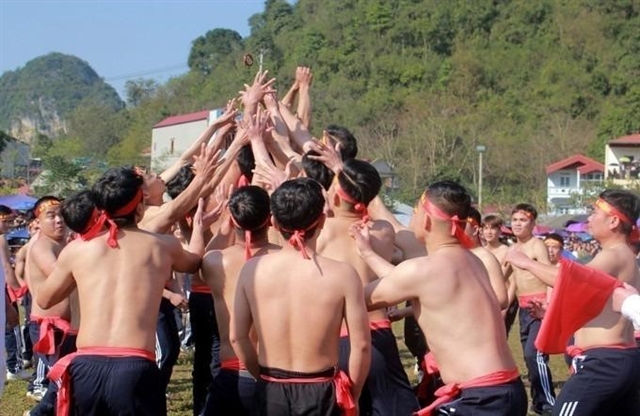 |
| The firecracker contest festival in Quảng Uyên Town, Quảng Hòa District, Cao Bằng Province. — VNA/VNS Photo |
CAO BẰNG — The northern mountainous province of Cao Bằng, home to a rich tapestry of ethnic groups, is keeping tradition alive through its vibrant festivals, which sustain cultural identity and strengthen community bonds.
According to the provincial Department of Culture, Sports and Tourism, Cao Bằng currently hosts around 100 festivals, more than 70 of which take place annually, mainly during the spring season.
Among the most prominent is the Lồng Tồng festival of the Tày and Nùng people, featuring rituals dedicated to agricultural deities, praying for favourable weather and abundant harvests.
Following the ceremonial rituals, the festive atmosphere comes alive with folk games and performances such as tung còn (throwing fabric balls), tug of war, spinning tops, singing and đàn tính (a handmade gourd lute), filling the mountainous landscape with energy and colour.
Other notable events include the Nàng Hai festival, a unique Tày ritual praying for prosperity; the Quảng Uyên firecracker contest, where dragon dances compete for a flaming ball; the Thanh Minh festival of the Nùng An people, dedicated to ancestor remembrance; the Bảo Lâm bull-fighting festival, which promotes livestock farming; and the Kỳ Sầm festival honouring General Nùng Trí Cao.
In recent years, many festivals have become more systematically organised, emerging as key highlights for attracting visitors.
The Pác Bó return-to-the-roots festival in Trường Hà Commune, for example, combines indigenous cultural elements with revolutionary history, commemorating President Hồ Chí Minh and drawing large crowds from across the country.
Meanwhile, the Quảng Uyên firecracker festival, with dragons competing for a flaming ball soaring into the sky, symbolises good fortune at the start of the year.
In districts such as Bảo Lâm and Bảo Lạc, highland festivals featuring vibrant ethnic costumes and the sounds of traditional instruments echoing through the mountains have created a distinctive appeal.
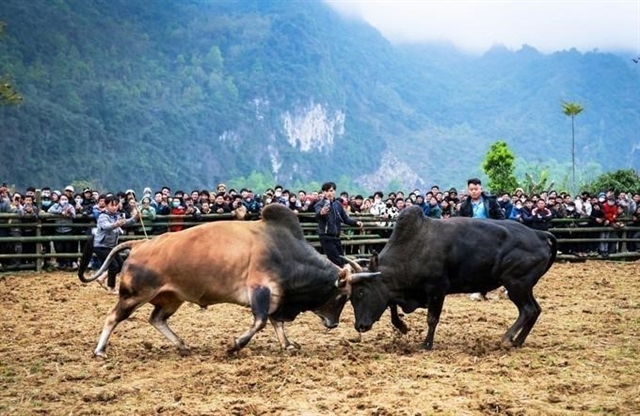 |
| A traditional bull-fighting event takes place in Bảo Lâm District, Cao Bằng Province. — VNA/VNS Photo |
Cao Bằng authorities see festivals not only as cultural events but also as powerful tools for promoting tourism. Organising festivals in a safe and civilised manner, while showcasing local handicraft products, helps encourage longer visitor stays and enrich the overall experience.
Festival venues in Cao Bằng leave a lasting impression on domestic visitors, thanks to the friendliness of local people and the authenticity of rituals and folk games. International tourists are particularly captivated by ethnic costumes, traditional music and ceremonial practices, which offer unique cultural experiences. Local cuisine further enhances the province’s appeal.
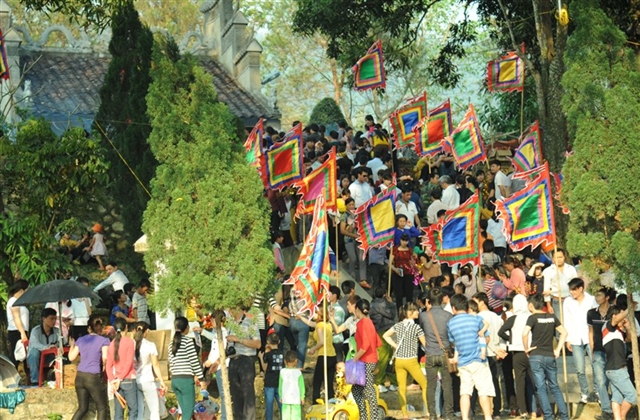 |
| Visitors gather at the Kỳ Sầm Temple festival in Cao Bằng Province. — VNA/VNS Photo |
Nguyễn Đức Minh, a visitor from Hà Nội, said: “I was very impressed by the festival atmosphere in Cao Bằng. The people are friendly, and traditional rituals and folk games are still well preserved. It was a truly special experience.”
David Martin, a visitor from the UK, also praised the way local communities maintain their traditions. Ethnic costumes, music and rituals have created a vibrant cultural space that is both authentic and engaging.
Nguyễn Quốc Trung, Director of the Department of Culture, Sports and Tourism, said the province regards culture as its foundation, with festivals serving as key highlights in its strategy for sustainable tourism development.
“When cultural preservation is harmonised with tourism development, festivals can become a driving force for green economic growth,” he said.
He added that the vitality of festivals depends not only on their scale but also on the active participation of local communities. With strong support from authorities and residents, many festivals have been restored and are now organised more professionally and appealingly.
Festival culture, he noted, not only nurtures the spiritual life of communities but also helps shape Cao Bằng’s image as a culturally rich destination on Việt Nam’s northern frontier. — VNS
Life & Style
 Life & Style
 Life & Style
 Life & Style
 Life & Style
 Life & Style
 Life & Style
 Life & Style
 Life & Style
 Life & Style
 Life & Style
 Life & Style
 Life & Style
.jpg) Life & Style
Life & Style
 Life & Style