 Life & Style

Việt Nam, Russia step up cooperation in criminal sentence enforcement
1.
|
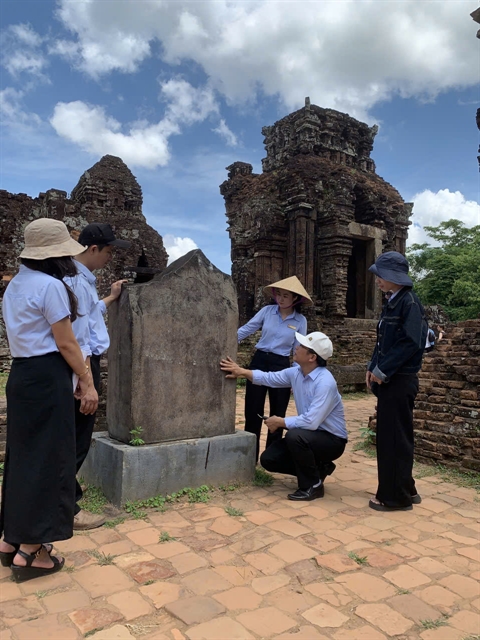
| Experts from the management of the Mỹ Sơn Sanctuary World Cultural Heritage site check an inscription stele with carved text on stone. A collection of 50 inscriptions on stone and brick will be built into a dossier for heritage approval. Photo courtesy of Nguyễn Văn Thọ |
MỸ SƠN SANCTUARY – Experts and archaeologists from the World Cultural Heritage site of Mỹ Sơn Sanctuary have started an assessment and research project of a collection of inscriptions, carved texts on sandstone and terracotta material to build a dossier for heritage recognition.
Nguyễn Văn Thọ, from the management of the Mỹ Sơn Sanctuary World Cultural Heritage site, said the project, kicked off in May, will be review a 50-inscription collection.
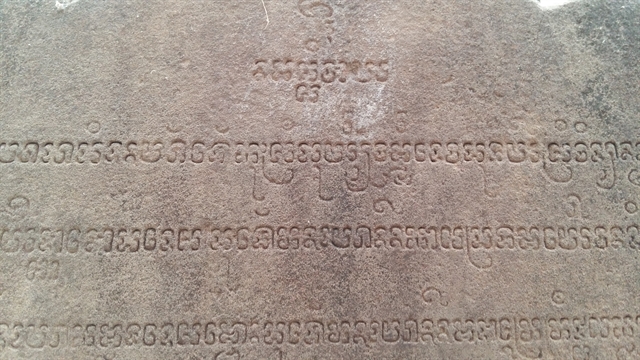
He said the inscription collection, which is believed to be from the fifth century to 13th century, had been carved on sandstone and terracotta stele, cantilevers and architectural structure beams and girders, or were engraved texts on pedestals.
|
| Ancient carved texts on sandstone stele are displayed at the Mỹ Sơn Sanctuary - a UNESCO-recognised world heritage site. Many engraved inscriptions at the site have yet to be translated or assessed for a heritage dossier. VNS Photo Công Thành |
The heritage management board also said some inscriptions had been stored for display at the Việt Nam National Museum of History and Chăm Sculpture Museum of Đà Nẵng.
It said translation works on ancient inscriptions had been done during the 20th century, but major engraved inscriptions have not yet been translated, or remain unexcavated at the heritage site.
In past years, Sanskrit inscriptions on stone slabs at the Mỹ Sơn Sanctuary were translated into Vietnamese and English, as part of a joint project between Vietnamese and Indian scientists.
Experts from India and the French Institute of Far Eastern Studies had assisted in translating these ancient steles from Sanskrit, the ancient liturgical language of Hinduism.
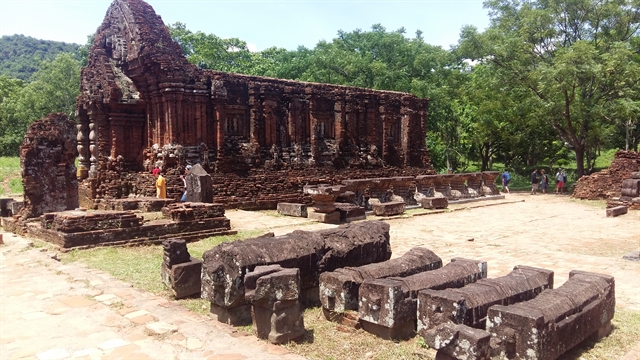
|
| A tower is preserved at Mỹ Sơn Sanctuary, 70km south of Đà Nẵng City's downtown. The world heritage site is one of the most popular destinations in central Việt Nam, and it has restored a huge amount of valuable ancient culture and items. VNS Photo Công Thành |
The Mỹ Sơn Sanctuary has Sanskrit epitaphs engraved on 31 slabs made of brick and stone, the main materials used in building Mỹ Sơn Sanctuary, the sanctuary’s management board reported.
The ancient Chăm scripts and Sanskrit inscriptions at the UNESCO-recognised site are highly valuable heritage.
The Mỹ Sơn Sanctuary is still a unique and mysterious archaeological site, and it remains a research centre for Chăm culture – a defunct civilization in Asia. At least 70 temples and towers were built at the site from the 4th century, and brick and natural cement were used.
Research into the construction techniques of the Chăm people resulted from the restoration of monuments in 2003-13 by the Việt Nam-Italy-UNESCO tripartite partnership.
Polish archaeologist and architect Kazimierz Kwiatkowski, known as ‘Kazik’, made contributions to the recognition of the Sanctuary as a world heritage site by UNESCO in 1999.
Kazik and a group of Polish archaeologists had strengthened ruined towers with cement, as well as clearing groups of towers in 1981-95 before they would be damaged due to weather and poor conservation.
Italian archaeologists then continued the restoration of Group G on the site from 1997 before Indian experts began recovering towers of Groups K, A and H from 2017-21.
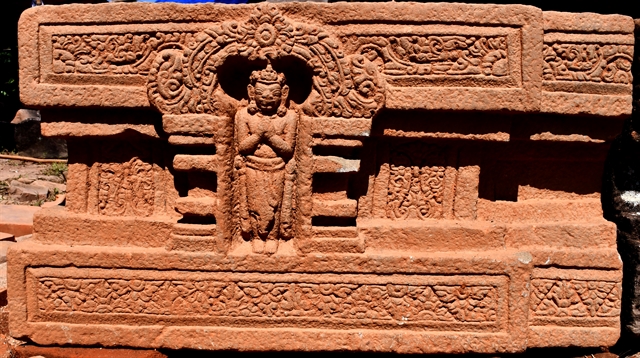
|
| A pedestal is preserved at Mỹ Sơn Sanctuary. Many architectural patterns are carved on the pedestal of a tower in the Sanctuary. VNS Photo Công Thành |
Much earlier, French archaeologists and researchers found the Mỹ Sơn Sanctuary in 1885, and the first excavation and research on the Chăm towers began in 1898-99 by Louis Finot and Launet de Lajongquere.
Heri Parmentier researched the site in 1901-02, and many artefacts were brought to the Chăm Sculpture Museum in Đà Nẵng City.
Last year, excavations exposed an ancient entrance road linking the K Tower to the central towers complex, and it is believed to have served as a sacred route for Hindu deities and a royal passage for Champa kings and priests between the 10th and 12th centuries.
Indian archaeologists had earlier identified two gates to the east and west of the K Tower, as well as a section of the guide wall leading to towers E and F during a restoration project in 2017-18.
The Mỹ Sơn Sanctuary, recognised by UNESCO as a world heritage site in 1999, remains one of the most popular destinations in central Việt Nam, alongside Hội An Ancient Town and the Chàm Islands–Hội An World Biosphere Reserve.
Located about 70km from downtown Đà Nẵng, Mỹ Sơn is the only central complex of Champa towers dating from the fourth to the 13th centuries, representing a unique centre of the former Champa Kingdom in central Việt Nam.
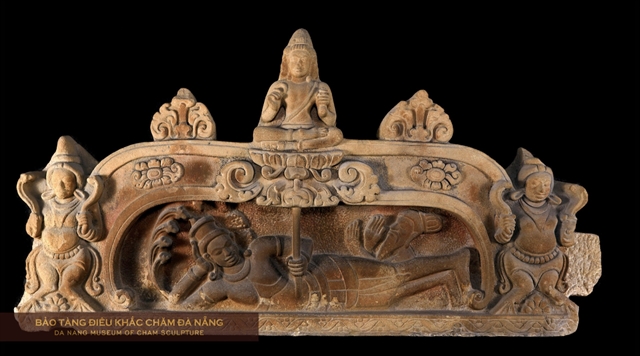
|
| Brama relief sculpture is on display at the Chăm Sculpture Museum of Đà Nẵng. The museum is one the most visited sites in Đà Nẵng City. Photo courtesy of Chăm Sculpture Museum of Đà Nẵng |
Many artefacts excavated from the sanctuary have been preserved and displayed at the Chăm Sculpture Museum in Đà Nẵng since 1915, with significant contributions from French archaeologist Henri Parmentier.
Đà Nẵng plans an emergency restoration project to save the ruins of Đồng Dương Buddhism monastery – a Chăm tower complex and pedestal alter from the ancient Kingdom of Champa – from collapsing soon.
Life & Style
 Life & Style
 Life & Style
 Life & Style
 Life & Style
 Life & Style
 Life & Style
 Life & Style
 Life & Style
 Life & Style
 Life & Style
 Life & Style
 Life & Style
 Life & Style
 Life & Style