 Life & Style

VN-Index ends lower despite liquidity hit over $1 billion
1.
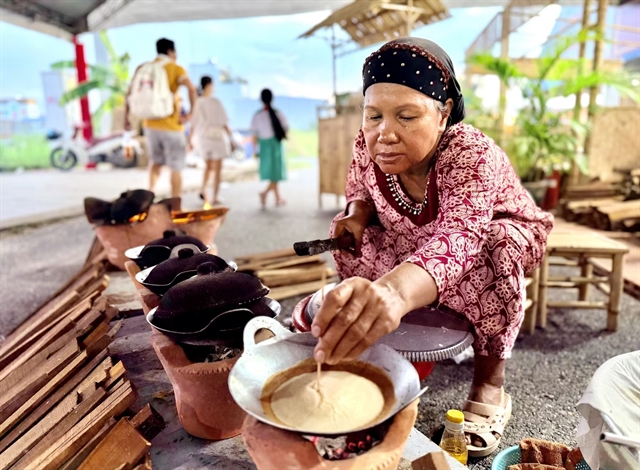 |
| Artisan Rofiah makes ha cô rice cakes.. — VNA/VNS Photo |
AN GIANG — Along the banks of the Hậu River, in a quiet Chăm village in Châu Phong Commune, the scent of coconut milk and ripe palm fruit drifts from clay stoves — a gentle invitation into the world of ha cô rice cakes, a humble delicacy rich in tradition and memory.
Made from humble ingredients such as rice flour, wheat flour, coconut milk, sugar and ripe palm fruit, this traditional delicacy reflects the ingenuity of local artisans and continues to captivate visitors fortunate enough to taste it.
Each morning, the rich aroma of coconut milk blended with the scent of ripe palm fruit drifts through the village. In front of her house, artisan Rofiah tends a red clay stove, carefully arranging small pans over glowing charcoal as she begins another day of making ha cô rice cakes.
For the Chăm people of Châu Phong, this is more than just food — it is memory, heritage and a way of life deeply rooted in the community.
In the past, ha cô cakes were mainly prepared for festivals, weddings and engagement ceremonies. In recent years, however, they have become a sought-after specialty among tourists visiting the village.
Notably, in 2022, artisan Rofiah won a gold medal at the ninth Southern Việt Nam Traditional Cake Festival, helping elevate the reputation of ha cô cakes.
According to Rofiah, the key ingredients include ripe palm fruit, rice flour, coconut milk and sugar. While the process may seem simple, achieving the perfect cake requires great skill.
Even a small mistake when pouring the batter can prevent the cake from rising properly or maintaining its shape. To ensure quality, Chăm women often select rice grown by the Khmer community in the Thất Sơn region of An Giang Province.
“After soaking the rice until soft, it is ground into a fine paste," Rofiah said.
"The paste is then mixed with sugar and extract from ripe palm fruit. It must ferment for at least six hours to achieve the right texture.
"If under-fermented, the cake won’t rise; if over-fermented, it becomes sour and loses its natural sweetness.”
The baking process demands equal precision. The batter is poured into a small pan placed over a clay stove, with careful control of both the amount and the heat of the charcoal. The cake must not be flipped during cooking, as even a slight disturbance can cause it to collapse or lose its shape.
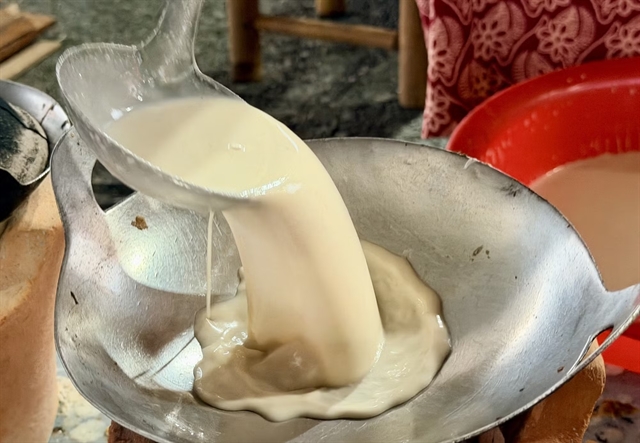 |
| The batter is poured into small pans over a clay stove. — VNA/VNS Photo |
To ensure the top cooks evenly, the artisan heats the lid over a wood fire before covering the pan. This technique helps create the cake’s distinctive pointed cone shape. A well-made ha cô cake is golden brown, slightly crispy on the outside, soft and fluffy inside, and fragrant with palm fruit and coconut.
Fresh off the stove, the cakes glisten in the sunlight, their aroma irresistible to passersby. Enjoyed warm, they offer a delicate sweetness and subtle richness that lingers pleasantly on the palate.
Beyond its flavour, ha cô cakes carry deep cultural and spiritual meaning. Their pointed shape symbolises fertility and abundance, making them an essential offering in traditional festivals, weddings, religious ceremonies and important community events.
With the growth of community-based tourism, ha cô has travelled far beyond the village, becoming a beloved specialty among visitors.
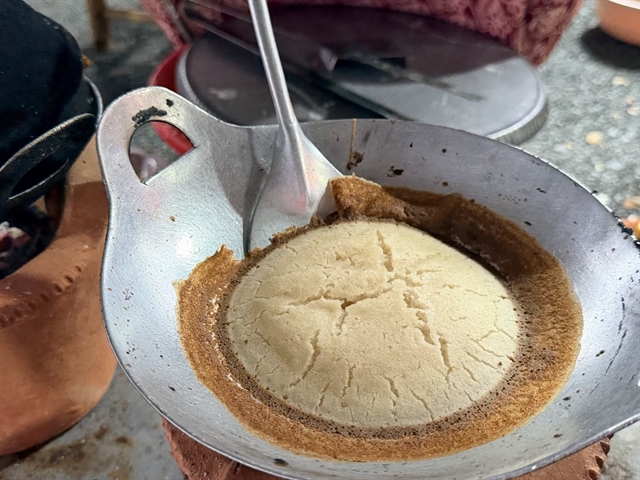 |
| Ha cô cakes are baked in small pans over charcoal, releasing an enticing aroma. — VNA/VNS Photo |
From hearth to heritage
Nguyễn Thảo My, a tourist from HCM City, said that she had known about An Giang’s ha cô cakes for a long time.
Visiting Châu Phong and experiencing them first hand allowed her to truly appreciate the "soul" of the dish - not just as food, but as a gateway to understanding Chăm culture and daily life.
Along village roads, neatly arranged ha cô cakes sit on bamboo trays, their cone shapes and fragrant aroma of palm sugar forming a familiar and inviting sight.
Artisan Rofiah hopes that through this humble cake, more people will come to appreciate the culinary traditions of the Chăm community.
In a rapidly modernising world where some traditional values are fading, ha cô cake endures thanks to the dedication of artisans who preserve this age-old craft.
More than just a dish, it is a testament to the diligence and skill of the Chăm people of An Giang — quietly keeping the flame of their heritage alive through time. — VNS
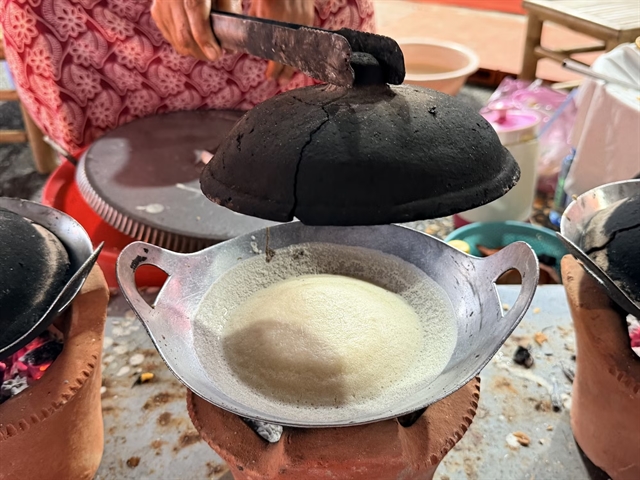 |
| Ha cô cakes are made from rice flour, wheat flour, coconut milk, sugar and ripe palm fruit, creating their distinctive flavour. — VNA/VNS Photo |
Life & Style
 Life & Style
 Life & Style
 Life & Style
 Life & Style
 Life & Style
 Life & Style
 Life & Style
 Life & Style
 Life & Style
 Life & Style
 Life & Style
.jpg) Life & Style
Life & Style
 Life & Style
 Life & Style