 Life & Style
European higher education week opens new opportunities
1.
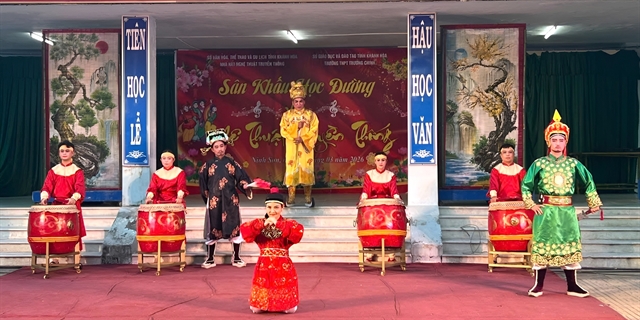 |
| Artists from the Khánh Hòa Traditional Performing Arts Theatre present performances at the Trường Chinh High School in Ninh Sơn Commune in Khánh Hòa Province. — Photo courtesy of the theatre |
KHÁNH HÒA — The Khánh Hòa Traditional Arts Theatre has launched a programme to promote local students’ interest in and understanding of Vietnamese traditional performing arts.
The programme helps students actively engage with the province’s traditional art forms such as tuồng (classical drama), bài chòi (folk singing) and traditional musical instruments.
It not only carries unique traditional cultural values, but also nurtures students’ love for the country and national pride, and raises their awareness of preservation and promotion of Vietnamese national cultural identity.
The troupe’s artists offer excerpts from shows based on Vietnamese fairy tales and folk stories, which are mentioned in the textbooks, such as tuồng plays named Thạch Sanh (The Tale of Thạch Sanh) and Tấm Cám (Tấm and Cám), and a bài chòi performance called Trần Quốc Toản Ra Quân (Young Hero Trần Quốc Toản in the Battle).
According to the theatre’s deputy director Đỗ Ngọc Tâm, the theatre’s tuồng and bài chòi artists have brought traditional performing arts closer to local students for years. Their enthusiasm has motivated the artists to create new performances, promote traditional arts to young audiences and educate them about history, culture and art.
Tuồng, which originated in the 12th century, consists of singing and dancing accompanied by music and often reflects themes of monarchist loyalty and patriotism, which help define the play’s structure, language, music, and characters' personalities.
Tuồng artists perform in traditional costumes weighing up to several kilos. They use their body, from the fingers to the elbows, to all the muscles, to move on stage. They sing and dance at the same time, and express the characters' emotions.
Bài chòi is a diverse art combining music, poetry, acting, painting and literature. Its practitioners include performers, card-making artists and hut-making artists. Performers and their families play a major role in safeguarding the practice, and dedicated groups continue to celebrate it.
The art was recognised as an Intangible Cultural Heritage of Humanity by UNESCO in 2017.
The theatre plans to bring the programme to students in remote and mountainous areas, particularly to ethnic minority students, throughout 2026. — VNS
Life & Style
 Life & Style
 Life & Style
 Life & Style
 Life & Style
 Life & Style
 Life & Style
 Life & Style
 Life & Style
 Life & Style
 Life & Style
 Life & Style
 Life & Style
 Life & Style
 Life & Style